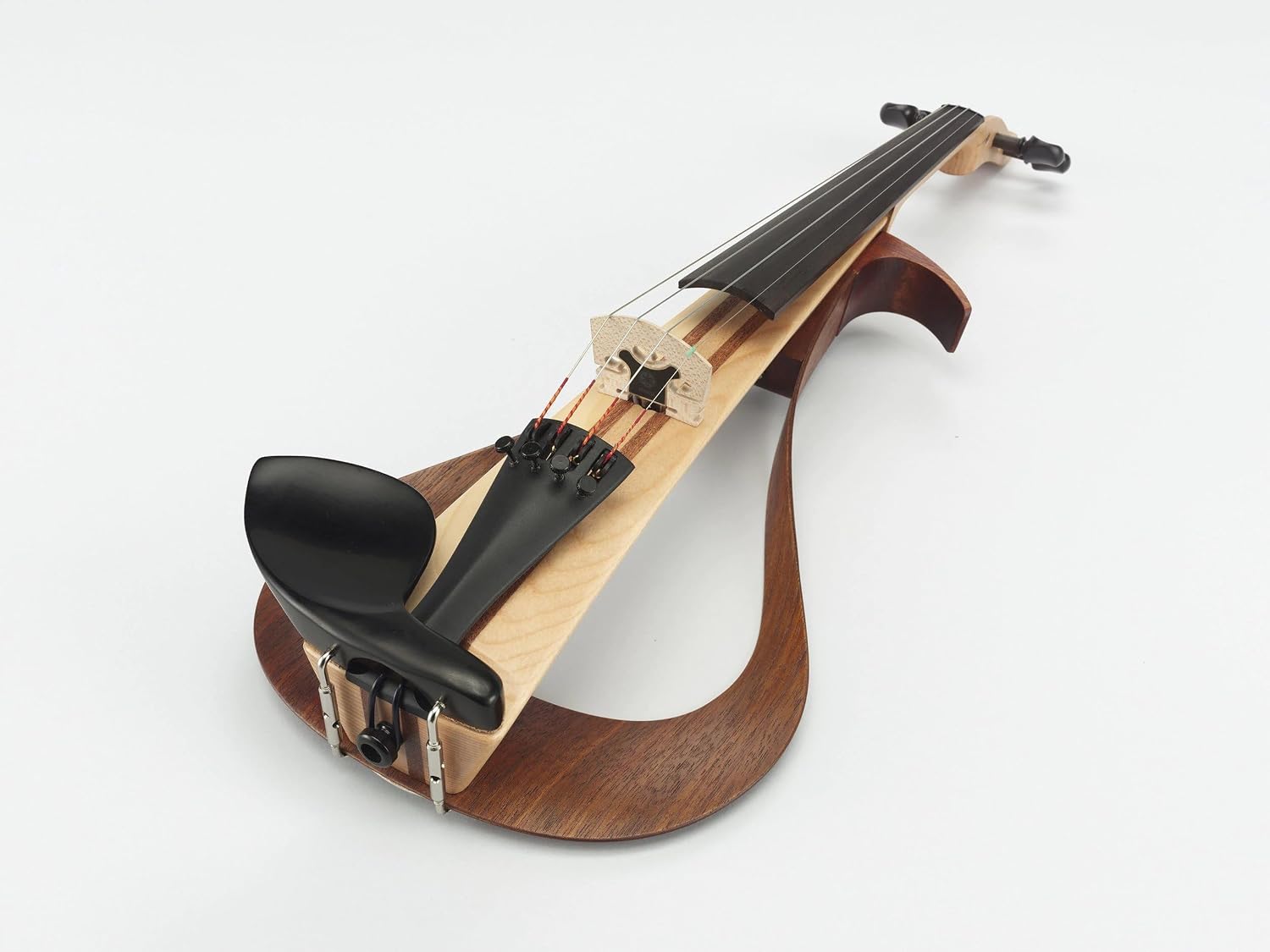
You’re deep into a Celtic session, and the tune drops into a register that makes every four-string player reach for the bottom of their range — and stop. A standard violin (acoustic or electric) has four strings: E, A, D, and G, tuned from high to low. A five-string electric violin adds a fifth string below that G: a low C, which is the same pitch as the lowest string on a viola. That one extra string sounds like a small upgrade on paper. In practice, it reshapes your instrument’s footprint, your pickup system, your amplifier setup, and how you physically play. If you’re a working Celtic or bluegrass player considering a five-string electric and you have money on the line — this guide is written to help you make the call clearly, not just understand the concept.
What the Low C String Actually Opens Up (and What It Doesn’t)
Let’s be direct about the musical case first, because the tone argument either justifies the whole investment or it doesn’t.
In Celtic music, the low C is not a common melodic destination. Traditional Irish and Scottish fiddle repertoire sits comfortably on the G string as its floor. But that misses the real use case. Players who gravitate toward five-string electrics in Celtic contexts tend to use the C string for drone work — sustaining a low tonic note under a melody — or for occasional viola-register countermelody in ensemble settings. Folkworks.org’s Celtic instrument resources note that cross-genre players, particularly those doubling in folk and Americana contexts, find the five-string opens compositional doors that the standard fiddle forecloses.
Bluegrass tells a different story. The low C is not a traditional part of any fiddle tune, but working session players and touring artists increasingly treat the five-string electric less as a fiddle and more as a bridge instrument — something that can cover mandola and viola parts in a studio session without a second musician. That’s where the real ROI calculation lives for professional players.
The honest caveat: Strings Magazine’s coverage of five-string violins notes consistently that players who add a fifth string primarily for occasional use tend to underutilize it. If your core repertoire is straight Celtic fiddle and you’re not actively composing or arranging for the lower register, the four-string option at the same price point will serve you better. The five-string instrument makes its value back only if the C string is a real tool in your musical work, not an insurance policy.
How the Extra String Changes the Instrument’s Body, Neck, and Feel
This is where folk and bluegrass players often get surprised after purchase. A five-string electric violin is not simply a four-string with one more string added. The physical differences cascade through playability in ways that matter at stage volume.
Neck width. To accommodate five strings at playable string spacing, manufacturers widen the neck and fingerboard. Violinists who have spent years building muscle memory on a standard neck report an adjustment period measured in weeks, not days. Violinist.com community threads show a recurring pattern: players with smaller hands find the five-string neck fatiguing in the first month of use, particularly in upper-position work where Celtic and bluegrass ornamentation is most demanding.
String spacing at the bridge. Narrower spacing between strings makes double-stops (playing two strings simultaneously, which is foundational to both Celtic and bluegrass style) more difficult to execute cleanly. The bow angle required to isolate a single string tightens, which increases accidental contact with neighboring strings. This is a playability tradeoff that does not disappear with practice — it becomes manageable, but it is real. Published reviews across MusicRadar’s buyer guides consistently flag this as the primary adaptation challenge.
Instrument body. Most purpose-built five-string electric violins are not acoustically hollow in the traditional sense — they’re solid or semi-hollow bodies with onboard pickup systems. The wider neck and altered body proportions can affect shoulder-rest and chin-rest compatibility. Players using custom-fitted rests for their four-string should budget for refitting costs.
By the Numbers: Key Specs at Each Price Tier
| Price Range | Representative Instruments | Neck Width (approx.) | Pickup Type |
|---|---|---|---|
| ~$400–$600 | Bridge Draco 5-string, Cecilio 5-string | Wider than standard (varies ~5–7 mm over 4-string) | Piezo, passive |
| ~$1,200–$2,000 | NS Design CR5 | Manufacturer-spec composite neck | Polar™ active piezo |
| ~$2,500+ | ZETA Jazz 5-string, Wood Violins Stingray 5 | Luthier-fitted or custom | Piezo or magnetic, active preamp |
Pickup and Preamp Reality: The Fifth String Creates Signal Chain Problems You Need to Solve
Here is where the decision gets financially concrete for working players. The low C string produces frequencies that many violin-optimized pickups were not designed to capture cleanly.
Piezo pickup coverage. Standard piezo bridge pickups (the most common type in electric violins — a sensor mounted under the bridge that converts string vibration into an electrical signal) are typically voiced and calibrated for the four-string frequency range. When you add a low C, the fundamental frequency of that string drops to around 65 Hz. Sweetwater’s NS Design CR Series documentation notes that the Polar pickup system used in the CR5 is specifically designed and calibrated for five-string output — that calibration is part of what justifies the price point. Cheaper five-string instruments often use a pickup ported from a four-string design, and owners consistently report that the C string sounds thin, nasal, or unbalanced relative to the upper strings.
Amplifier and DI compatibility. Your existing amp setup may not have sufficient low-frequency headroom for clean C-string reproduction. A violin amp or PA channel set up for a four-string fiddle is typically high-passed (filtered to reduce low frequencies) to minimize stage rumble and bowing noise. That same high-pass filter will attenuate your C string. Players moving to five-string electrics in a professional context frequently report needing to revisit their EQ settings, DI box selection, and sometimes the amp itself.
Practical budget implication: If you’re running a mid-tier signal chain — a passive piezo into a violin-specific amp — plan for $150–$400 in additional signal chain work when moving to a serious five-string instrument. That cost is real and often goes unmentioned in instrument-only price comparisons.
Instrument-Specific Tradeoffs: Where the Money Actually Goes
Given the editorial focus of this site on premium and working-musician-level instruments, here’s how the five-string market breaks down at the tiers most relevant to a player with a real purchase decision pending.
Entry-adjacent (~$400–$600): The Bridge Draco is available in a five-string configuration and represents a common entry point for intermediate players testing the five-string concept. Owners on violinist.com forums note that the C string performance at this tier is usable but noticeably weaker in projection and tonal balance. If you’re evaluating whether the five-string format works for your playing before committing four figures, a Draco 5-string is a reasonable audition instrument — but treat it as a trial, not a destination.
Professional working tier ($1,200–$2,000): The NS Design CR5 is the most consistently cited benchmark at this price level. Sweetwater’s product documentation and aggregated owner reviews both support the claim that the CR5’s Polar pickup system handles the C string’s low-frequency output more evenly than instruments using repurposed four-string pickups. The composite neck addresses some of the hand-fatigue concerns by providing consistent geometry across temperature changes — relevant for touring players moving between venues. MusicRadar’s buyers guide consistently places the CR5 in this tier’s recommended column for players who need stage reliability and tonal consistency across all five strings.
Upper-tier and boutique ($2,500+): Wood Violins’ Stingray five-string and the ZETA Jazz five-string represent different philosophies at this price point. The Stingray’s body design prioritizes ergonomic playability and aesthetic visibility on stage. The ZETA Jazz — per the company’s published specifications — offers a magnetic pickup option alongside piezo, which changes the tonal character of the C string substantially: magnetic pickups tend to produce a warmer, more viola-like fundamental on the low C, while piezo systems deliver more attack and cut. For Celtic players whose C-string use leans toward drones and texture, magnetic may be the more useful voice. For bluegrass players who want the C string to project in a band context, piezo with active EQ typically wins.
Custom luthier commissions at $3,000+ allow for neck width specification, pickup placement optimization, and body balancing tailored to an individual player’s technique — the only real solution for players who have tried production five-strings and found none of them fit their specific playing geometry.
The Decision Frame: If X, Then Y
If your C-string use case is primarily experimental or occasional, and your core playing is four-string Celtic or bluegrass repertoire: buy a four-string at your target price point and put the difference into your pickup and amp setup. The instrument money is better spent on tonal quality across the strings you actually use.
If you are a working player who books sessions or touring gigs where viola or mandola-register coverage is part of the ask, and you need one instrument that handles the full range: the NS Design CR5 is the clearest professional-tier entry point. Its pickup system and neck consistency address the two biggest five-string failure modes — weak C-string signal and playability fatigue — at a price that working musicians can justify with a few paid gigs.
If you have already played a production five-string for a year or more, know that the format works for you, and are now dissatisfied with the remaining tonal or ergonomic compromises: a boutique or custom commission is the logical step. Specify your neck width preference, discuss pickup options with the builder, and bring your existing signal chain to the conversation.
The low C string is a real tool. Whether it’s your tool depends on whether the music you’re actually playing has a place for it. Get that answer first — then choose the instrument that delivers it most cleanly at your budget.
Your next step: If you’re between the NS Design CR5 and a boutique option, read our detailed pickup system comparison for the CR Series to understand exactly what the Polar pickup does and doesn’t do before you commit.