You’re standing at the side of a stage — or a rehearsal room, or a sanctuary — holding an acoustic violin and you need it louder. A microphone would pick up every other instrument in the room along with yours, causing feedback and muddy bleed. The solution most working violinists reach for is a pickup: a small transducer that converts the vibration of your instrument’s bridge or body into an electrical signal you can send to a PA system, amp, or DI box. But not all pickups work the same way, and choosing the wrong one for your gig means fighting tone problems, feedback, or awkward gear logistics every night you perform. This guide compares four brands that collectively dominate the acoustic violin pickup market — Fishman, KNA, Barcus Berry, and LR Baggs — so you can match the right system to your actual playing situation before you spend a dollar.
| EDITOR'S PICKFishman V-300 Concert Series Vi… | Mid-tierFishman V-200 Classic Series Vi… | Budget pickBarcus Berry 1320 Electric Viol… | |
|---|---|---|---|
| Series | Concert Series | Classic Series | 1320 |
| Fit | Violin | Violin | Electric violin |
| Pickup type | — | — | Built-in piezo |
| Format | Pickup | Pickup | Bridge |
| Color | — | MultiColored | — |
| Price | $229.95 | $178.54 | $109.99 |
| See on Amazon → | See on Amazon → | See on Amazon → |
What You’re Actually Choosing Between
Before comparing brands, it helps to understand that these four companies don’t all build the same type of pickup. The load-bearing categories are:
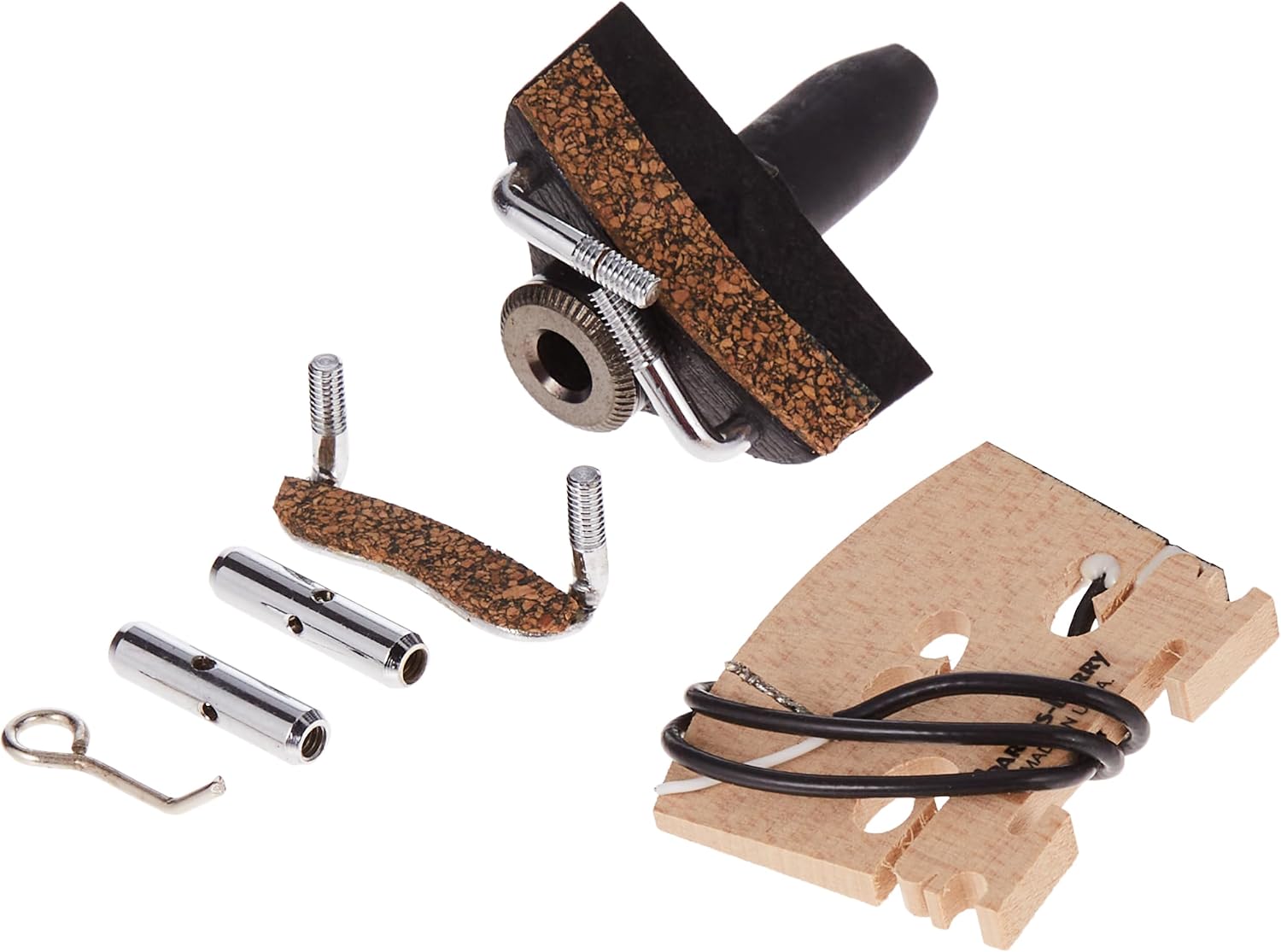
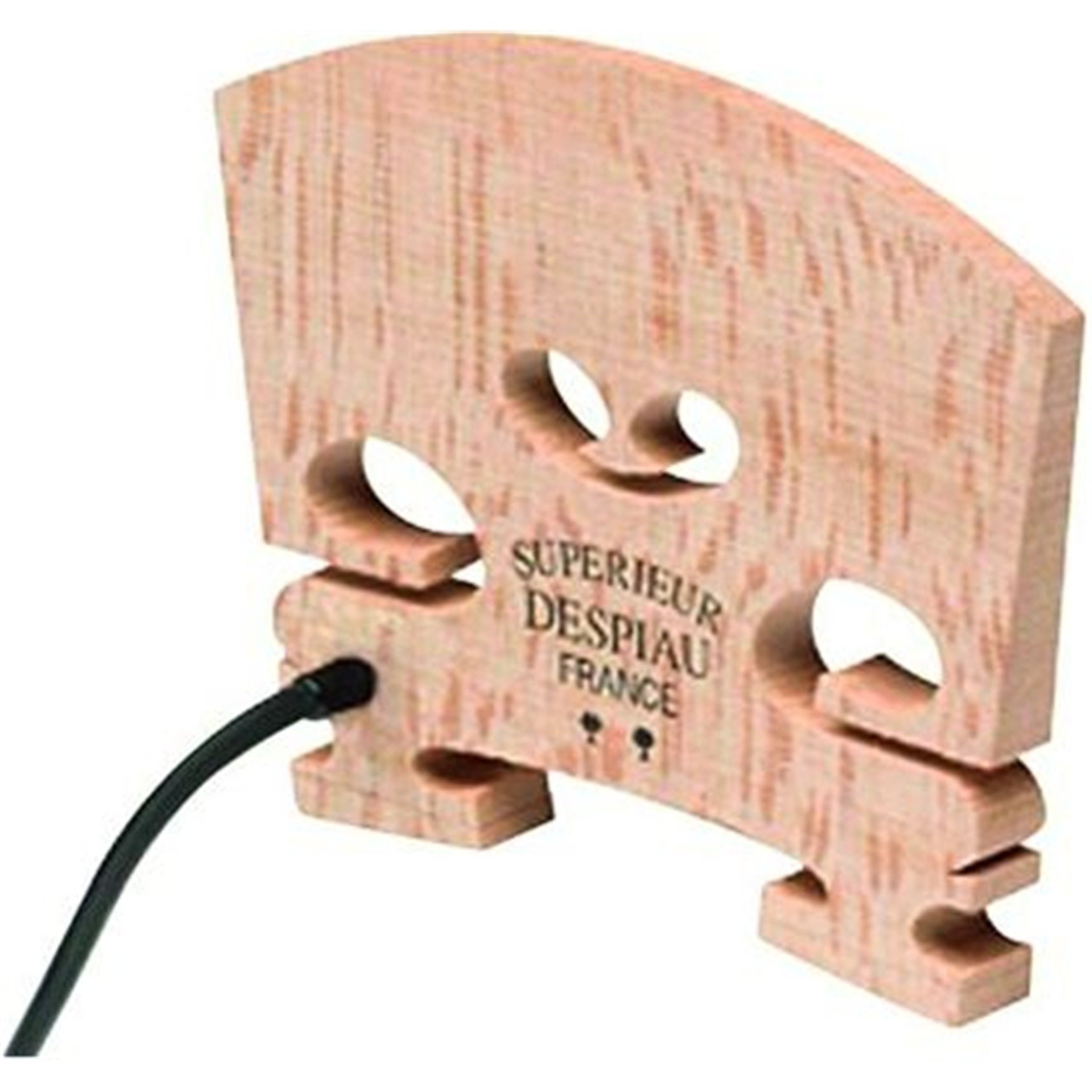
Bridge piezo (undersaddle or sandwich): A thin element sits in a slot cut into your violin bridge — the small wooden piece that holds the strings above the body. It reads vibration directly from the bridge and is extremely feedback-resistant. The LR Baggs Violin System and the Barcus Berry 1320 both use this approach. Installation typically requires a luthier (a specialist violin or string instrument maker/repairer) to fit or cut a new bridge.
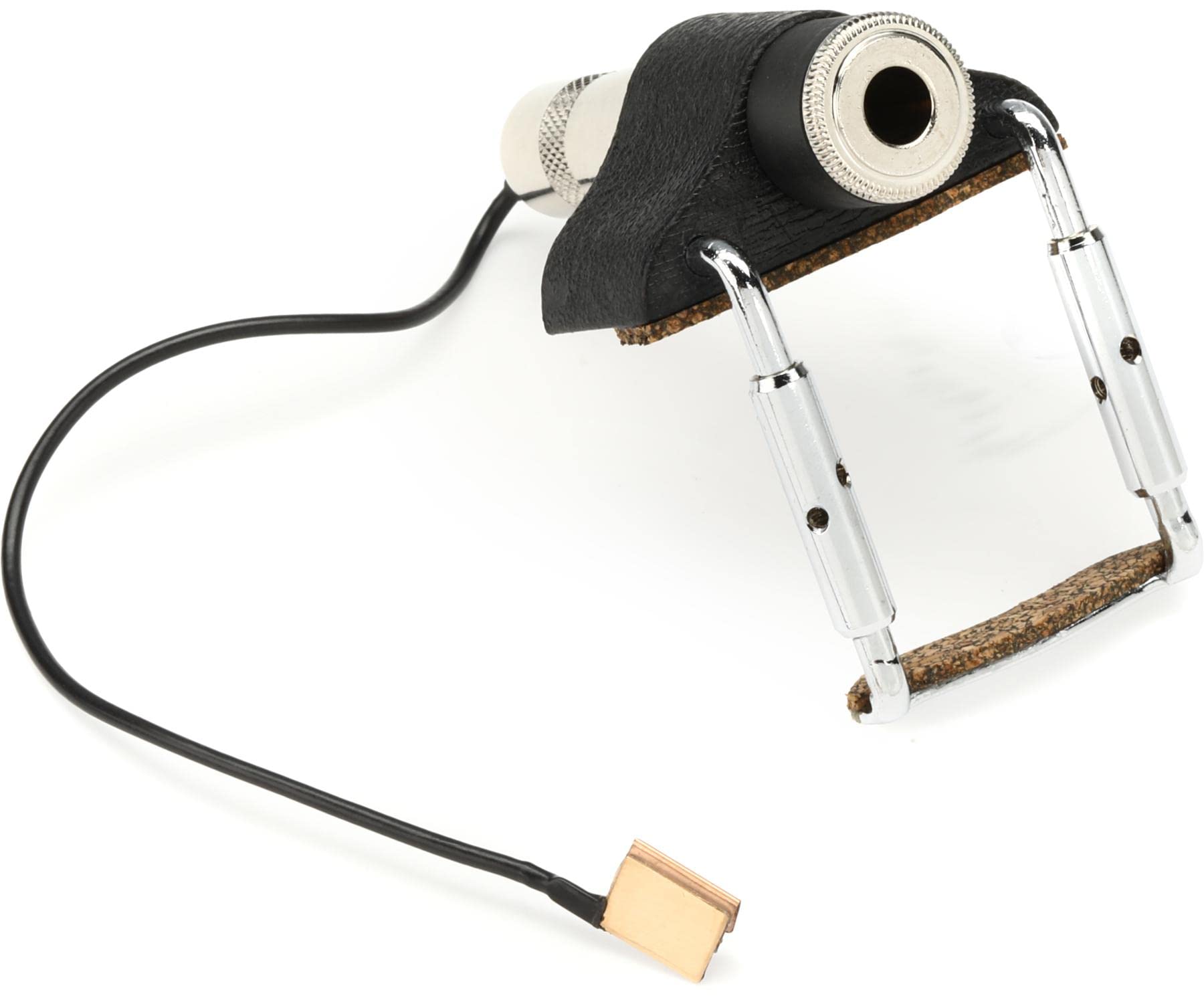
Clip-on piezo: A small sensor clips directly onto the bridge wing or tailpiece with no permanent modification to the instrument. The KNA VV-3 is the standard-bearer here. You can remove it and put it in your case between gigs.
Flexible transducer / retrofit: Fishman’s V-200 uses a thin, flexible element that wedges into the bridge wing notch. It falls between the above categories — less invasive than a full bridge replacement, more stable than a simple clip.
Strings Magazine, in its amplification overview titled “Amplifying the Acoustic Violin: Pickup Options Explained,” frames the tradeoff cleanly: undersaddle systems trade installation permanence for superior feedback rejection and signal consistency, while clip-on systems trade some of that stability for zero-modification convenience.
The Four Pickups, Compared Honestly
Fishman V-200
Reviewers documented across Violinist.com community review threads consistently describe the V-200 as one of the cleanest-sounding pickup solutions available at its price tier. One weekly-gigging player’s account stands out across aggregated owner reports: they called it “the best pickup I have used for a violin,” specifically noting it performed reliably across multiple different PA systems without a dedicated preamp. That last point matters — many bridge piezos produce a weak, high-impedance signal that sounds thin and harsh unless you run it through a preamp (a device that boosts and shapes the signal before it reaches the PA). The V-200’s output level is high enough that players report going direct to a standard DI box — a Direct Input box that converts your instrument signal to a balanced, stage-ready signal — with acceptable results.
One practical cost to budget: at least one reviewer documented needing a luthier visit because their bridge wing slot required widening to accommodate the Fishman element. That’s a likely $30–$60 additional expense in most markets, and it’s the kind of detail manufacturer marketing materials don’t lead with. Sweetwater’s editorial piece “How Piezo Pickups Work” notes that bridge slot tolerances vary significantly across factory and luthier-made bridges, so this is a real variable — not a one-off edge case.
Best for: Players who gig regularly across different rigs and want consistent results without carrying a dedicated preamp.
Fishman
$178.54
In stock on Amazon
Check price on AmazonKNA VV-3
KNA’s biggest reviewable advantage is entirely logistical: the VV-3 fits any bridge style without modification and can be left on the instrument or removed and cased between performances. Multiple owners documented on Violinist.com community threads highlight this specifically — if you’re running one instrument to different venues, if you share a violin, or if you simply don’t want any permanent alteration to your bridge, this removes friction from your life.
Tonal character, as reported across owner accounts, leans slightly brighter and more “acoustic-adjacent” than undersaddle designs. That’s a real tradeoff in louder band contexts. A clip-on’s physical contact with the bridge wing is less consistent than a fitted piezo, and feedback resistance is lower. In a small ensemble, folk session, or low-volume acoustic setting, that doesn’t matter. In a loud worship band or rock context, it can become a problem.
Sound On Sound’s feature “Miking and Amplifying Strings” notes that mechanical coupling — how firmly and consistently a transducer contacts the instrument — directly affects both tone evenness and feedback threshold. The KNA’s clip mechanism is well-reviewed for staying put, but it’s still a clip, and external-contact designs respond to airborne sound more readily than internal-vibration readers.
Best for: Players who need instrument portability and zero luthier involvement, gigging in moderate-volume acoustic settings.
Barcus
$109.99
In stock on Amazon
Check price on AmazonBarcus Berry 1320
The 1320 earns strong aggregate scores across multiple owner review sources, and the consistent pattern in those reviews is a direct price-to-performance comparison against the LR Baggs: players report similar tonal quality at approximately $50 less. That’s a meaningful gap when you’re also potentially paying for installation.
There are two important owner-flagged constraints. First, the 1320 requires professional installation — it fits into a replacement bridge, and that bridge needs to be properly fitted to your specific instrument by a luthier. Second, once installed, owners and Barcus Berry’s own product guidance note it should not be moved between instruments. This isn’t a weekend swap-out tool. If you’re a touring player with one primary instrument you treat as a long-term platform, that’s not a limitation — it’s actually a reliability asset. If you rotate instruments or expect to resell, factor the installation cost and the effectively permanent commitment into your decision.
Best for: Players who want undersaddle-quality tone at a lower price point and are committing to a primary instrument for the long term.
Fishman
$178.54
In stock on Amazon
Check price on AmazonLR Baggs Violin System
LR Baggs occupies the premium slot in this comparison, and the owner-reported evidence supports the price in specific ways. The most striking data point across aggregated Violinist.com reader accounts and Strings Magazine reader reports: multiple players installing the LR Baggs system — which ships with a replacement bridge element — reported that the new bridge itself improved their acoustic tone before they ever plugged in. One account involves a vintage instrument whose stock bridge was apparently underperforming; the LR Baggs replacement bridge noticeably opened the instrument’s acoustic projection.
This matters because it reframes the value calculation. You’re not just buying a pickup — you’re potentially buying a better bridge for your violin, which is a legitimate lutherie upgrade. Strings Magazine’s instrument setup coverage consistently notes that bridge quality and fit are among the highest-leverage variables in acoustic tone production, often neglected on student and mid-tier instruments.
Signal quality is described by owners as warm, full, and natural — closer to the instrument’s acoustic character than most competitors at this tier. The system does benefit from a preamp, and LR Baggs sells matched preamp options, which adds to the total cost.
Best for: Players with instruments worth protecting and improving, especially anyone gigging professionally where tone quality is a competitive differentiator.
Fishman
$229.95
In stock on Amazon
Check price on AmazonBy the Numbers
| Pickup | Install Type | Luthier Required? | Removable? | Preamp Needed? | Tier |
|---|---|---|---|---|---|
| KNA VV-3 | Clip-on | No | Yes | Recommended | Barcus — $109.99 |
| Fishman V-200 | Bridge wing wedge | Usually (slot fitting) | Yes | No (but helps) | Fishman — $178.54 |
| Barcus Berry 1320 | Undersaddle / bridge | Yes | No | Yes | Fishman — $178.54 |
| LR Baggs Violin System | Replacement bridge | Yes | No | Recommended | Fishman — $229.95 |
The Feedback Problem — and Why Pickup Type Is the Variable That Actually Matters
One real-world gig scenario deserves specific attention: if you’re playing in a loud band context — a full worship band, a festival stage with multiple amplified instruments, a Celtic session in a pub with fold-back monitors — feedback is not a theoretical concern. It’s a show-stopper.
Players who have switched from clip-on microphones or clip-on piezos to undersaddle systems specifically cite feedback rejection as the motivating factor. The gap between a clip-on piezo and a well-fitted undersaddle system isn’t just about tone — it’s about the volume ceiling at which your setup stops working. Sound On Sound’s “Miking and Amplifying Strings” addresses this directly: undersaddle pickups have a fundamentally higher feedback threshold than external-contact solutions because they’re reading internal vibration rather than responding to airborne sound pressure.
If your gig involves monitors pointed at you and a loud backline, the Barcus Berry 1320 or LR Baggs system’s installation permanence starts to look like a small price for a large practical gain. The permanence isn’t a downside in that context — it’s part of what makes the system work.
Sweetwater’s editorial piece “How Piezo Pickups Work” also notes that the high-impedance output characteristic of undersaddle piezos, while it requires a preamp buffer for best results, contributes to the pickup’s ability to reject feedback: the transducer is reading mechanical vibration from within the bridge structure rather than acting as a microphone. That’s a real technical distinction with real stage consequences.
Frequently Asked Questions
Do I need a preamp to use a bridge piezo pickup at a gig? Not always, but usually yes for best results. Piezo elements produce a high-impedance signal that sounds thin and harsh through a standard instrument input. A preamp — either outboard or built into a DI box — buffers that signal and adds warmth. The Fishman V-200 is the outlier among the pickups compared here; owners report usable direct-to-PA results without one. For undersaddle systems like the LR Baggs and Barcus Berry, a preamp is strongly recommended.
Can I install a violin pickup myself or do I need a luthier? The KNA VV-3 is a genuine no-tools-required clip installation. The Fishman V-200 can be self-installed but may require a luthier to widen the bridge slot first. The Barcus Berry 1320 and LR Baggs system both require luthier installation — attempting to fit a replacement bridge yourself risks damaging the instrument’s setup or top plate.
Which pickup has the least feedback in a loud band or worship setting? Undersaddle systems — the Barcus Berry 1320 and LR Baggs Violin System — have the highest inherent feedback rejection because they read internal bridge vibration rather than airborne sound. Among clip-on options, the KNA VV-3 performs reasonably in moderate-volume settings, but players in loud live environments consistently report needing to switch to undersaddle solutions as stage volume climbs.
Will a bridge-mounted pickup mute my acoustic violin’s natural tone? A properly fitted undersaddle element has minimal acoustic impact. Owners of the LR Baggs system report that the replacement bridge can actually improve acoustic tone if the stock bridge was poorly fitted — an outcome corroborated by multiple Violinist.com reader accounts. A clip-on like the KNA can slightly damp bridge resonance, but owner accounts describe this as negligible in practice at performance volume.
What is the difference between a clip-on piezo and an undersaddle bridge pickup? A clip-on attaches externally to the bridge wing or tailpiece. An undersaddle pickup sits inside a slot cut into the bridge itself, reading vibration directly from the bridge body. Undersaddle designs have better feedback rejection and more consistent tone; clip-ons are removable and require no instrument modification.
Is the Fishman V-200 or the LR Baggs worth the price difference over a KNA? If you’re gigging regularly across different PA systems and prioritize reliability and tone consistency, the Fishman V-200 is the clearer value over the KNA — owners back this up in long-run accounts from Violinist.com community threads. The LR Baggs warrants its premium specifically if your instrument’s bridge is already due for an upgrade, or if you’re committed to a long-term professional setup where acoustic tone quality is part of your competitive edge. If you gig occasionally in low-volume acoustic settings and value portability above all else, the KNA is a rational choice.
The Decision Rule
Here’s the clearest if/then framework based on what the evidence actually shows:
- If you gig weekly across variable rigs and don’t want to carry a preamp → Fishman V-200. Budget for possible luthier slot work. Fishman — $178.54
- If you need zero instrument modification and play in moderate-volume settings → KNA VV-3. Keep a preamp or buffer pedal in your bag. Barcus — $109.99
- If you’re committing to one primary instrument and want undersaddle quality at a lower price → Barcus Berry 1320. Factor in luthier installation cost upfront. Fishman — $178.54
- If your instrument has an aging bridge or you’re building a long-term professional setup → LR Baggs Violin System. Treat the bridge upgrade as part of the value. Fishman — $229.95
Your next step: check current street prices on all four systems — they move more than most players expect — and call a local luthier to get a bridge-fitting quote before you buy any undersaddle system. That total installed cost is the real comparison number, not just the pickup price alone.