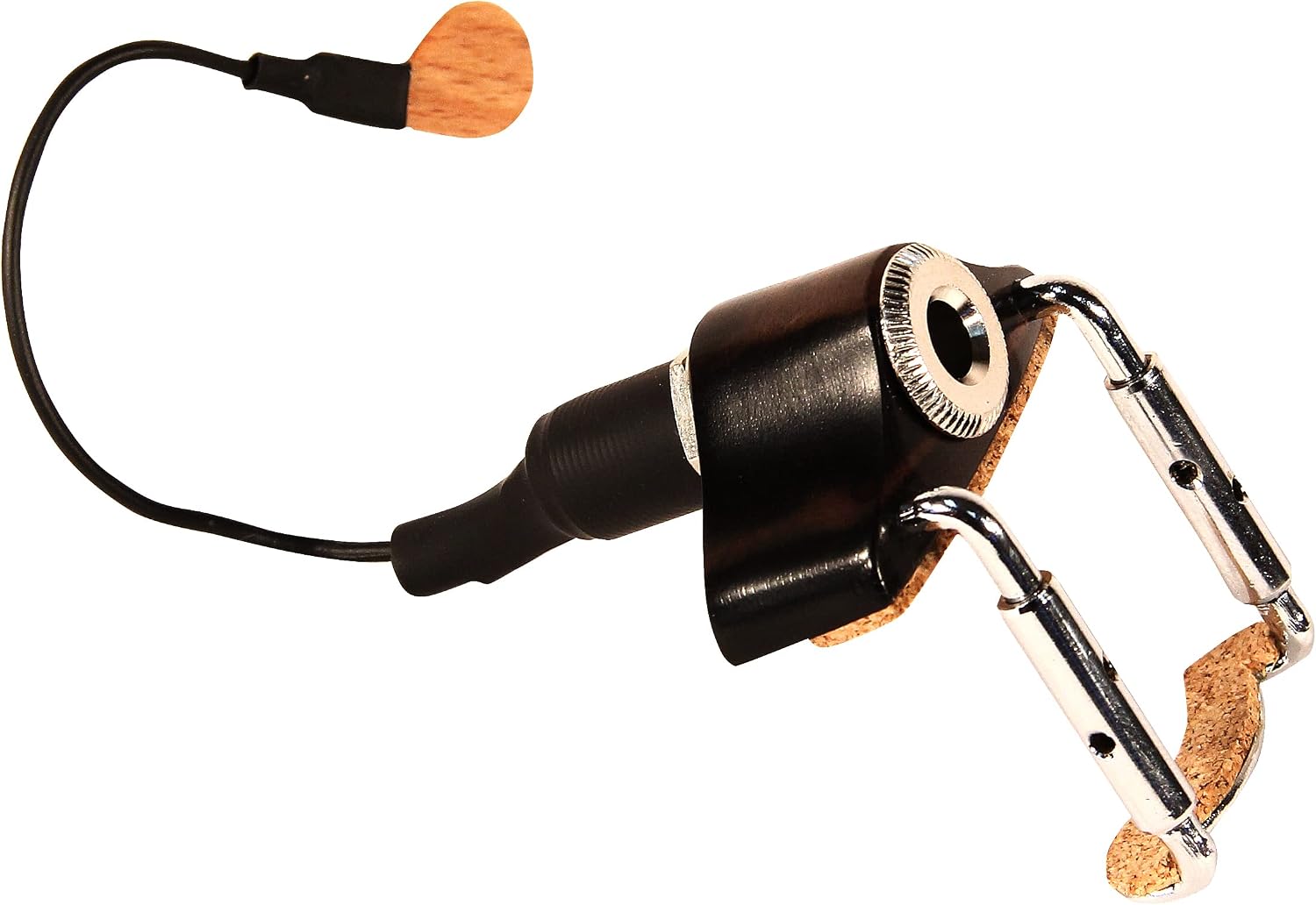
You’ve played acoustic violin for years and it sounds exactly right unplugged — warm, complex, alive. Then someone hands you a gig that requires you to plug in. Suddenly you’re staring at a wall of options, each promising it’ll “preserve your natural tone.” A pickup is a device that captures the vibration of your instrument and converts it into an electrical signal a PA system or amplifier can use. Some pickups use a piezo element — a pressure-sensitive crystal that reads vibrations through physical contact with the bridge or body. Others use a small condenser microphone mounted close to the instrument. Each approach involves a different tradeoff between tone, feedback resistance, and how much work it takes to install. This article breaks down five pickups that gigging players return to again and again — the KNA VV-3, Barcus Berry 3100 and 1320, Fishman V-200, LR Baggs, and Myers Feather — with the specific, practical information you need before you spend money and show up to a stage.
The Decision Frame: What Kind of Stage Are You Playing?
Before comparing pickups spec by spec, answer this honestly: What is your loudest, most demanding gig? Everything else flows from that answer.
Players and reviewers consistently segment these pickups into two distinct use-case camps, and the camps don’t overlap gracefully:
Camp A — Controlled stages: small venues, folk sessions, acoustic showcases, church gigs, studio work. Ambient noise is moderate, monitor levels are sane, and feedback is manageable with care.
Camp B — Loud stages: open-air festivals, high-volume folk or bluegrass bands, loud monitors, live sound engineers you’ve never met before who will push faders without warning.
This split matters because the Myers Feather — the most tonally praised pickup in this comparison — is genuinely polarizing between camps A and B. We’ll return to that in detail.
At a glance:
| Pickup | Install complexity | Luthier required? | Tier |
|---|---|---|---|
| KNA VV-3 | DIY clip-on | No | Budget–mid |
| Barcus Berry 3100 | Bridge-wing piezo | Recommended | Mid |
| Barcus Berry 1320 | Undersaddle | Yes — emphatically | Mid |
| Fishman V-200 | Bridge-wing piezo | Often yes | Mid |
| Myers Feather | Clip-on mic | No | Mid |
(Prices fluctuate; verify current market pricing before purchasing.)
Five Pickups, Head to Head
KNA VV-3: The Low-Commitment Starting Point
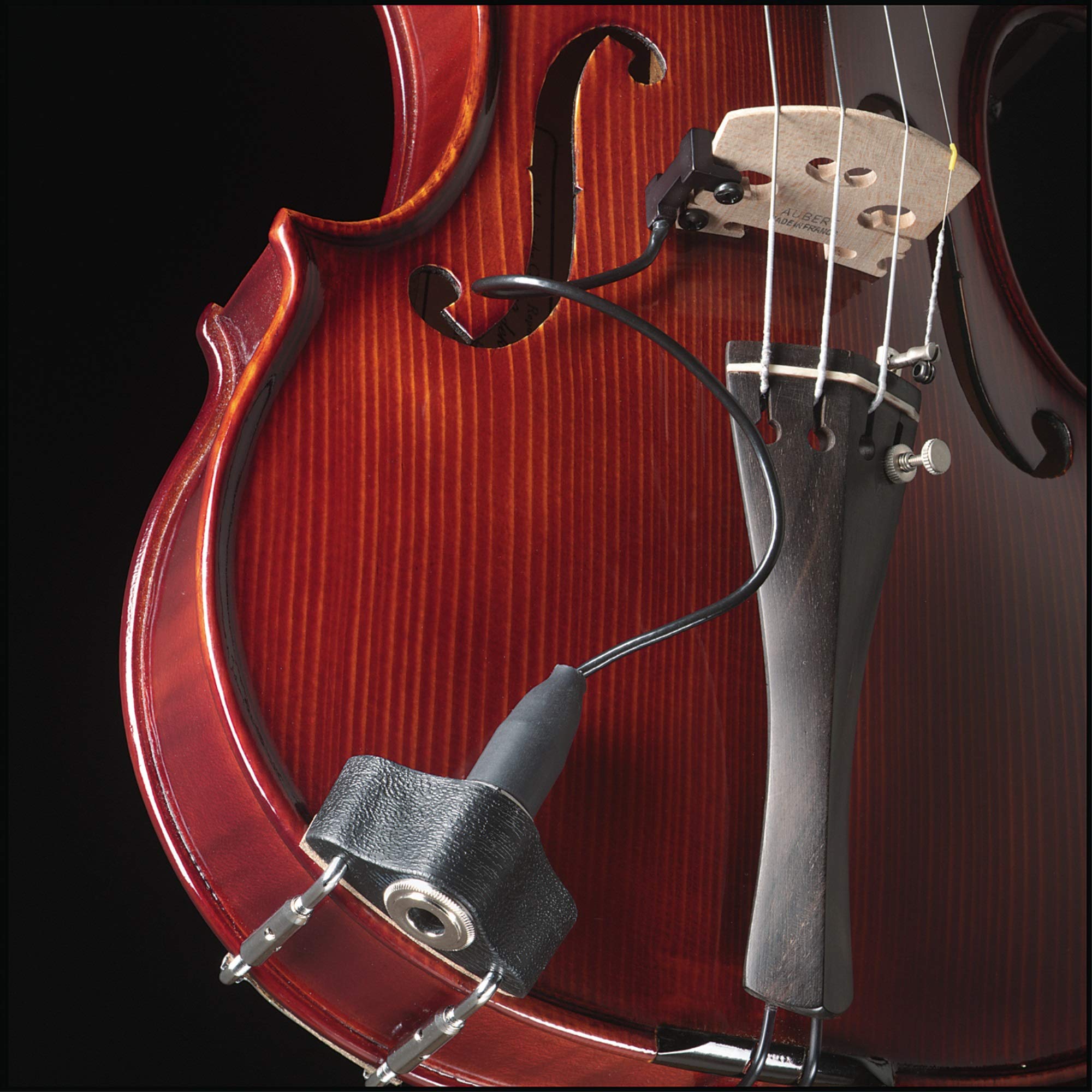
The KNA VV-3 is a bridge-wing piezo pickup — a small transducer that press-fits into one of the carved wings of your violin bridge. It reads vibrations directly from the bridge, which is the structural heart of how your instrument’s sound travels.
Players consistently prize the KNA VV-3 for one reason above everything else: non-destructive, fully reversible installation. You do not need a luthier. You do not need glue. You slide it in, clip the cable, and play. When the gig is over, it comes back out and your bridge is exactly as it was.
A practical tip circulating among players in violinist.com review threads: try mounting the VV-3 on the A/E string side of the bridge rather than the G/D side. Multiple players report this positions the element closer to the higher-frequency vibration nodes, improving high-note projection and clarity — a detail worth experimenting with before your first rehearsal.
The storage question is real: several players have asked whether it’s safe to leave the VV-3 attached when putting the violin in its case. Based on aggregated owner reports: it depends on your case. Tight-fit cases may press on the pickup during closure, risking element damage over time. Players with roomier cases report no issues leaving it installed. When in doubt, remove it — the whole value proposition of the KNA is that removal takes seconds.
Where it falls short: the KNA’s signal is relatively low-output and benefits substantially from a dedicated preamp or DI box with high-impedance input. Running it directly into a standard PA input without proper gain staging is a common mistake that results in thin, weak tone. Budget for a preamp or a quality DI if you don’t already own one. Sweetwater’s acoustic instrument amplification guides consistently identify impedance matching as the baseline requirement for any piezo pickup in a live signal chain.
Barcus
$134.87
In stock on Amazon
Check price on AmazonBarcus Berry 3100 and 1320: Two Philosophies, One Brand
Barcus Berry offers two pickups in meaningfully different philosophical directions, and conflating them is an easy mistake.
The Barcus Berry 3100 is a bridge transducer — a bridge-contact piezo design that sits externally and is recommended for players who want a meaningful tone upgrade over the KNA tier without committing to undersaddle work. Player reports documented in MusicRadar’s violin pickup coverage and in violinist.com discussion threads consistently validate this positioning: one weekly-gigging folk player cited the 3100’s balanced output and road-worthy build quality as the deciding factors over competing bridge-wing designs at a similar price point.
For Camp A players (controlled stages, moderate volumes), the 3100 is a strong choice that many players can install themselves, though professional setup is worth considering if you want the element positioned optimally.
The Barcus Berry 1320 is a different animal entirely: an undersaddle pickup, meaning it installs beneath the feet of the bridge, in direct contact with the instrument top. This placement gives it exceptional sensitivity to the instrument’s resonance and — when well-matched — a fuller, more integrated tone than surface-contact designs.
Here is the warning you need to hear clearly: do not attempt DIY installation, and do not reposition it after it is set. Professional installers with extensive experience fitting undersaddle pickups are emphatic on this point across multiple documented owner discussions: the 1320’s element is calibrated to its contact surface, and repositioning after initial installation disrupts the acoustic coupling in ways that are difficult to reverse without damaging the bridge or instrument top. This is a luthier-mandatory pickup. Budget the labor cost in from the beginning — it is not optional.
The comparison that matters: players who have benchmarked acoustic amplification solutions directly have compared the Barcus Berry 1320 against LR Baggs undersaddle options and called them essentially equal in tone quality at approximately a $50 price advantage for the Barcus Berry. If budget is a tiebreaker and your luthier is comfortable with both systems, that is a concrete data point worth factoring in.
Fishman
$178.54
In stock on Amazon
Check price on AmazonFishman V-200: The Hidden Cost Problem
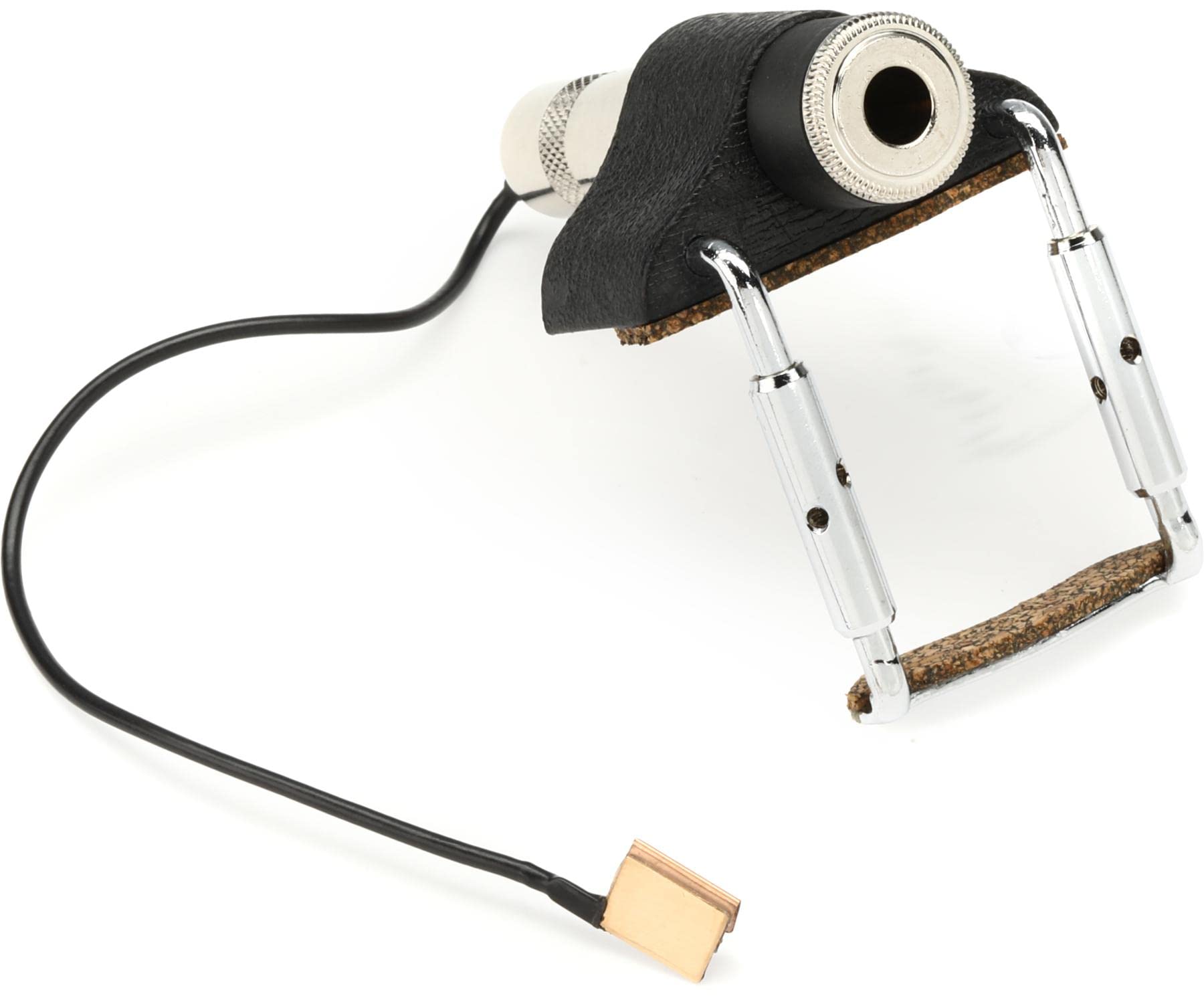
The Fishman V-200 is a well-regarded bridge-wing piezo from one of the most trusted names in acoustic instrument amplification. Strings Magazine’s coverage of acoustic instrument amplification consistently cites Fishman as a reliability benchmark for the category, and Sound On Sound’s pickup and preamp guides have referenced the brand’s engineering standards for impedance-matched piezo systems.
However, players report a hidden cost that product listings don’t advertise: the V-200’s bridge element requires a specific slot width to seat properly, and many violins — even quality mid-range instruments — have bridge slots that are too narrow from the factory. Multiple V-200 owners note that bridge slot widening by a luthier was necessary before installation could proceed. This is straightforward work for a skilled luthier, but it adds time, cost, and a shop visit that buyers do not anticipate when they purchase the pickup expecting to plug in that evening.
The practical tradeoff: If your luthier is already involved — for setup, bridge work, or otherwise — ask them to check bridge slot compatibility while they have the instrument. The V-200’s tone quality, as documented in MusicRadar’s violin pickup roundups, is praised as warm and natural for a piezo design. That result is worth the extra step if you plan the visit properly. If you need a zero-hassle install tonight, this is not your pickup.
Fishman
$178.54
In stock on Amazon
Check price on AmazonMyers Feather: The Most Polarizing Pickup in the Category
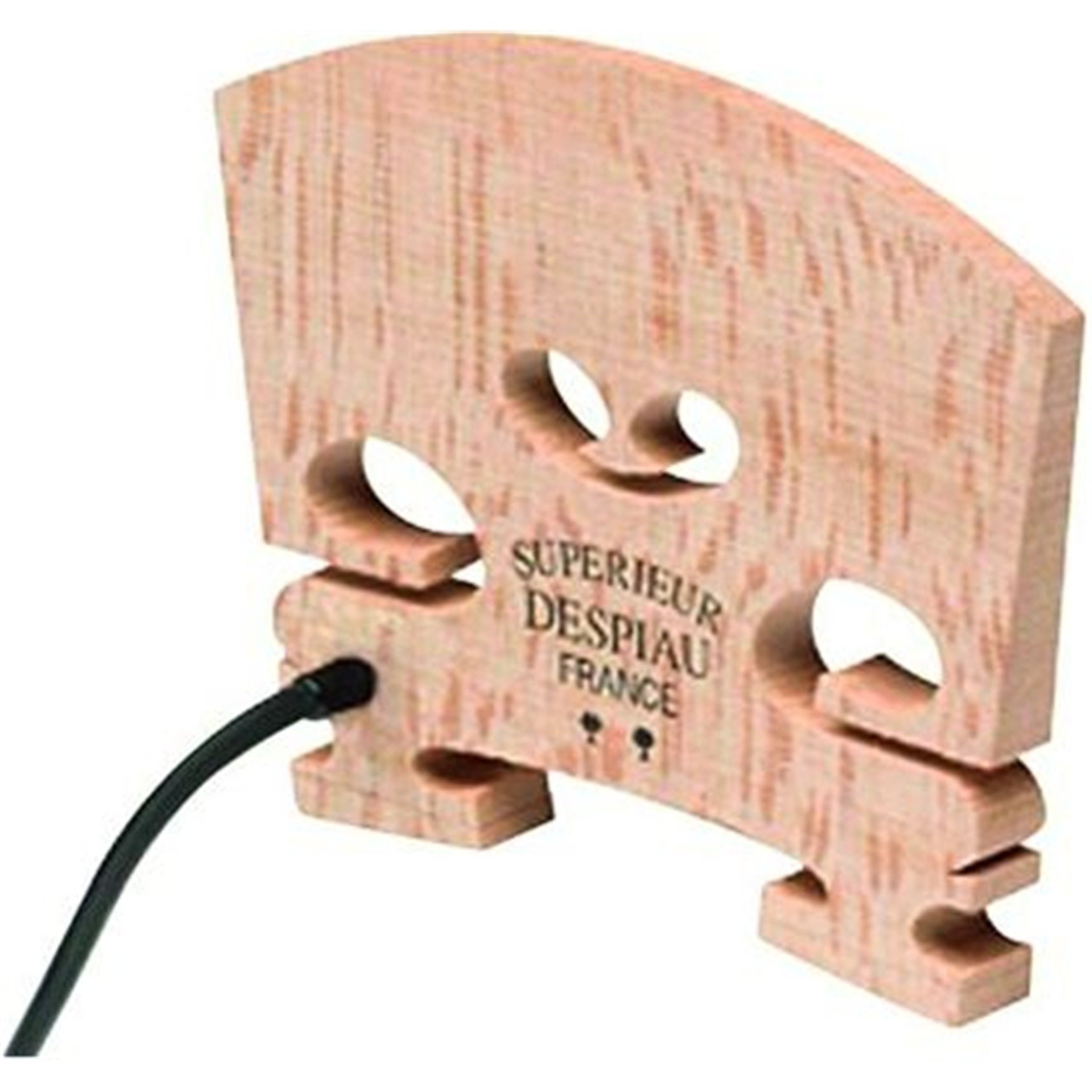
The Myers Feather is not a piezo. It is a small condenser microphone on a gooseneck mount — meaning it captures actual sound waves radiating from your instrument’s body rather than reading vibrations through contact. This is the reason classical performance students and tonally critical players consistently prefer it: a condenser mic, positioned correctly, produces a response much closer to what your instrument actually sounds like unamplified.
Player accounts document this clearly. Classical violin performance students specifically prefer the Myers Feather’s natural tone character over the “bright or brittle” quality many players associate with piezo designs. Folk fiddlers report using it across years of regular live performance — meaningful durability data for a clip-on design. Strings Magazine has noted in its amplification coverage that mic-based pickup systems represent the most tonally transparent option available to acoustic string players willing to manage the tradeoffs.
The feedback problem is real and not to be minimized. A condenser microphone, unlike a contact piezo, picks up sound from the surrounding environment as well as your instrument. On a loud stage — high monitor levels, band playing at volume, open-air festival — the Myers Feather is substantially harder to manage feedback-free than any of the bridge-contact options in this comparison. Sound On Sound’s guidance on acoustic instrument amplification consistently notes that mic-based pickups require more attentive gain staging and EQ than piezos in high-SPL environments.
The decision rule: If your primary gigs are sessions, small venues, recording, or any environment where you can ask the sound engineer to keep monitor levels reasonable, the Myers Feather’s tonal advantage may be worth managing. If your gigs regularly put you in front of loud monitors with little control over the mix, a bridge piezo is the more survivable choice.
Fishman
$229.95
In stock on Amazon
Check price on AmazonFrequently Asked Questions
Can I install the KNA VV-3 myself without a luthier, and will it damage my bridge? Yes, the KNA VV-3 is explicitly designed for self-installation with no tools, adhesives, or permanent modification. It press-fits into the bridge wing. Used and removed correctly, it does not damage the bridge. The caveat is case storage: very tight cases may put pressure on an installed pickup, so removal before storage is a safe habit.
Does the Barcus Berry 1320 undersaddle pickup require professional installation? Yes, unambiguously. Experienced professional installers strongly advise against both DIY installation and repositioning after initial fitting. The element’s acoustic coupling to the bridge depends on precise placement. Budget luthier labor from the start.
How does the Myers Feather gooseneck mic handle feedback compared to a bridge piezo on a loud stage? It does not handle it as well. A condenser microphone picks up ambient sound; a bridge-contact piezo does not. On loud stages with high monitor levels, the Myers Feather requires more careful gain management, EQ notching, and positioning discipline. Players in controlled environments report it as manageable. Players on loud stages consistently flag feedback as the primary limitation. Sound On Sound’s acoustic instrument amplification coverage addresses this tradeoff in detail.
Do I need a preamp to use the Fishman V-200 or Barcus Berry 3100 with a standard PA? A dedicated preamp or a high-impedance DI box is strongly recommended for both. Piezo pickups have high output impedance that does not match standard PA or mixer inputs well without buffering. Running directly without appropriate gain staging produces thin, weak signal. Acoustic Guitar Magazine’s working player amplification guides and Sweetwater’s acoustic instrument resources both identify impedance matching as a non-negotiable baseline for piezo instruments in live use.
Which pickup sounds closest to my unamplified acoustic violin? Based on aggregated player and reviewer reports — including coverage in Strings Magazine and MusicRadar’s violin pickup roundups — the Myers Feather condenser microphone approach produces the most tonally natural amplified sound. Among piezos, undersaddle designs such as the Barcus Berry 1320 and LR Baggs options generally receive higher marks for tonal integration than bridge-wing designs. But “closest to acoustic” always involves tradeoffs against feedback resistance and practicality.
Is it safe to leave the KNA pickup attached when storing the violin in its case? Depends on your case. Players with roomy, well-padded cases report no issues. Players with tighter-fitting cases risk pressure damage to the element over repeated open/close cycles. Removing the KNA takes seconds — when in doubt, remove it.
Your Next Step
Work backward from your loudest regular gig. Loud stage, uncertain monitor situation → start with the Barcus Berry 3100 or Fishman V-200 and budget for a luthier consultation before the first show. Controlled environments where tone is the priority → evaluate the Myers Feather seriously, and read player accounts from violinist.com threads from players in comparable settings before committing. Need zero commitment and total reversibility while you sort out the rest of your rig → the KNA VV-3 is a legitimate starting point, not a consolation prize.
The next deeper read worth your time: Strings Magazine’s amplification feature covers preamp pairing in detail — essential reading before you finalize any pickup purchase, because the pickup is only half the signal chain. Acoustic Guitar Magazine’s piezo vs. mic-based amplification guide is the companion piece if you want the full technical picture on why impedance and gain staging decisions matter as much as which transducer you mount on your bridge.