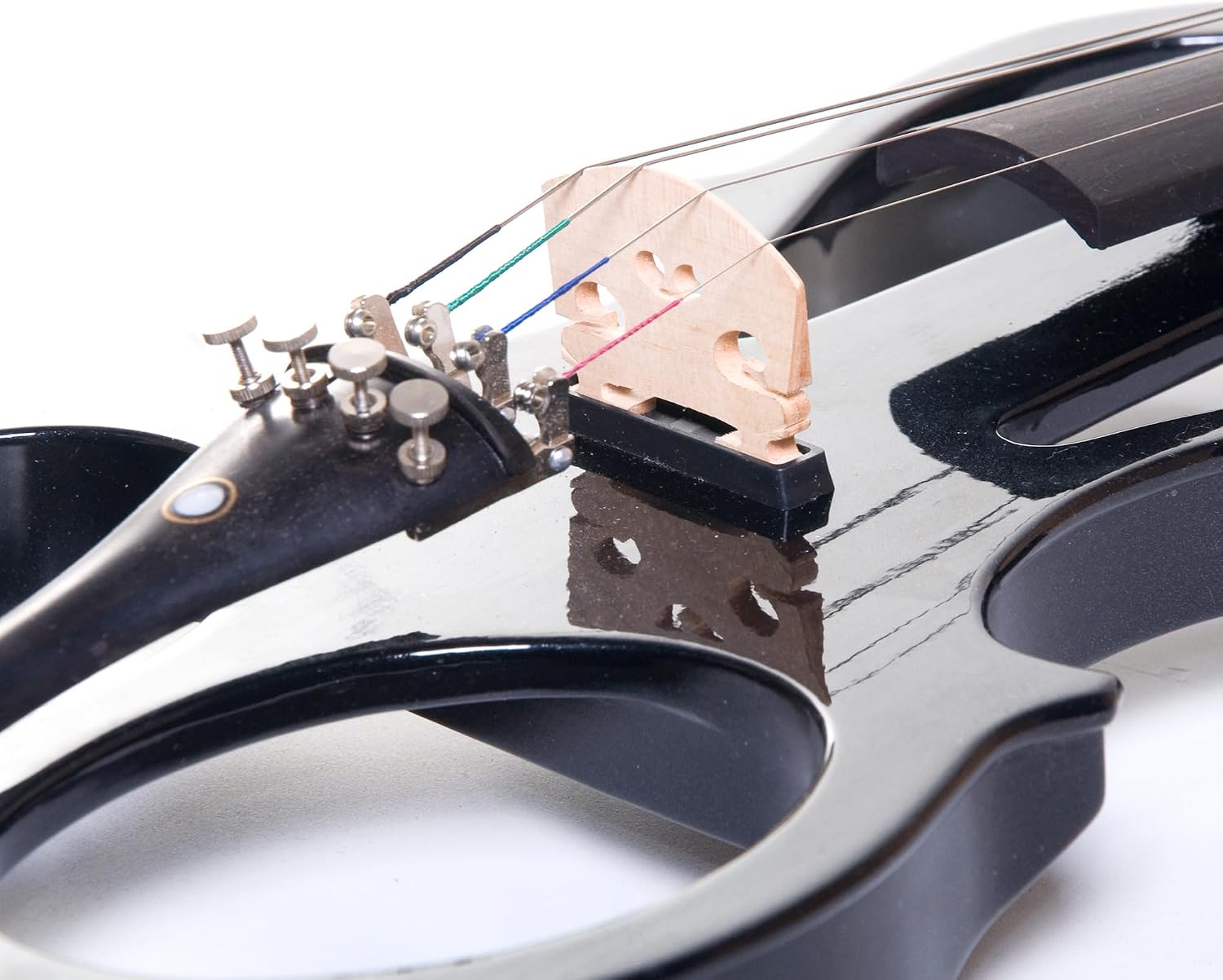
So you’ve decided to pick up the electric violin — maybe you live in a thin-walled apartment, maybe you want to experiment with effects pedals and loops, or maybe you’re returning to the instrument after years away and want something a little different. An electric violin is a violin (a bowed, stringed instrument played with a horsehair bow) designed to be amplified through a cable plugged into a speaker, a headphone amp, or a recording interface, rather than relying on a hollow wooden body for volume. Unlike an acoustic violin, it typically has a solid or semi-hollow body, which is how most buyers assume it stays quiet when unplugged. And that assumption is exactly where the trouble starts.
Before you spend a dollar — or before you decide the budget instrument you already ordered was a mistake — read this. The most consistent pattern across hundreds of owner reviews is not about tone, tuning stability, or playability. It’s about a fundamental misunderstanding of what “electric” actually means. Getting this one thing right will save you from buyer’s remorse at any price point, and it will reframe every other decision you need to make.
| EDITOR'S PICKElectric Violin Bunnel NEXT (cl… | Mid-tierElectric Violin Bunnel Edge Out… | Budget pickCecilio Electric Violin 4/4 Ful… | |
|---|---|---|---|
| Carrying case | ✓ | ✓ | — |
| Mini amp | ✓ | ✓ | — |
| Headphone jack | — | ✓ | — |
| Pickup type | Piezo ceramic | Piezo ceramic | — |
| Top wood | — | — | Solid maple |
| Fittings | — | — | Ebony |
| Price | $528.88 | $498.88 | $119.99 |
| See on Amazon → | See on Amazon → | See on Amazon → |
The Biggest Misconception: Electric Does Not Mean Silent
Let’s put this plainly because reviewer after reviewer has been burned by it: an electric violin is not a silent instrument. It is quieter than an acoustic violin — meaningfully so — but it is not silent. The strings still vibrate. The body still resonates. There is still audible acoustic sound, and at 11 p.m. in a shared apartment, that matters.
Multiple verified purchasers of the Cecilio CEVN-1, one of the most widely sold entry-level electric violins, have written explicitly that the instrument is “quieter than acoustic” but emphatically “not silent.” One reviewer described practicing while their partner slept in the next room and being surprised at how much sound carried through the wall. This isn’t a Cecilio problem specifically — it’s a physics problem. You cannot bow a string in physical contact with a wooden or composite structure and produce zero acoustic output. The electric signal you send to an amp is separate from the acoustic vibration that happens regardless.
This distinction matters enormously depending on your reason for buying:
| Goal | Electric Violin Adequate? | Notes |
|---|---|---|
| Reduce volume vs. acoustic | ✅ Yes | Typically 40–60% quieter unplugged |
| Silent late-night apartment practice | ⚠️ Partial | Still audible; use headphone amp + mute for best results |
| Full stage amplification | ✅ Yes | Core use case |
| Recording direct | ✅ Yes | Clean signal chain, no room bleed |
Sweetwater’s electric violin overview confirms this framing directly: solid-body electrics reduce acoustic output substantially compared to an acoustic instrument, but they do not eliminate it. If true silence is the goal, a practice mute on an acoustic violin or a dedicated silent-practice system may actually serve you better. Know the tradeoff before you buy.
Budget Reality: What You Actually Get at Each Tier
The $80–$150 Range: Adequate for Players Who Already Know Violin
The sub-$150 electric violin market — where instruments like the Cecilio CEVN-1 and Mendini MV300 live — is more complicated than the star ratings suggest. The instruments themselves are often adequate. The accessories that ship with them frequently are not.
Verified purchasers of the Pyle electric violin starter kit have reported a bow that “exploded” (delaminated and shed its fibers) on the very first use, alongside a factory-included cable that arrived frayed at the jack. Neither accessory survived first contact with the instrument. This isn’t universally true across every unit, but it’s common enough that you should budget for replacement accessories from the start: a decent student bow (around $30–$60 from a reputable supplier) and a standard ¼-inch instrument cable are near-mandatory expenses if you’re going this route.
The more important finding from reviews of this tier: these instruments require baseline knowledge to get running. A Vangoa electric violin purchaser who identified themselves as a complete beginner with no prior string instrument experience spent months attempting to set up and troubleshoot the instrument — and ultimately concluded it “will not work.” A different reviewer of the same instrument who had played violin for ten years, taken a five-year break, and returned to it found it “great for its price.” Same product. Completely different experience. The instrument wasn’t the variable. Prior knowledge was.
Violinist.com’s forums document this pattern repeatedly: electric violins at this tier ship with bridges and soundposts (the internal wooden dowel that transmits vibration, relevant on semi-hollow models) that need adjustment, strings that need proper seating at the nut (the small notched piece at the top of the neck), and occasionally electronics that need to be reseated inside the body cavity. None of these are dealbreakers for someone who knows what they’re doing. For a true beginner with no reference point, they can make an instrument seem unplayable when it just needs a setup.
The if/then rule for this tier: If you have prior violin experience (even if rusty), the $80–$150 electric is a reasonable low-risk experiment. If you have zero prior string instrument experience, plan to include a few lessons or an in-person setup session with a luthier or music store tech in your budget — or move up.
The $350–$600 Range: Where Intentional Research Starts Paying Off
A verified purchaser of the Bunnel Edge electric violin, who identified themselves as a conservatory-trained pianist approaching violin for the first time, conducted specific research to avoid the sub-$100 tier before selecting the Bunnel. Their review is one of the most credible mid-tier testimonials available because they came in with both high standards and realistic calibration. Their finding: the instrument performed consistently, arrived properly set up, and held up under early serious practice.
The Bridge Draco sits in a similar zone. At this price point, manufacturers are sourcing better tonewoods, installing more consistent pickups, and — critically — performing actual quality control on outgoing units. MusicRadar’s electric violin roundup notes that the mid-tier is where buyers start receiving instruments that are genuinely stage-ready without modification rather than “playable with adjustment.”
The Yamaha YEV-104 occupies the upper edge of this bracket and represents a meaningful step change. Owner reviews use language that simply doesn’t appear in budget electric reviews: instruments described as “responsive to every nuance,” producing sound “like an acoustic violin.” That language isn’t marketing copy — it’s the subjective experience of players who have spent time with the instrument. It reflects a pickup system (the mechanism that converts string vibration into an electrical signal) that captures harmonic detail rather than just fundamental pitch.
The if/then rule for this tier: If you have intermediate-level playing experience and want an instrument that performs at open mics, small gigs, or serious home recording sessions without modifications, the $350–$600 range is where your money starts doing real work.
At What Point Does Spending More Actually Change the Experience?
This is the question serious buyers are actually asking, and the honest answer is: the gap between $80 and $400 is larger than the gap between $400 and $1,200, but the gap between $400 and $1,200 is not zero.
The NS Design CR Series (roughly $1,200–$2,000) and the ZETA Jazz (starting above $2,500) are instruments designed for working professionals. What you’re paying for, as Stringsmagazine’s electric violin buyer coverage explains, is a combination of things that compound: superior pickup placement and design, ergonomic bodies engineered for performance movement, onboard EQ systems (tone-shaping controls built into the instrument itself), and long-term reliability for players logging 150+ stage hours per year. A Wood Violins Stingray or a custom luthier commission above $3,000 adds the variable of individual instrument voice — the sense that the instrument was built specifically for a player’s tonal preferences and physical build.
For an adult beginner, none of that is the immediate decision. The immediate decision is: do you already play violin, and what are you actually trying to do?
Frequently Asked Questions
Will an electric violin let me practice silently in an apartment? Not completely. As covered above, the strings and body still produce acoustic sound when bowed — typically similar to a violin played with a practice mute, but not silent. For genuine silence, you need a headphone amplifier (a small device that lets you hear yourself through headphones rather than a speaker) connected to the output jack, and even then, your neighbors may hear faint acoustic vibration. It reduces volume meaningfully; it does not eliminate it.
Why is my new electric violin hard to keep in tune? At the budget tier, this almost always traces to one of three things: strings that haven’t finished stretching in (new strings need 24–48 hours of regular playing before they stabilize), a nut that has poorly cut slots causing strings to catch and release unevenly, or tuning pegs that slip. The first problem resolves itself. The second and third typically require a setup from a luthier or experienced tech. Fine tuners (the small screw adjusters on the tailpiece) can compensate for minor drift during play — most electric violins ship with them already installed.
Do I need any experience to set up a budget electric violin out of the box? Honestly: some, yes. Budget electrics frequently require bridge adjustment, string reseating, and occasionally electronics troubleshooting. If you have zero prior experience with string instruments, plan to either purchase from a retailer that performs a setup before shipping, or budget $40–$80 for a local music store setup visit. This is not optional if you want to learn on a functional instrument from day one.
Is it worth buying a cheap electric first to see if I like violin, or should I spend more from the start? If you have zero prior violin experience, the argument for starting cheap is weaker than it looks, because a poorly set-up cheap instrument can actively teach you bad technique or convince you the instrument is broken when it isn’t. If you have some prior experience and just want to experiment with the electric format, the budget tier is a reasonable low-commitment entry. The Bunnel Edge represents a meaningful step up for adults who want a reliable experience without committing to the mid-tier price.
What should I do if the bow or cable that came with my electric violin is broken or defective? Replace them, and don’t consider this unusual. Factory-included accessories at the budget tier are widely reported to fail, sometimes before the instrument is played. A replacement student fiberglass bow and a standard instrument cable are inexpensive and widely available from music retailers. Do not attempt to play through a frayed cable — it can damage your amplifier’s input jack and produces unreliable signal.
At what point does spending more on an electric violin actually make a meaningful difference? The first meaningful difference arrives around $350–$400, where quality control improves and instruments typically arrive playable without modification. The second meaningful difference arrives at the Yamaha YEV-104 level (~$500), where the pickup system begins capturing nuance rather than just signal. Beyond $1,200, you’re buying professional-grade reliability, ergonomics, and tonal refinement — genuinely worthwhile for working performers, but not a priority for someone still building foundational technique.
Your Next Step
The single most useful thing you can do before buying is match your actual situation to the right tier honestly. If you already play violin and want a low-cost electric to experiment with: the Cecilio CEVN-1 is a reasonable starting point, with the explicit expectation that the accessories may need replacement. If you’re a serious beginner or returning player who wants something that will hold up: start your research at the Bunnel Edge. If you’ve confirmed violin is your instrument and you’re ready to invest in something stage-ready: the Yamaha YEV-104 is the benchmark against which everything else in its price range is measured.
Browse the instrument that matches your tier, read the owner reviews with the context this article provides, and if you’re still uncertain — a single lesson from a local violin teacher who works with electric instruments is worth more than another hour of spec comparison. They’ll tell you in five minutes whether your setup is the problem or your instrument is.