If you’ve ever unboxed a new electric violin — a dedicated instrument built to plug into an amplifier or PA system, rather than a traditional acoustic instrument played in a concert hall — the strings that came on it were probably D’Addario NS310s. Electric violin strings (the physical vibrating wires or synthetic cores that produce the signal your pickup captures) are not interchangeable with standard acoustic violin strings. They’re engineered specifically for the way electric instruments work: lower tension profiles, tighter windings, and output characteristics tuned to work with piezo transducers (sensors that convert vibration into electrical signal) or magnetic pickups. Getting strings wrong means a weak signal, a tone that fights your amp, or intonation (the accuracy of each note’s pitch) that never quite settles. This guide explains why the NS310 became the industry default, when the math says you should stay with it, and the specific scenarios where switching to something else is the right call.
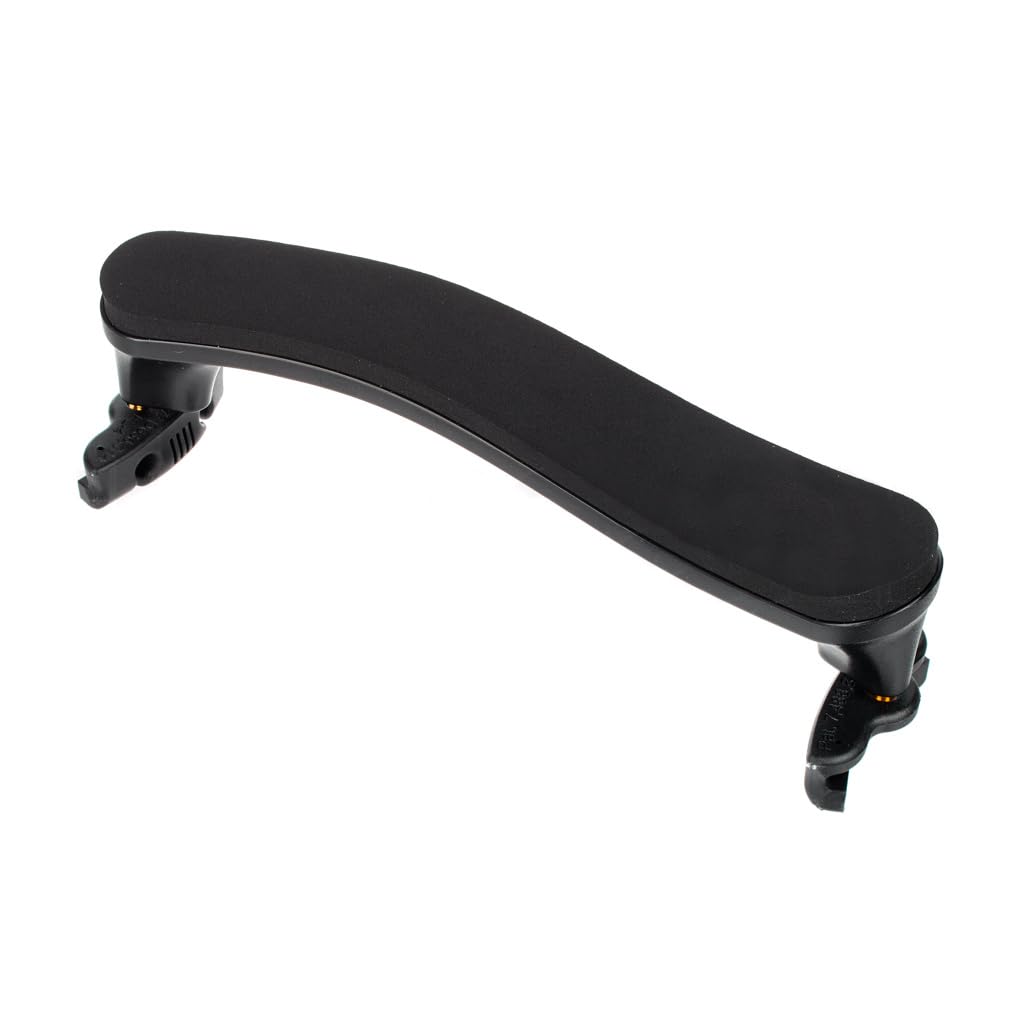
| EDITOR'S PICKFender FCT-2 Professional Multi… | Mid-tierEVEREST Violin Shoulder Pad 1/4… | Budget pick8 Pieces Violin Strings Univers… | |
|---|---|---|---|
| For instrument | Guitar, bass, uke | Violin | Violin |
| Violin size | — | 1/4–1/10 | 4/4–1/4 |
| Piece count | — | — | 8 |
| String set | — | — | G-D-A-E |
| Core material | — | — | Steel |
| Tuner type | Clip-on | — | — |
| Price | $23.99 | $13.99 | |
| See on Amazon → | See on Amazon → | See on Amazon → |
Why D’Addario NS310s Became the Default
The short version: D’Addario designed the NS310 in direct collaboration with Ned Steinberger, the inventor of the NS Design line of electric violins (and basses, and cellos). That partnership matters because Steinberger’s instruments use a specific bridge-and-pickup architecture that shaped what the NS310 needed to do. When NS Design became one of the dominant platforms in professional electric violin — the CR Series sits in the $1,200–$2,000 range and is reviewed approvingly by working touring musicians across aggregated forum discussions on violinist.com — the strings that shipped with it became the reference point everyone else measured against.
D’Addario’s own product documentation describes the NS310 as a “solid steel core” string with a specific winding tension engineered to maximize signal transfer to piezo pickups. That’s the key technical claim. Piezo pickups work by converting mechanical pressure and vibration into voltage — they are extremely sensitive to the amount of vibration energy the string transmits through the bridge. A string wound too loosely, or built with too much synthetic damping (as many acoustic strings are, to produce a warm, complex tone), reduces the signal the pickup captures. The result is a thin, uneven output that’s harder to EQ and amplify cleanly.
Strings Magazine’s 2024 coverage of amplified string instruments notes that the NS310’s steel core produces a more consistent vibration envelope than gut-core or Perlon (synthetic gut) acoustic strings, which translates to a more predictable and punchier signal at the output stage. For players using a direct line into a PA or running into effects chains (loop pedals, reverb, harmonizers), predictable output is not a small thing — it’s what keeps your tone consistent from room to room.
The additional reason the NS310 became a default: availability and price. As of mid-2026, a set runs approximately $18–$22 depending on retailer, which is meaningfully cheaper than most professional acoustic violin strings. For a gigging musician replacing strings every few months, that’s a real-dollar difference across a year.
The Numbers: NS310 vs. the Field
| String | Core | Approx. Set Price (2026) | Intended Pickup Type | Gauge Category |
|---|---|---|---|---|
| D’Addario NS310 | Solid steel | ~$20 | Piezo (primary) | Medium |
| Kaplan NS Electric | Steel | ~$24 | Piezo / magnetic | Medium |
| Thomastik Vision Electric | Synthetic/steel | ~$32 | Piezo | Light-medium |
| Supersensitive Red Label (electric) | Steel | ~$14 | Piezo | Heavy |
By the numbers: The NS310 sits in the middle of the price band, is the only set co-developed with a major electric violin manufacturer, and occupies the medium-gauge position that works across the widest range of piezo pickup designs. The Supersensitive Red Label is cheaper but runs heavier, which affects feel and intonation stretch. The Thomastik Vision Electric costs roughly 60% more per set.
When to Stay With the NS310
If your instrument is in the NS Design, ZETA, or Wood Violins family — or any instrument with a bridge-mounted piezo designed for medium steel-core strings — the default answer is: keep using the NS310 until you have a specific reason to deviate. The tradeoff calculus favors the default for several reasons.
You’re running clean into a PA. Players doing Celtic session work, bluegrass shows, or straight amplification with minimal processing report in aggregated Reverb reviews that the NS310 delivers a full, balanced signal with no dark frequency gaps. The Strad’s coverage of amplified strings highlights that piezo-based systems are notoriously sensitive to string choice at low-to-mid gain settings — the NS310’s consistency matters most here.
You’re early in dialing in your rig. If you’re still calibrating your preamp gain (the amplification stage before signal reaches your main amp or PA), EQ settings, or effects chain, changing strings introduces another variable. Sweetwater’s electric violin buying guide specifically recommends locking in strings before adjusting signal chain settings; treating them as a fixed baseline makes the rest of your setup decisions cleaner.
You change strings frequently. The cost differential is real. A player going through four sets per year saves $40–$50 annually staying with NS310s over Thomastik Visions. That’s not life-changing, but across a full touring musician’s gear budget it’s worth naming.
Your instrument has a floating magnetic pickup. If you’ve added an aftermarket magnetic pickup (like a Barbera or HighEnd Strings system) alongside your piezo, the NS310’s steel core registers cleanly on both. A Perlon or gut-core acoustic string would read poorly on a magnetic pickup — the core has to be ferromagnetic (magnetically responsive) for the pickup to work at all. NS310s pass that test by default.
When to Deviate: Four Specific Scenarios
1. You Need Acoustic-Adjacent Tone for Recording
Sound On Sound’s 2023 examination of electric violin in the studio makes a point that many players discover the hard way: steel-core electric strings produce a tonally narrow signal that’s efficient for live amplification but can sound sterile in a mix. Session players and crossover artists tracking parts in a studio environment — where the track may sit alongside acoustic instruments or orchestral samples — often find the NS310’s clean transient too bright and “electric” for the blend they need.
In this scenario, the Thomastik Vision Electric is the documented go-to. Owners who track both live and studio work consistently describe it as producing a warmer, more complex harmonic envelope while still being designed for piezo output. The tradeoff: it runs about $12–$14 more per set and reportedly takes slightly longer to settle in pitch stability (a characteristic of lighter synthetic cores noted in multiple player discussions catalogued at violinist.com).
If X, then Y: If you’re regularly recording acoustic-blend parts and budget per-set isn’t a constraint, try one set of Thomastik Vision Electric for your next session. Compare the recorded signal, not the live sound.
2. You’re Playing in Cold or Humid Outdoor Environments
Steel-core strings respond more aggressively to temperature and humidity changes than acoustic strings because there’s no synthetic core material to buffer the metal’s thermal expansion. Players doing outdoor festivals, Renaissance faires, or Celtic folk events in variable weather report tuning instability as the primary complaint against NS310s in extended outdoor use — this pattern shows up consistently in forum aggregations and Reverb seller notes.
The Kaplan NS Electric string, also a D’Addario product, uses a slightly different winding construction that players report holds tuning better in variable temperature environments. The premium over the NS310 is modest (roughly $4–$5 per set) and the pickup compatibility is the same. For outdoor performers, this is a low-risk upgrade worth testing.
If X, then Y: If you play three or more outdoor gigs per season and spend more than 15 minutes re-tuning between sets, run one set of Kaplan NS Electrics through your next outdoor run and track whether tuning calls drop.
3. You Play a Hybrid Acoustic-Electric Instrument
Players on instruments like the Yamaha YEV-104 — which has a semi-hollow resonating body and is designed to be played acoustically during practice and amplified for performance — face a genuine string-selection dilemma. The NS310’s steel core sounds acceptable amplified but produces a thin, metallic tone in acoustic practice mode. For a player using the YEV-104 partly as a silent-practice instrument and partly as a stage instrument, that acoustic tonal quality matters.
Strings Magazine’s 2024 coverage of hybrid electric instruments suggests that Thomastik Dominant strings (designed for acoustic use) are a sometimes-used workaround on hybrid instruments, with the caveat that output to the piezo pickup is measurably lower than with purpose-designed electric strings. The Strad’s pickup system analysis confirms that piezo efficiency drops with softer-core strings — players going this route typically need to raise their preamp gain, which can introduce noise floor issues depending on the preamp’s quality.
If X, then Y: If your instrument is a hybrid acoustic-electric and you practice acoustically at least 50% of the time, the acoustic tonal experience may justify using Thomastik Dominants — but budget for a preamp gain adjustment and noise check before your next gig.
4. You’ve Upgraded to a Custom or High-End Luthier Instrument
Custom electric violin commissions above $3,000 — instruments from boutique builders with custom bridge geometries and proprietary pickup configurations — frequently come with specific string recommendations from the builder. In these cases, the NS310 default may not apply at all. Luthier-built instruments often use non-standard bridge heights, saddle radii, or pickup positioning that was voiced for a particular string brand during the build and setup process.
Before defaulting to NS310s on a custom instrument, ask the builder directly which string they set the instrument up with and what gauge they used. Installing a heavier or lighter string than the setup was optimized for can pull the bridge, affect neck relief (the slight curvature of the neck that determines playability), and shift the intonation at the nut. This is not a small thing on a $3,000+ instrument.
The Decision Rule in Plain Language
The NS310 earns its default status. For the majority of electric violin players — running piezo pickups, playing live, and working within established instrument platforms — it is the lowest-friction, highest-reliability string choice available at a fair price. Deviating from it requires a specific, nameable reason: a studio recording environment, outdoor humidity exposure, a hybrid instrument you practice acoustically, or a custom build with explicit setup requirements.
If none of those four scenarios describe your current situation, stay with the NS310 and spend your optimization energy on the rest of your signal chain — preamp gain, EQ, and how your instrument interfaces with your PA. That’s where most players find the real gains.
Your next step: If you’re evaluating a new instrument and want to understand how string choice intersects with pickup system design, the deeper guide on piezo vs. magnetic pickup systems for electric violin is worth reading next. It covers the full signal chain from string vibration to amp output — which is ultimately the context that makes string selection make sense.