Bunnel Edge vs. Bunnel NEXT vs. Cecilio vs. Kinglos: Mid-Budget Electric Violins Honestly Compared
Maybe you’re returning to the violin after a long break and you don’t want to disturb the household at 10 p.m. Maybe you’re a working musician who wants a gigging backup that won’t break your heart if it gets knocked over. Or maybe you’ve read enough reviews to know the Cecilio tier exists and you’re wondering whether spending a little more actually buys you something real. An electric violin — an instrument that produces its amplified sound from a pickup (a small sensor that converts string vibration to an electrical signal) rather than from a hollow wooden body — is the answer to all three of those situations. It’s quieter unplugged than an acoustic, it can plug directly into an amp or headphones, and the best ones in the $100–$400 range punch far above their price in reliability.
This article puts four of the most-discussed instruments at that price point side by side: the Bunnel Edge, the Bunnel NEXT, the Cecilio CEVN-1, and the Kinglos. The comparison draws on aggregated owner reviews, manufacturer documentation from Kennedy Violins, and editorial analysis from Strings Magazine’s electric violin coverage (stringsmagazine.com), MusicRadar’s buyer guides (musicradar.com), community threads on Violinist.com, and Sweetwater’s product documentation (sweetwater.com). The goal is a clear decision framework: if your situation is X, here’s why you should pick Y.
| EDITOR'S PICKElectric Violin Bunnel NEXT (cl… | Mid-tierKinglos 4/4 White Blue Flowers… | Budget pickCecilio Electric Violin 4/4 Ful… | |
|---|---|---|---|
| Pickup | Piezo ceramic | — | — |
| Case included | ✓ | — | — |
| Amp included | ✓ | — | — |
| Headphones | ✓ | — | — |
| Fittings | — | Ebony | Ebony |
| Body material | — | Solid wood | Solid maple |
| Price | $528.88 | $227.99 | $119.99 |
| See on Amazon → | See on Amazon → | See on Amazon → |
The Four Instruments at a Glance
Before diving into tradeoffs, it helps to know where each instrument sits in the market and what it’s designed to do.
Approximate 2026 street pricing:
| Instrument | Street Price | Amp Included | Headphone Output |
|---|---|---|---|
| Cecilio CEVN-1 | ~$80–$100 | No | Yes (aux out) |
| Kinglos (standard 4-string) | ~$150–$220 | No | Yes |
| Bunnel NEXT | ~$200–$250 | No | Yes |
| Bunnel Edge | ~$350–$400 | Yes (mini amp) | Yes |
The Cecilio CEVN-1 is the entry point — a full outfit at a price that makes it the default “first electric violin” recommendation. Kennedy Violins’ Bunnel Edge and NEXT occupy the upper end of this tier, backed by a US-based company with a phone support line and a return policy that actual humans answer. Kinglos comes in below the Bunnels in price but above the Cecilio, and it competes more on aesthetics than on technical pedigree.
Instrument-by-Instrument Breakdown
Cecilio CEVN-1: Honest About What It Is
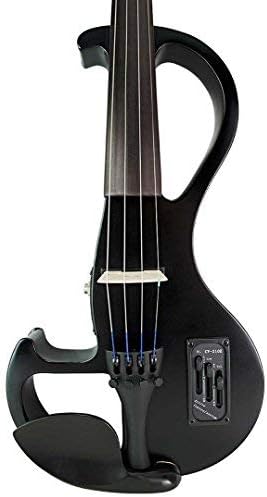
The Cecilio CEVN-1 is not trying to compete with the Bunnels on build quality, and it doesn’t pretend to. At roughly $80–$100, it’s the instrument you buy when budget is the binding constraint. What owners and reviewers consistently report is this: it works. The pickup produces a usable signal, the instrument holds tune, and for the purpose of learning fingering and practicing scales without an acoustic instrument’s volume, it gets the job done.
The honest version of that story, however, includes the problems. Reviewers — including community discussion threads archived on Violinist.com and editorial coverage in MusicRadar’s electric violin roundups — consistently flag finish inconsistencies: scroll lacquer that looks rushed, fingerboard seam cracks on some units, and cosmetic quality that varies noticeably between instruments in the same production run. These are cosmetic issues, not functional ones, but they signal a manufacturing process with loose tolerances.
A telling pattern emerges in buyer research: many players who set out to buy a Cecilio read enough reviews to skip that tier entirely and spend $150 more on the Bunnel NEXT. That decision path is common enough to name explicitly, and it’s worth knowing before you commit.
The decision rule: Buy the Cecilio if your budget is genuinely under $150 and you understand you’re buying a functional practice tool, not a gigging instrument. If you can stretch to $200, the Bunnel NEXT is a meaningfully better instrument.
Cecilio
$119.99
In stock on Amazon
Check price on AmazonKinglos: Built to Be Looked At — and Played
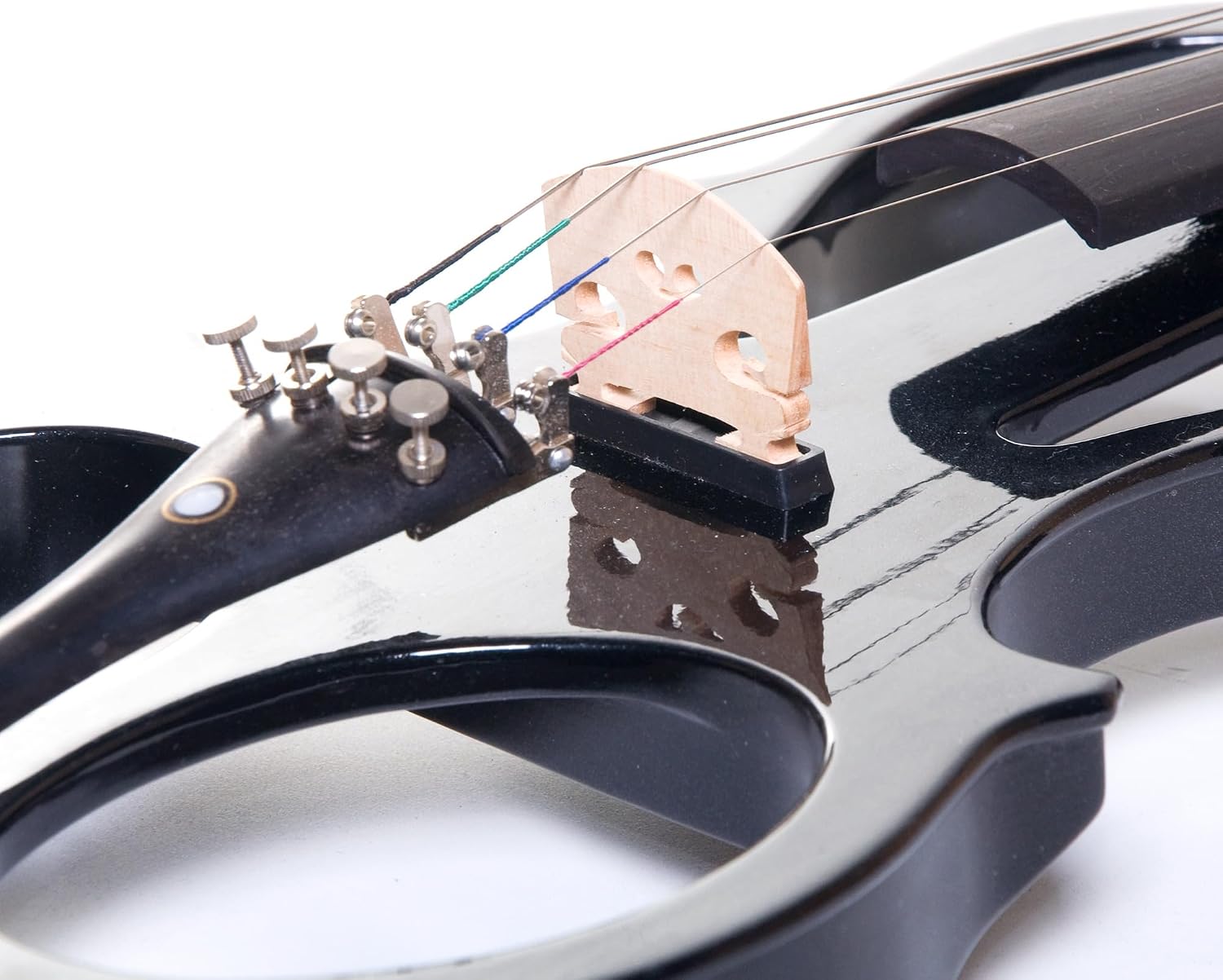
The Kinglos occupies an interesting position. Owners who review it tend to separate it into two instruments: the violin itself, and everything that comes in the case with it. The violin body — typically a carved or solid-colored acrylic or wood body with distinctive aesthetic designs — draws consistent praise. Owners note that the pegs feel solid, the body is well-constructed, and the instrument looks genuinely striking. One traveling musician specifically cited the Kinglos as an instrument worth displaying, not just playing — a real differentiator at this price point if aesthetics matter to you.
The bow and strings that come in the box are a different story. Across aggregated owner reviews, the pattern is near-universal: replace the bow and strings immediately. The bundled bow is described as playable but coarse, and the factory strings produce a tone that owners consistently call thin or scratchy until replaced. Sweetwater’s electric violin buying guide (sweetwater.com) and MusicRadar’s electric violin roundups (musicradar.com) both note that factory string and bow quality is a common weak point across this price tier, but Kinglos owners flag it more consistently than Bunnel owners do. Budget an additional $30–$60 for a decent beginner bow and a set of strings — D’Addario Prelude or Thomastik Alphayue are frequently recommended starting points in Violinist.com community threads.
The Kinglos does not have an onboard headphone preamp the way the Bunnel Edge does — you’ll need a headphone amplifier or audio interface to practice silently. That’s not unusual at this price, but it’s worth knowing before you buy.
The decision rule: Choose the Kinglos if instrument aesthetics genuinely matter to your purchase — for display, for stage presence, or because you’ll practice more if you love looking at the thing. Budget for immediate string and bow replacement. If you need silent headphone practice out of the box, look at the Bunnel Edge instead.
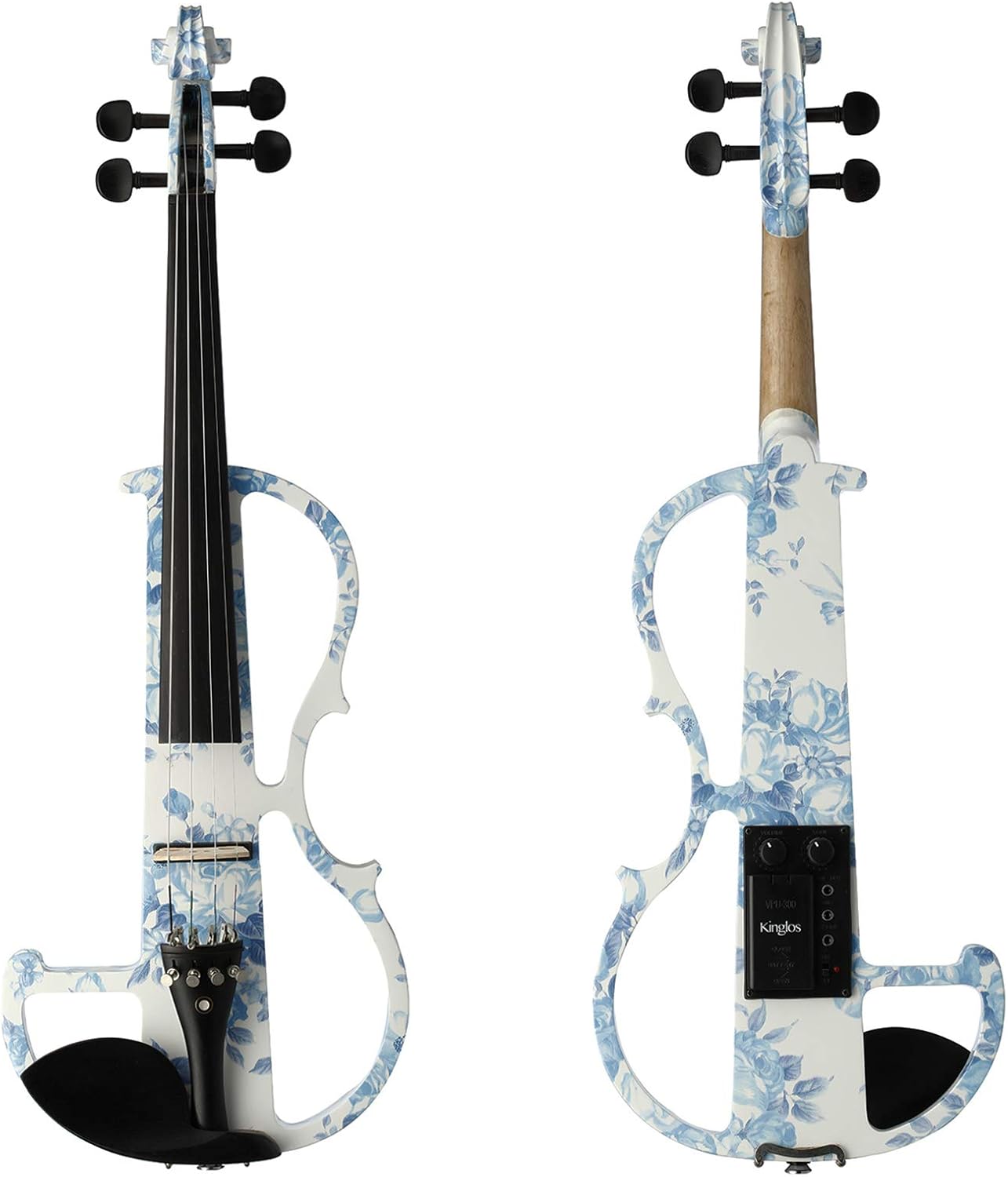
Kinglos DSG1201
$227.99
In stock on Amazon
Check price on AmazonBunnel NEXT and Bunnel Edge: What the Upgrade Actually Buys You
These two instruments come from the same manufacturer — Kennedy Violins, based in the United States — and that shared origin matters. Kennedy Violins’ product documentation describes the NEXT as their entry-level professional silent practice instrument and the Edge as a step up that adds an onboard preamp, a built-in headphone amplifier with volume control, and a bundled mini amp. The NEXT gives you a piezo pickup (a crystal sensor embedded under the bridge that reads vibration) routed to an output jack; you supply the amp or headphone adapter. The Edge handles that signal processing internally so you can plug headphones straight in without a separate amplifier.
Across aggregated reviews on Violinist.com community threads and Kennedy Violins’ own product feedback, a consistent pattern emerges: the Edge draws more experienced players. A 30-year semi-professional violinist and paid gigging musician who reviewed the Edge specifically chose it for quiet practice — not because it was the cheapest option, but because the onboard headphone amp removes a piece of gear from the chain. For someone returning to violin after years away, that matters: fewer cables, fewer boxes, fewer reasons to give up and put the instrument back in the case.
The NEXT is the better buy if you already own an interface, an amp, or a headphone amplifier — if you’re building a practice rig around existing gear, you’re not paying for circuitry you already have. The Edge is the better buy if you want a complete, plug-and-play system that works tonight.
One underreported angle from owner reviews: the electric violin body, with its lighter weight and lower string tension, can be physically easier to play for people with hand or joint pain. One buyer reviewing the Edge noted that their spouse, who has arthritis, found the electric violin easier to press than their acoustic — a real consideration for returning players whose hands have changed over the years. The lower string height (called “action”) typical of well-set-up electric violins reduces the force required to press strings to the fingerboard. Strings Magazine’s electric violin coverage (stringsmagazine.com) has noted this accessibility angle as an underappreciated benefit of the solid-body electric format.
The decision rule: If you want a complete system with no additional purchases, choose the Edge. If you have existing audio gear and want to spend less, choose the NEXT.
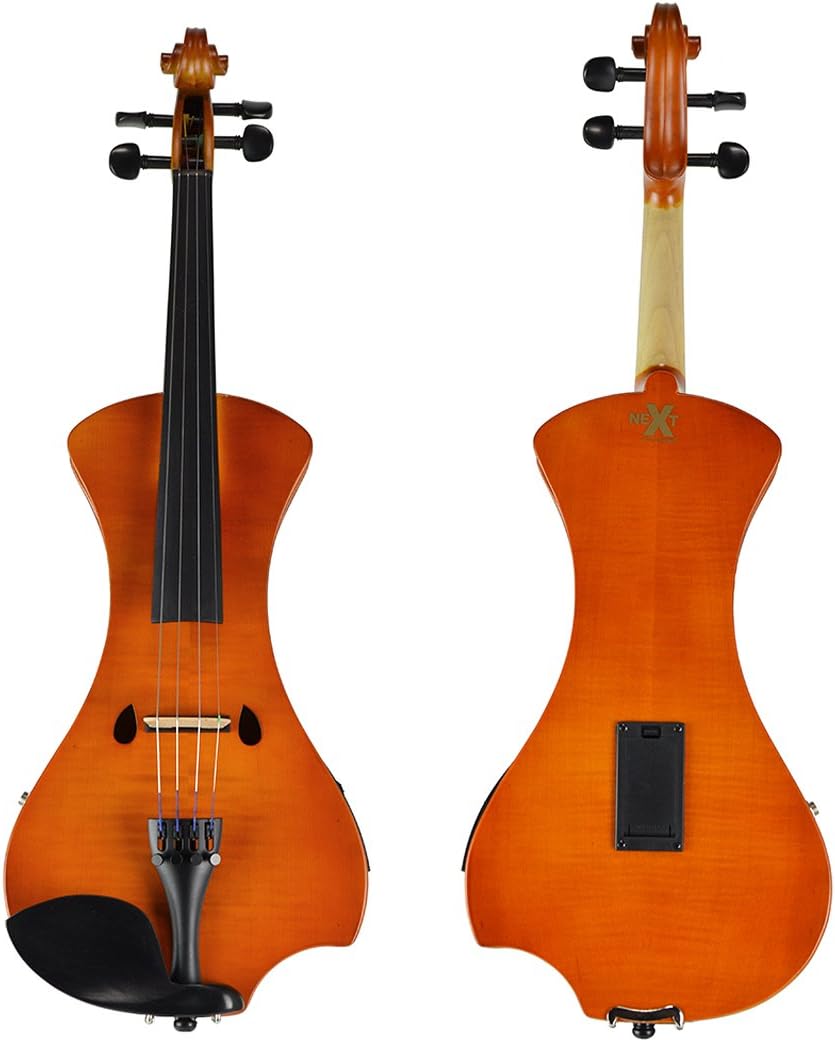
Electric HONEY
$528.88
In stock on Amazon
Check price on AmazonSide-by-Side Summary
| Feature | Cecilio CEVN-1 | Kinglos | Bunnel NEXT | Bunnel Edge |
|---|---|---|---|---|
| Street price | ~$80–$100 | ~$150–$220 | ~$200–$250 | ~$350–$400 |
| Onboard headphone amp | No | No | No | Yes |
| Bundled amp | No | No | No | Yes (mini amp) |
| Build consistency | Variable | Good body, weak accessories | Consistent | Consistent |
| Immediate extras needed | None critical | Bow + strings | Headphone amp or interface | None |
| Best for | Absolute budget constraint | Aesthetics + solid build | Players with existing gear | Complete plug-and-play system |
Frequently Asked Questions
Is the mini amp included with the Bunnel Edge loud enough to use without headphones in a small room?
The bundled mini amp is designed for personal monitoring — think bedroom or studio apartment scale. Kennedy Violins’ product documentation describes it as a practice amp, not a performance amp. Owners report it’s audible in a small room without headphones, but it won’t fill a living room or project over other instruments. For anything beyond personal practice, you’d want a dedicated instrument amp or a PA system.
How quiet is an electric violin with headphones plugged in — can someone in the next room hear it over a TV?
Electric violins are not fully silent — the strings and bow still produce acoustic sound, often compared to a quiet conversation or a ticking clock. With headphones plugged into the Bunnel Edge, the violin itself is quiet enough that someone in the next room watching television at normal volume would not hear it clearly. Strings Magazine’s electric violin coverage (stringsmagazine.com) describes this as “practice silent” rather than “recording silent.” It’s real quiet practice, not absolute silence.
Are the bundled headphones usable, or should you replace them right away?
The Bunnel Edge ships with basic headphones. Owner reviews describe them as adequate for getting started — you’ll hear yourself, you’ll hear pitch, you’ll practice. They’re not high-fidelity monitoring headphones. If you already own a better pair, plug those in. If you don’t, the bundled ones will get you through the first few months without an immediate additional expense.
Does the Kinglos need a string and bow upgrade out of the box?
Based on aggregated owner reviews and buying guidance from Sweetwater’s electric violin documentation (sweetwater.com), yes — almost universally. The strings and bow that ship with most Kinglos instruments are functional but noticeably below the quality of the instrument body itself. Plan to replace both before drawing serious conclusions about the violin’s tone. The instrument body consistently earns praise; the bundled accessories are where corners were cut.
Is the Bunnel Edge suitable for someone returning to violin after years away, or is it only for complete beginners?
It’s well-suited for returning players. The semi-professional violinist who reviewed it was a gigging player choosing it specifically for quiet practice — not a beginner. Kennedy Violins’ product documentation and Violinist.com community discussion both position the Edge as appropriate for players with existing technique who want a silent practice instrument, not as a training-wheels option.
Can someone with hand pain or arthritis play an electric violin more comfortably than an acoustic?
Owner reviews suggest this can be true, and it’s worth exploring. The lower string tension and lighter body weight of many electric violins reduces the physical effort required. One owner specifically reported that their spouse, who has arthritis, found the electric violin easier to press than their acoustic. This is not a medical claim — individual results depend on the specific condition and instrument setup — but it’s a real pattern in owner feedback that’s worth a conversation with a teacher or luthier if this applies to your situation.
Your Next Step
If you’re still deciding between these four instruments, the clearest next step is to identify which constraint is actually binding for you: budget, silent practice capability, or aesthetics. If it’s budget, the Cecilio is honest about what it is. If it’s silent practice with no extra gear required, the Bunnel Edge gives you the most complete system. If it’s aesthetics combined with solid build quality, the Kinglos rewards immediate string and bow upgrades. And if you have existing audio gear, the Bunnel NEXT is the workhorse that doesn’t make you pay for what you already own.
Once you’ve landed on your instrument, read through our deeper guide to piezo pickups and onboard preamps — understanding how your signal chain works will help you get a better sound on day one, regardless of which instrument you choose.