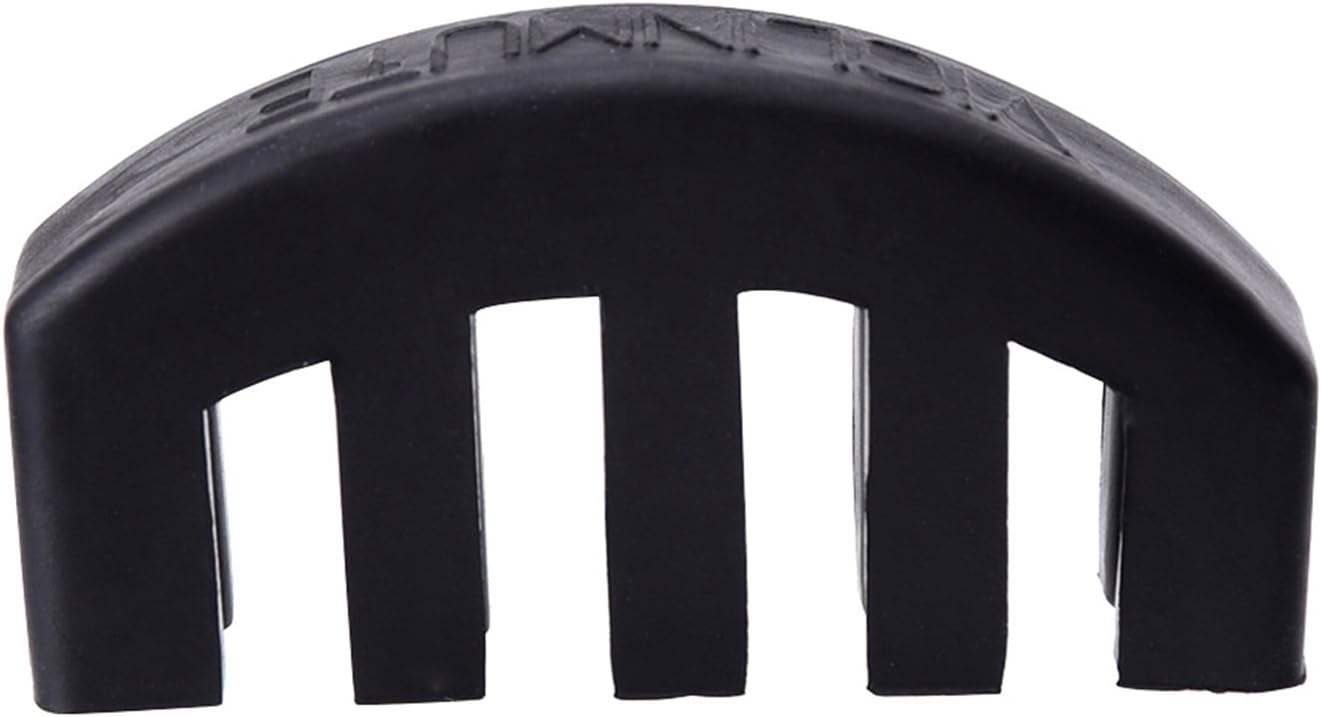
Rubber Practice Mute vs. Tourte vs. Electric Violin: The Real Volume Numbers for Apartment Players
Picture this: it’s 9 p.m. on a Tuesday, you’ve got thirty minutes before you need to be in bed, and you desperately want to run through the passage that fell apart at rehearsal. But your neighbor has a paper-thin ceiling and a documented temper. So you’re standing there, violin in hand, wondering: which solution actually works?
A practice mute is a small device — usually rubber or metal — that clamps onto a violin’s bridge (the small wooden piece that holds the strings up) and dampens the vibration, reducing volume. An electric violin routes your sound through a pickup (a sensor on the instrument) and into headphones, theoretically letting you practice in silence. Both approaches promise apartment-friendly practice. Neither one delivers quite what the marketing suggests. This guide gives you the real volume reduction numbers, the hidden caveats, and a clear decision framework so you can stop guessing and start playing.
| EDITOR'S PICKElectric Violin Bunnel NEXT (cl… | Mid-tierCecilio Electric Violin 4/4 Ful… | Budget pickeBoot Rubber 4/4 Violin Practic… | |
|---|---|---|---|
| Instrument type | Electric violin | Electric violin | Practice mute |
| Pickup | Piezo ceramic | — | — |
| Case included | ✓ | — | — |
| Included extras | Amp, headphones | — | — |
| Body material | — | Solid maple wood | — |
| Price | $528.88 | $119.99 | $5.99 |
| See on Amazon → | See on Amazon → | See on Amazon → |
How Loud Is a Violin, Actually — and What Are We Comparing?
An unamplified acoustic violin produces somewhere between 78 and 95 decibels (dB) at typical playing distance, depending on the instrument, the player, and the room. For context, that’s louder than a normal conversation (60 dB) and in the range of a lawn mower heard from 50 feet away. In a reverberant apartment, that sound carries.
Here’s the short version of what each method delivers:
By the numbers — approximate volume reduction at the player’s ear and in adjacent rooms:
| Solution | Approximate Reduction | Residual Sound Type |
|---|---|---|
| Tourte / wire mute | 5–10 dB | Full acoustic tone, slightly damped |
| Rubber “heavy” practice mute | 10–20 dB (~half perceived volume) | Muffled, low-sustain tone |
| Electric violin + headphones | 15–25 dB (body noise only) | Structural vibration hum |
A 10 dB drop is perceived by human hearing as roughly half as loud. A 20 dB drop sounds about one-quarter as loud. These are not “silent” outcomes at any tier — and that distinction matters enormously in an apartment building.
The Rubber Practice Mute: More Effective Than You’d Think, But Not Magic
Rubber practice mutes — sometimes called “heavy mutes” to distinguish them from the smaller performance mutes — work by adding mass to the bridge and absorbing string vibration before it can excite the top of the violin. The more mass, the more damping.
Owners of the eBoot rubber mute consistently report that the mute “almost mutes the violin by half” in their estimation — a phrase that maps closely to the acoustic reality of a 10 dB reduction. That’s meaningful. You’re no longer projecting across a room; you’re producing a close-field, woody thud that neighbors in adjacent apartments are unlikely to hear through a standard shared wall, especially if there’s carpet and furniture between you and them.
What the reviews don’t always flag upfront: rubber practice mutes change the character of your sound significantly. You’re not getting useful feedback on tone production, bow speed, or resonance when you practice with one — because all of that is being suppressed. For technical drill work (intonation, left-hand mechanics, shifting), that’s fine. For bow technique development, it’s a real limitation. String Magazine’s coverage of practice tools notes that heavy muting “removes the acoustic feedback loop that connects bow pressure to tonal response,” which means players using heavy mutes long-term can develop bow habits that only show up as problems when they perform.
One practical note that reviews keep surfacing: new rubber mutes often arrive with a strong synthetic smell. eBoot mute buyers in particular flag this. It dissipates within a few days of airing out — it’s a minor nuisance, not a defect.
The viola fit problem is real and underreported. A 4/4 violin rubber mute is not interchangeable with a 15-inch viola mute. The eBoot 4/4 mute is sized for violin bridges, and viola bridges are taller and wider. If you play viola, verify the instrument size the mute is rated for before buying — several buyers have received violin-sized mutes that won’t seat properly on viola bridges, and the marketing copy is often ambiguous.
The Tourte Mute: The Performance Tool That Isn’t a Practice Tool
A Tourte mute — the small rubber or wire lyre-shaped mute that sits on the strings between the bridge and tailpiece — is designed for mid-performance use. Orchestral players use them for “con sordino” (muted) passages. They reduce volume by about 5–10 dB and produce a softer, more veiled tone. They are not practice mutes.
If you’re using a Tourte-style mute for apartment practice because it’s what you had on hand, understand that your neighbors can still hear you clearly. The reduction is real but modest — you’re going from “lawn mower” to “loud conversation.” In a building with normal wall construction, this still travels.
The Tourte does preserve tone quality in a way the rubber practice mute doesn’t. For light late-evening practice where you’re working on musical nuance and just need to take the edge off the volume, it’s useful. As a neighbor-management tool, it’s insufficient on its own.
The Electric Violin: The Most Misunderstood Solution in This Space
Here’s where buyers consistently get burned by a misconception that’s worth addressing directly: an electric violin is not a silent instrument.
Multiple Cecilio CEVN-1 owners have written variations of the same review — surprise, and sometimes frustration, that the instrument “is not really silent, it’s quieter than an acoustic, but still gives off its own sound due to vibrations.” Vangoa electric violin owners echo this. The physical body of the violin, the string vibration, the bow on string — all of that still produces acoustic sound, even with no amplifier connected and headphones running audio into your ears.
The reason is simple physics. A pickup converts vibration to an electrical signal; it does not prevent the vibration from happening. The instrument’s body still resonates. On a full-body electric violin (like a Cecilio CEVN-1 or Mendini MV300), that body is still a hollow or semi-hollow chamber with meaningful acoustic output — less than an acoustic violin, but audible in a quiet room.
A Bunnel Edge owner who plays second-chair orchestral violin described the real-world threshold precisely: with headphones plugged in, sound is audible in the next room “only if the house is very quiet.” That is the honest benchmark. Not silence. Not inaudible-to-neighbors. Audible-only-in-a-quiet-house.
The practical implications by building type:
- Thin-wall apartment over another unit: neighbors can likely hear you, especially at night.
- Solid-construction building, carpeted floors: audibility drops significantly; late-evening practice is probably fine.
- Detached house or ground floor: residual acoustic output from an electric violin with headphones is unlikely to bother anyone.
Solid-body or “silent” electric violin designs — instruments with minimal resonating body, like some NS Design models — do reduce this residual acoustic output compared to semi-hollow instruments. But they do not eliminate it. SoundOnSound’s guide on acoustic instrument amplification notes that even solid-body electric violins produce “significant structural vibration noise” relative to electric guitars, because the bow creates a fundamentally different energy transfer than a plucked string.
Stacking Solutions: Can You Combine a Mute and an Electric Violin?
This is a real question that owners ask, and the answer is: yes, but with caveats.
Using a rubber practice mute on an electric violin further dampens the structural vibration and the residual acoustic output. If your goal is maximum noise reduction, this is the most aggressive approach short of a soundproofed room. The tradeoff is that a heavy rubber mute changes string response enough that pickup-dependent instruments may produce an altered signal — some piezo pickups (which work by detecting pressure on the bridge) become less responsive with a heavy mute dampening bridge movement. You may get a thinner or more compressed signal into your headphone mix.
For players primarily using an electric violin for headphone practice and wanting to reduce even the body noise: a light mute (not a heavy rubber mute) placed on the strings above the bridge can help without drastically altering pickup response. This is an empirical question that depends on your specific instrument’s pickup design — magnetic pickups, which sense string movement rather than bridge pressure, are less affected by muting than piezos.
Frequently Asked Questions
Can my downstairs neighbor hear me practicing with an electric violin and headphones?
Probably yes, at least partially — especially if they’re in a quiet room. The residual acoustic vibration from an electric violin travels through floors more readily than through walls. Owners of instruments like the Cecilio CEVN-1 consistently note that the instrument produces audible sound from vibration alone, even in headphone mode. Adding carpet, a practice pad under your feet, and playing on a solid floor (not a wood-joist floor over a neighbor’s ceiling) all help reduce transmitted sound.
Does a rubber mute change the sound quality of my violin or just reduce the volume?
Both. A rubber practice mute significantly changes tone — it suppresses sustain, reduces resonance, and produces a muffled, dull response. You are not getting accurate feedback on your tone production. It’s useful for mechanical practice but not for ear training or bow development.
Will a 4/4 violin mute fit on a viola?
Not reliably. A 4/4 violin mute is sized for violin bridge geometry. Viola bridges (especially 15-inch and 16-inch violas) are taller and wider. Buyers who need a mute for a viola should specifically verify that the product is rated for their viola size. The eBoot mute in particular has generated complaints from viola players who received a mute that wouldn’t seat correctly on their bridge.
Can I stack a rubber mute and a headphone jack on an electric violin for even less noise?
Yes, and it does reduce residual acoustic output further. The caveat is that heavy rubber mutes can interfere with piezo pickup response, potentially thinning your headphone signal. Solid-body electric violins with magnetic pickups are less affected by this stacking approach.
Why can I still hear my electric violin even when headphones are plugged in?
Because headphones mute the amplified signal, not the physical instrument. The bow still excites the strings, the strings still vibrate, and the body still resonates — all acoustically, regardless of what’s happening in the electronics. This is physics, not a defect. It affects every electric violin on the market, from a $80 Mendini to a $2,000 NS Design.
The Decision Framework
If you need the clearest possible answer:
-
If your walls are thin and noise is a serious concern: a solid-body or minimal-body electric violin (not a semi-hollow like the Cecilio CEVN-1) combined with a light mute gives you the most realistic path to late-night practice without neighbor complaints. A heavy rubber mute on a fully acoustic violin gets you close but changes your practice experience meaningfully.
-
If you’re practicing mechanical technique (scales, shifting, intonation) and don’t need tonal feedback: a rubber practice mute on your acoustic violin is the cheapest and most effective solution. The eBoot mute’s reported ~50% volume reduction is real and meaningful.
-
If you’re a semi-serious player who wants to practice musically (tone, bow, dynamics) without an amp: invest in the electric violin, manage expectations about residual noise, and consider your building type honestly before committing.
-
If a Tourte mute is all you have: it’s not enough for apartment practice. It’s a performance tool.
Your next step: If residual acoustic output from electric violins is your primary concern, read the ElectricFiddles.com guide on solid-body vs. semi-hollow electric violin construction — the body design difference matters more to your noise floor than the price tier does.