You’re a violin player who lives in an apartment, a dorm, or a house with thin walls and light-sleeping neighbors — and you want to practice after hours without filing a noise complaint. Two solutions keep coming up in every forum thread and gear recommendation list: a rubber practice mute (a small rubber clamp that fits over the violin’s bridge — the carved wooden piece that holds the strings up — to dampen vibration and reduce volume) and a budget electric violin (a solid-body instrument that produces almost no acoustic sound on its own and routes audio through headphones). Both cost under $200. Both promise quiet practice. But as anyone who’s dug into real owner reviews quickly learns, neither option fully delivers on the word silent — and the gap between them matters a lot depending on your situation.
This guide cuts through the marketing promises. We’ll look at what owners of the most-discussed options actually report, map out the real tradeoffs, run the basic math, and give you a clean decision rule at the end.
| EDITOR'S PICKCecilio Solid Wood Electric/Sil… | Mid-tierCecilio Electric Violin 4/4 Ful… | Budget pickeBoot Rubber 4/4 Violin Practic… | |
|---|---|---|---|
| Instrument type | Electric/silent violin | Silent violin | Rubber practice mute |
| Body material | Solid wood | Solid maple | — |
| Fittings | Ebony | Ebony | — |
| Finish | Metallic red mahogany | Black metallic | Black |
| Price | $151.99 | $119.99 | $5.99 |
| See on Amazon → | See on Amazon → | See on Amazon → |
What “Quiet” Actually Means for Each Option
Before comparing products, it’s worth establishing a shared frame: how quiet is quiet enough?
Community discussions on Violinist.com consistently distinguish between three tiers of acoustic reduction:
- Noticeably quieter — neighbors in the next room probably won’t complain, but a partner in the same room will still hear you clearly
- Significantly reduced — suitable for late-night practice if walls aren’t paper-thin
- Headphone-only — the instrument itself is essentially inaudible; all sound goes to headphones
Rubber mutes, in most owner reports, land in tier 1 or 2. Budget electric violins, when plugged into headphones, aim for tier 3 — but whether they actually reach it depends on the instrument.
The Three Options, Compared Side by Side
Rubber Practice Mutes
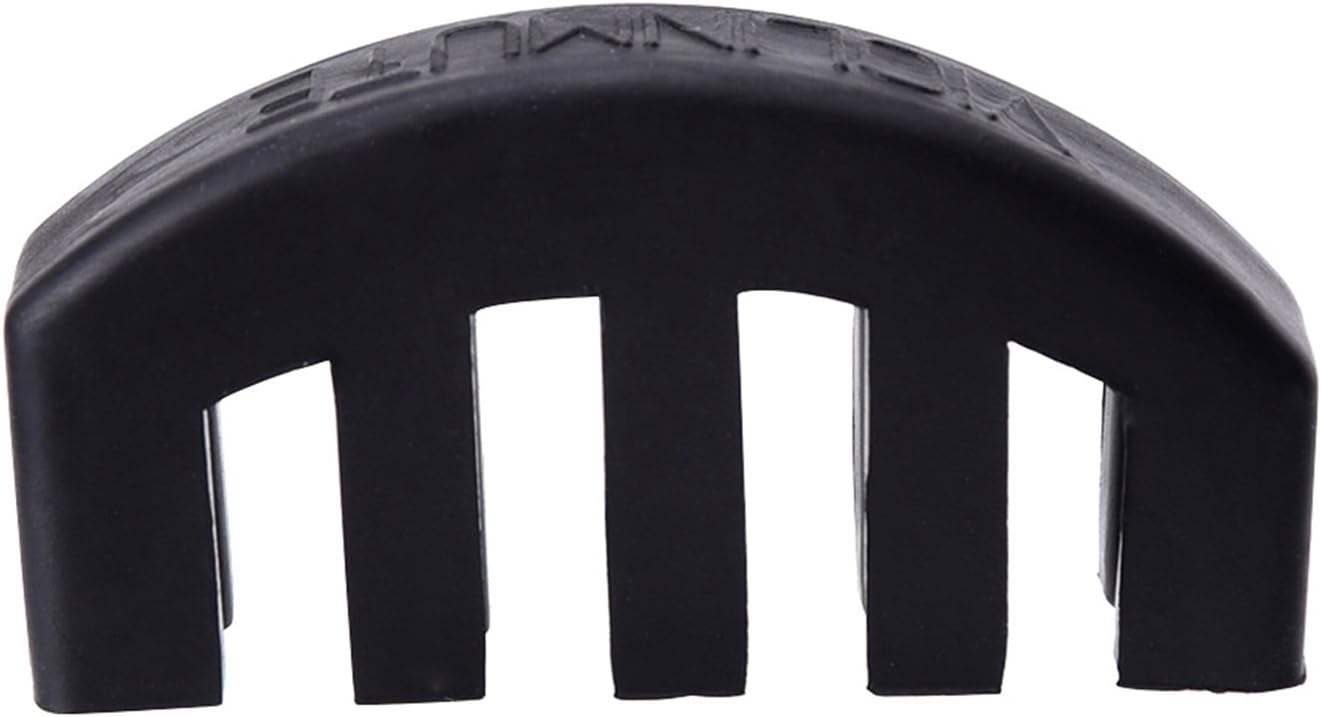
The eBoot rubber mute is the most widely reviewed entry point in this category, and the pattern in owner feedback is consistent enough to be useful. Multiple reviewers praise the price and the simple clip-on installation. But the volume reduction story is more complicated than the product listing implies.
One reviewer explicitly notes the mute is “still louder than I expected,” and the aggregate owner consensus puts the reduction at roughly half the instrument’s open acoustic volume — not near-silent. That’s meaningful: half of a violin’s full projection is still audible through walls at 11 p.m.
A separate category worth noting is the larger claw-style mute — the type sold in multi-packs for studio and teaching use. One reviewer who buys these in bulk for students notes that the claw-style designs are meaningfully more effective than lighter rubber bridge mutes, and purchases them specifically for that reason. The tradeoff is that they’re heavier on the bridge, which alters tone more noticeably — something that matters less for late-night scales than for tone-critical practice.
The core limitation of any mute: A rubber mute reduces acoustic volume by damping the bridge’s vibration transfer to the top plate. But the strings still vibrate, and the body still resonates. The sound isn’t eliminated — it’s reduced. For true apartment silence, you’re still relying on the physical mass of your walls.
As noted in Strings Magazine’s overview of quiet practice methods (“Practicing Quietly: Mutes, Electric Violins, and the Apartment Musician,” stringsmagazine.com), instrument stacking — attempting to combine muting accessories with electric instruments — often creates new problems that outweigh the marginal volume benefit. The cleaner solution is picking the right tool for the primary use case from the start.
eBoot
$5.99
In stock on Amazon
Check price on AmazonBudget Electric Violins: The Unplugged Reality
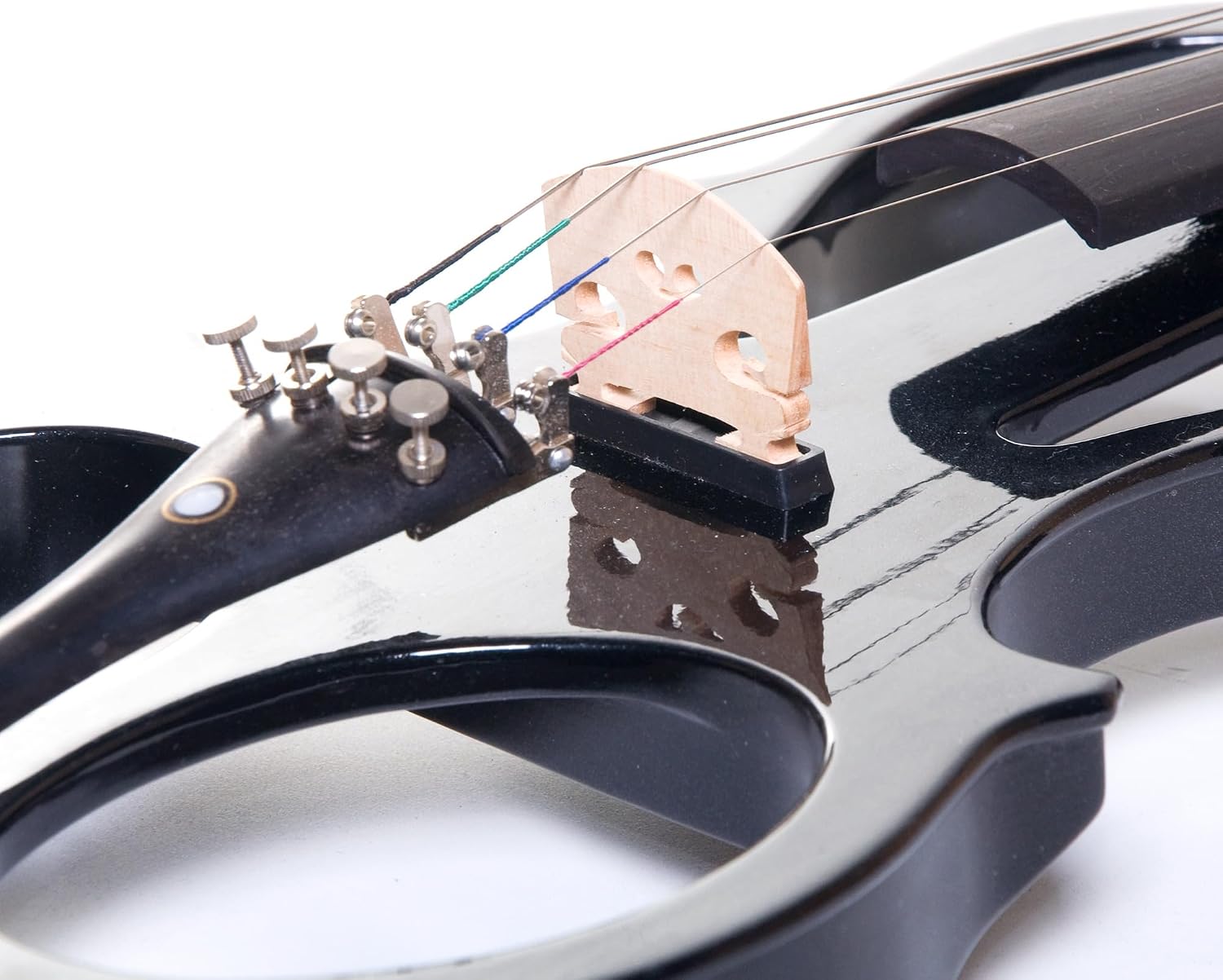
The pitch for budget electric violins — instruments like the Cecilio CEVN-1 (~$100) and the Vangoa electric violin — is appealing: solid body means no acoustic resonance, plug into headphones, practice in silence.
The actual owner experience is more nuanced, and the reviews on this are worth quoting directly.
Multiple Cecilio owners note that the instrument unplugged is not actually silent. One reviewer’s phrasing is precise: “it’s not really quiet or silent — it’s quieter.” The solid body does eliminate the amplified projection of an acoustic instrument, but the strings and body still produce audible sound when played in a quiet room. At close range or in a small apartment bedroom, that residual resonance is noticeable — especially on vigorous bowing.
The Vangoa line compounds this with a separate, more serious issue: a documented pattern across multiple reviews of DOA (dead on arrival) pickup and preamp units. Reviewers describe failures including non-functional pickups and preamps that “crackle massively.” For an instrument purchased specifically to route sound through headphones and practice quietly, a non-functional preamp isn’t a minor inconvenience — it’s a complete functional failure. The instrument becomes an overpriced acoustic-lite violin with none of the silent-practice benefit.
Sweetwater’s Electric Violin Buying Guide (sweetwater.com) reinforces this framing directly, noting that budget electric violins at the sub-$150 price point vary significantly in pickup and preamp quality, and that buyers motivated by a specific functional outcome — headphone practice — should weigh reliability over sticker price.
Cecilio
$119.99
In stock on Amazon
Check price on AmazonMid-to-Upper Budget Electric Violins: When Reliability Is the Purchase
The Bunnel Edge draws buyers who, according to multiple purchase reviewers, explicitly researched cheaper electric violins, read the structural and reliability complaints, and chose to step up rather than risk a DOA unit or a return cycle. The price premium over a Cecilio or Vangoa is real — roughly $200–$300 more — but the decision logic from those buyers is consistent: they were not willing to gamble on a silent-practice instrument that might not be silent.
The Strad’s overview of urban practice solutions (“The Quiet Practice Problem: Solutions for Urban Musicians,” thestrad.com) notes that reliability of the signal chain — from pickup through preamp to headphone output — is the single most important variable for a player whose primary use case is headphone practice. A mute that reduces volume by half still works. A dead preamp doesn’t work at all.
The Bunnel Edge costs more upfront, but the reviews suggest it earns that premium by actually working as a silent-practice instrument. For players whose walls are genuinely thin and whose tolerance for a DOA return cycle is low, the step up in price is the step up in reliability.

Cecilio
$151.99
In stock on Amazon
Check price on AmazonBy the Numbers
| Option | Typical Cost | Volume Reduction | Key Failure Point | Tier |
|---|---|---|---|---|
| eBoot rubber mute | ~$8–$12 | ~Half acoustic volume | Still audible through walls | eBoot — $5.99 |
| Claw-style mute set | ~$20–$30 | More effective than bridge mutes | Alters tone; heavier on bridge | eBoot — $5.99 |
| Cecilio CEVN-1 | ~$100 | Reduced but not silent | Residual body resonance audible | Cecilio — $119.99 |
| Vangoa electric violin | ~$100–$130 | Reduced unplugged; headphone-silent if working | DOA pickup/preamp pattern documented | Cecilio — $119.99 |
| Bunnel Edge | ~$300–$400 | Low unplugged resonance; functional preamp | Higher upfront cost | Cecilio — $151.99 |
The Vangoa DOA Problem Is a Decision-Critical Risk
This deserves its own section because it changes the math entirely.
When a buyer purchases a rubber mute that underperforms, they’re out $10 and an evening. When a buyer purchases an electric violin specifically for silent headphone practice and the preamp is DOA, they’ve lost $100–$130, their practice window, and they’re now navigating a return process.
The Violinist.com community forum thread “Practice Mutes vs. Electric Violins for Apartment Practice” (violinist.com) has worked through this question repeatedly, and the real-world pattern is instructive. Players who need immediate volume reduction with zero setup friction and no risk of DOA electronics consistently reach for a rubber mute — ideally the larger claw-style design if maximum reduction is the goal. It works on the instrument you already own. It costs under $30. It’s reversible.
Players who are buying a dedicated practice instrument and want headphone-quality isolation over the long term are better served by a reliable electric violin than a cheap one. The Cecilio CEVN-1 is a functional entry point if the preamp works — but the “quieter, not silent” acoustic bleed is a real limitation. The Vangoa’s documented DOA rate makes it a risky choice for anyone whose entire purchase motivation is silent practice.
Combining a Rubber Mute with a Budget Electric Violin
A reasonable question: can you stack these solutions? Use a rubber mute on a budget electric violin unplugged to reduce the already-lower acoustic resonance to near-nothing?
In theory, yes — and some owners report doing this. The residual acoustic sound from an electric violin’s solid body is already lower than a standard acoustic violin, and adding a bridge mute reduces it further. The physics work.
The practical problem is that a rubber mute on an electric violin’s bridge interferes with the piezo pickup’s contact pressure and can degrade the plugged-in signal — which defeats the purpose of having an electric violin at all. If you’re playing unplugged with a mute, you’ve paid $100–$130 for a worse acoustic experience than your regular violin with a $10 mute. And if the preamp is DOA, you’ve already lost the headphone path anyway.
Strings Magazine’s quiet practice overview (“Practicing Quietly: Mutes, Electric Violins, and the Apartment Musician,” stringsmagazine.com) notes directly that instrument stacking often creates new problems — signal interference, intonation shift, tonal loss — that outweigh the marginal volume benefit. The cleaner solution is to pick the right tool for the primary use case, not to patch a weak solution with accessories.
Frequently Asked Questions
Can I play an electric violin completely silently without headphones? No — and reviewers are consistent on this. Even solid-body electric violins produce audible acoustic resonance when played unplugged. One Cecilio owner’s description sums it up: “it’s not really quiet or silent — it’s quieter.” For true silence, you need headphones plugged into a working preamp output.
How much does a rubber practice mute actually reduce violin volume? Based on aggregated owner reports, the eBoot rubber mute and similar bridge mutes reduce volume by roughly half — not to near-silence. One reviewer explicitly notes it was “still louder than I expected.” Larger claw-style mutes perform better, according to a reviewer who buys them in bulk for students.
Will a DOA pickup on a budget electric violin be covered under return or warranty? Generally yes — a non-functional preamp on a new instrument qualifies as a defect under standard return policies and most manufacturer warranties. But navigating a return takes time, and if your purchase was motivated by an upcoming practice need, a DOA unit is a significant disruption. This is the core risk the Vangoa’s documented failure pattern represents.
Is it better to buy a cheap electric violin or mute my acoustic for apartment practice? It depends on the severity of your noise constraint. If you need some reduction and already own an acoustic violin, a claw-style rubber mute is faster, cheaper, and zero-risk. If you need headphone-only practice and walls are genuinely thin, a reliable electric violin — one above the DOA-risk tier — is the better long-term investment.
Does the Cecilio or Vangoa electric violin still make noise when unplugged? Yes. Multiple owners of both lines note that the instruments produce audible sound unplugged — reduced compared to an acoustic violin, but clearly audible in a quiet room. This is a known limitation of the solid-body design at this price point.
Can I combine a rubber mute with a budget electric violin for maximum silence? You can, but it creates tradeoffs. A mute on an electric violin’s bridge can interfere with the piezo pickup’s signal when plugged in, degrading your headphone sound. Strings Magazine’s quiet practice overview (“Practicing Quietly: Mutes, Electric Violins, and the Apartment Musician,” stringsmagazine.com) notes that stacking acoustic mutes with electric instruments often creates new problems rather than solving the original one.
The Decision Rule
Here’s the clean if/then:
- If you already own an acoustic violin and need volume reduction tonight with no risk: get a claw-style rubber mute. It’s the lowest-cost, lowest-friction path that works reliably.
- If you’re buying a dedicated silent-practice instrument and your walls are genuinely thin: skip the sub-$130 electric violin tier entirely. The DOA risk on the Vangoa and the acoustic bleed on the Cecilio mean you may not get the silence you’re paying for. The Bunnel Edge costs more, but the reviews suggest it earns that premium by actually working as advertised.
- If you want to hedge: buy the rubber mute now, play your acoustic quietly, and save for a reliable mid-tier electric violin rather than buying a cheap electric that might fail your primary use case.
Your next step: if the rubber mute path makes sense for your current instrument, look at multi-pack claw-style mutes rather than bridge-only designs — the difference in effectiveness is documented by owners who’ve compared both.