If you’ve ever finished a practice session with a sore neck or a shoulder that won’t stop aching, you already understand what a shoulder rest does — and why getting it wrong costs you. A shoulder rest is a curved support accessory (usually plastic or wood with rubber grip feet) that clips to the bottom edge of your violin or fiddle and bridges the gap between the instrument and your collarbone, so you don’t have to death-grip the instrument with your chin or hunch your shoulder to hold it in place. For acoustic violin players it’s a comfort and posture tool. For electric violin players — especially those playing hollow-bodied or body-less instruments where the ergonomics are already non-standard — it becomes a genuine performance variable. This article ranks five of the most-discussed shoulder rests on the market right now — Kun, Everest, Bonmusica, Fiddlerman, and SUEWIO — by pulling together what real players are actually saying, comparing the tradeoffs directly, and giving you a clear decision frame based on your situation.
| EDITOR'S PICKKun Collapsible Shoulder Rest -… | Mid-tierFiddlerman Wood Violin Shoulder… | Budget pickKun Original - 4/4 Violin Shoul… | |
|---|---|---|---|
| Violin size | 4/4 | 4/4 & 3/4 | 4/4 & 3/4 |
| Collapsible | ✓ | ✓ | — |
| Height adj. | — | ✓ | — |
| Material | — | Wood | — |
| Brand | Kun | Fiddlerman | Kun |
| Price | $28.75 | $22.89 | |
| See on Amazon → | See on Amazon → | See on Amazon → |
The Ranking at a Glance
Before the deep dive, here’s how these five stack up based on aggregated owner feedback across review platforms and community forums including Violinist.com discussion threads and retailer owner notes:
| Rest | Best For | Key Strength | Key Watch-Out |
|---|---|---|---|
| Bonmusica | Serious intermediate–pro players | Shoulder-hook + chest lock = best bow-angle stability | Higher cost; takes adjustment time |
| Kun (standard + collapsible) | Most players, most situations | Proven reliability; collapsible folds case-flat | Aging rubber feet can mar varnish |
| Fiddlerman Wood | Injury-recovery; electric violin | Neck/shoulder strain relief; distinctive look | Less adjustable than Kun or Bonmusica |
| Everest | Growing children; parents | Width adjusts as child grows | Less relevant for adult players |
| SUEWIO | Budget beginners; emergency spare | Low price; bundled mute included | Doesn’t fold flat for case storage |
Detailed Rankings: Five Rests Evaluated
Bonmusica — The Serious Player’s Pick
Bonmusica is the rest that serious players keep recommending with actual superlatives, which is unusual in a category where most accessories earn measured praise at best. The reasoning is specific rather than vague: the Bonmusica uses a distinctive shoulder-hook design that curves around the back of the shoulder combined with a chest-side friction ridge, creating a two-point lock that stabilizes bow arm angle in a way a flat-bottom rest cannot replicate. Players who participate in Violinist.com community discussions on shoulder rest ergonomics consistently describe this locked position as the primary reason they switched — and stayed switched.
That bow-angle stability matters more than it sounds. When your instrument drifts during a long passage or a fast string-crossing run, your bow arm compensates — micro-adjustments that accumulate into fatigue over a two-hour gig. Strings Magazine’s coverage of ergonomic aids for violin players notes that player fatigue at the shoulder and upper arm is frequently traced to instrument drift rather than bow technique itself, which validates exactly what Bonmusica owners are describing in their long-term feedback.
The tradeoff is real: Bonmusica costs more than a Kun, and the curved hook design means it takes longer to dial in your fit. Players who rush the setup phase sometimes dismiss it prematurely. If you are in the intermediate-to-advancing range and treating your electric violin as a primary performance instrument, the extra investment and a deliberate fit session are worth it. If you are still working through foundational hold mechanics, start with a Kun and revisit Bonmusica when your technique is stable enough to notice the difference the two-point lock provides.
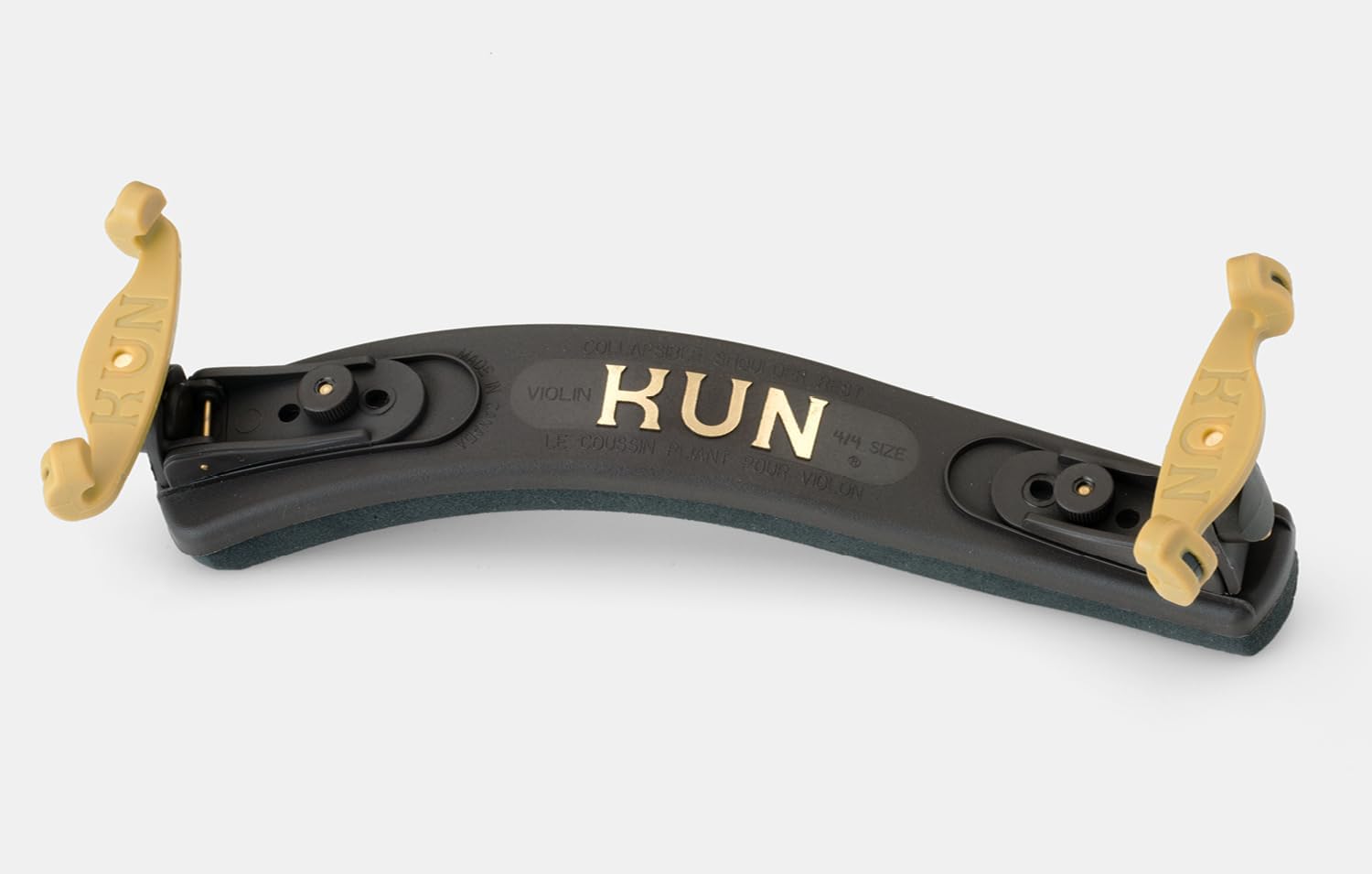
Kun
$28.75
In stock on Amazon
Check price on AmazonKun Collapsible — The Reliable Workhorse (With One Important Caveat)
Kun has been the default shoulder rest recommendation from teachers and shop staff for decades, and that reputation is largely deserved. Players with fifteen or more years of playing still cite it as their baseline — a well-made, adjustable, predictable rest that works across a wide range of body types and playing positions. Sweetwater’s stringed instrument accessory listings consistently place the Kun among the top-recommended rests for intermediate players, and the collapsible version earns specific praise that the standard version does not: it folds flat and fits inside a standard violin case without requiring a separate bag or accessory pocket.
For players who travel to gigs or sessions regularly, that convenience advantage compounds over hundreds of practice sessions and performances. The foldability is not a minor feature — it’s the reason many players choose the collapsible version over the otherwise-equivalent standard Kun.
The varnish caveat is documented and worth taking seriously. Multiple long-term owners, including players who contribute to Violinist.com community threads on instrument maintenance, flag that the rubber feet on Kun rests degrade over time and can leave marks or cause surface damage on acoustic violin varnish. This is a low-urgency but non-trivial issue: it typically shows up after years of use rather than months, and it is more pronounced on instruments with softer or older varnish finishes. For electric violin players using instruments like the Yamaha YEV series or NS Design bodies — which use urethane or composite surface finishes rather than traditional oil varnish — the risk profile is lower. But if you are playing a boutique acoustic crossover instrument, inspect your rest’s rubber feet every six to twelve months and replace them before they harden and discolor.
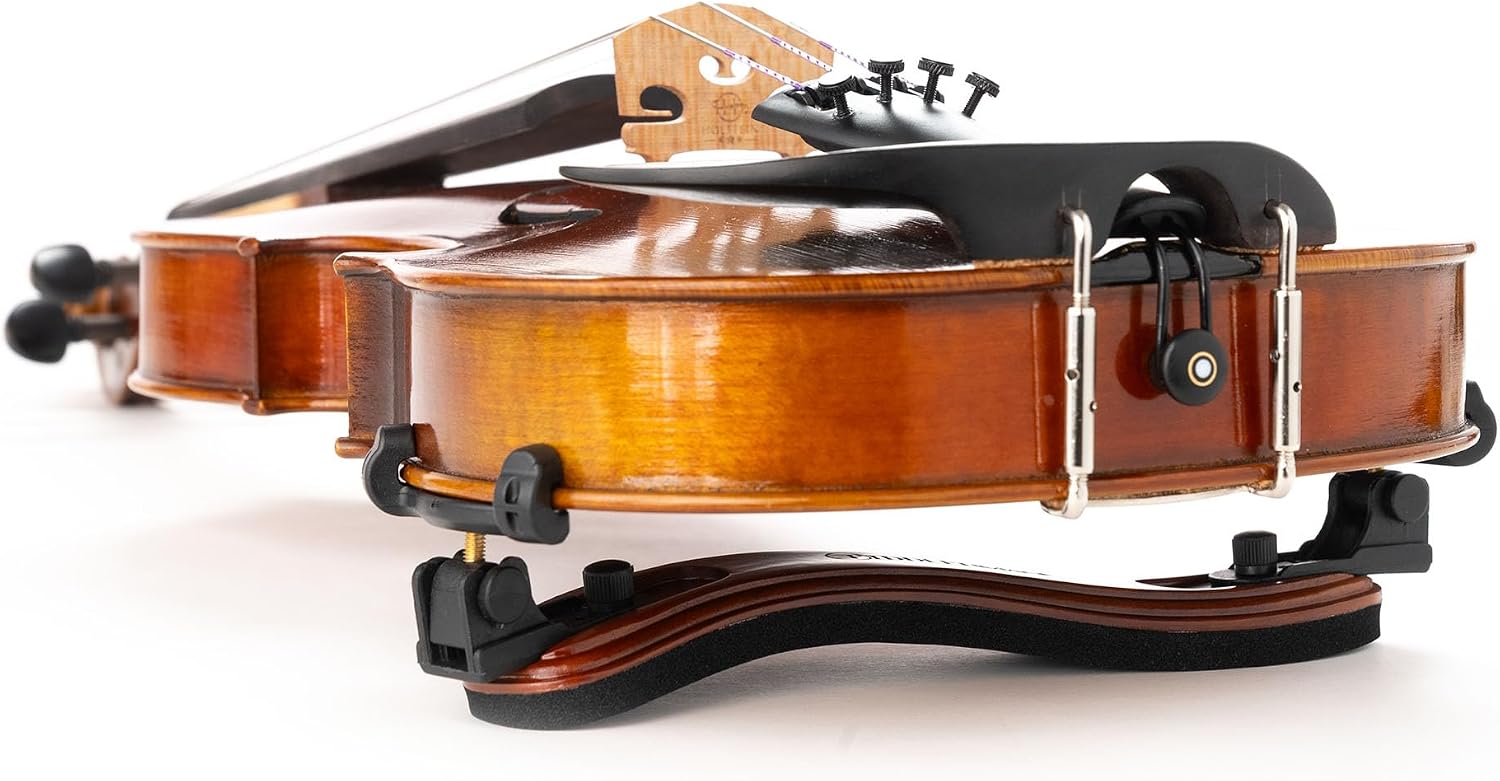
Fiddlerman
$22.89
In stock on Amazon
Check price on AmazonFiddlerman Wood Rest — The Ergonomic Specialist
Fiddlerman’s wood shoulder rest occupies a specific and underserved niche: players dealing with neck or shoulder injuries, and electric violin players whose instrument geometry creates unusual ergonomic demands.
On the injury side, player-reported experiences in aggregated review discussions specifically credit the Fiddlerman wood rest with meaningful strain relief compared to standard plastic rests. The Strad’s published guidance on injury prevention for string players consistently emphasizes that shoulder rest shape and contact surface can meaningfully affect tension distribution across the neck, shoulder, and upper back — not as a dramatic intervention but as one variable that sensitive players notice. Wood as a contact material offers a different compliance and pressure feel than the harder plastic of a standard Kun, and players managing chronic tightness or recovering from injury report that difference as significant.
On the electric violin side, players using body-less instruments — the NS Design CR Series and Wood Violins Stingray are two examples that come up in player discussions — redistribute the instrument’s weight differently than an acoustic body does. A rest that offers slightly different contact geometry can help compensate for the unfamiliar balance. If you have been fighting your hold on a body-less electric and attributing the problem entirely to technique, the Fiddlerman wood rest is worth an honest trial before you conclude the issue is yours alone.
The tradeoff: the Fiddlerman wood rest is less adjustable than a Kun or Bonmusica. Precise width or leg-height tuning has limits. It also carries a premium aesthetic that electric players with stage-presentation preferences tend to appreciate — a minor point, but one that shows up in owner feedback regularly enough to mention.
Fiddlerman
$22.89
In stock on Amazon
Check price on AmazonEverest — The Right Answer for the Wrong Audience
Everest wins one category clearly and matters little outside it: parents buying shoulder rests for growing children. Everest’s adjustable-width design means the rest can grow with the player rather than becoming obsolete each time a child moves from a smaller to a larger fractional instrument. For families managing a child’s violin progression, that flexibility has genuine economic value and reduces the friction of equipment changes during a period when the child’s commitment to the instrument is still developing.
For adult players making a buying decision for themselves, Everest rarely appears in serious comparisons. It is not a poorly made rest — reviewers do not report reliability complaints — but it does not offer anything that a Kun or Bonmusica does not do better for an adult player’s anatomy. This is one of those cases where the product is correctly matched to its intended user; it is simply not aimed at you if you are an adult intermediate or advancing player.
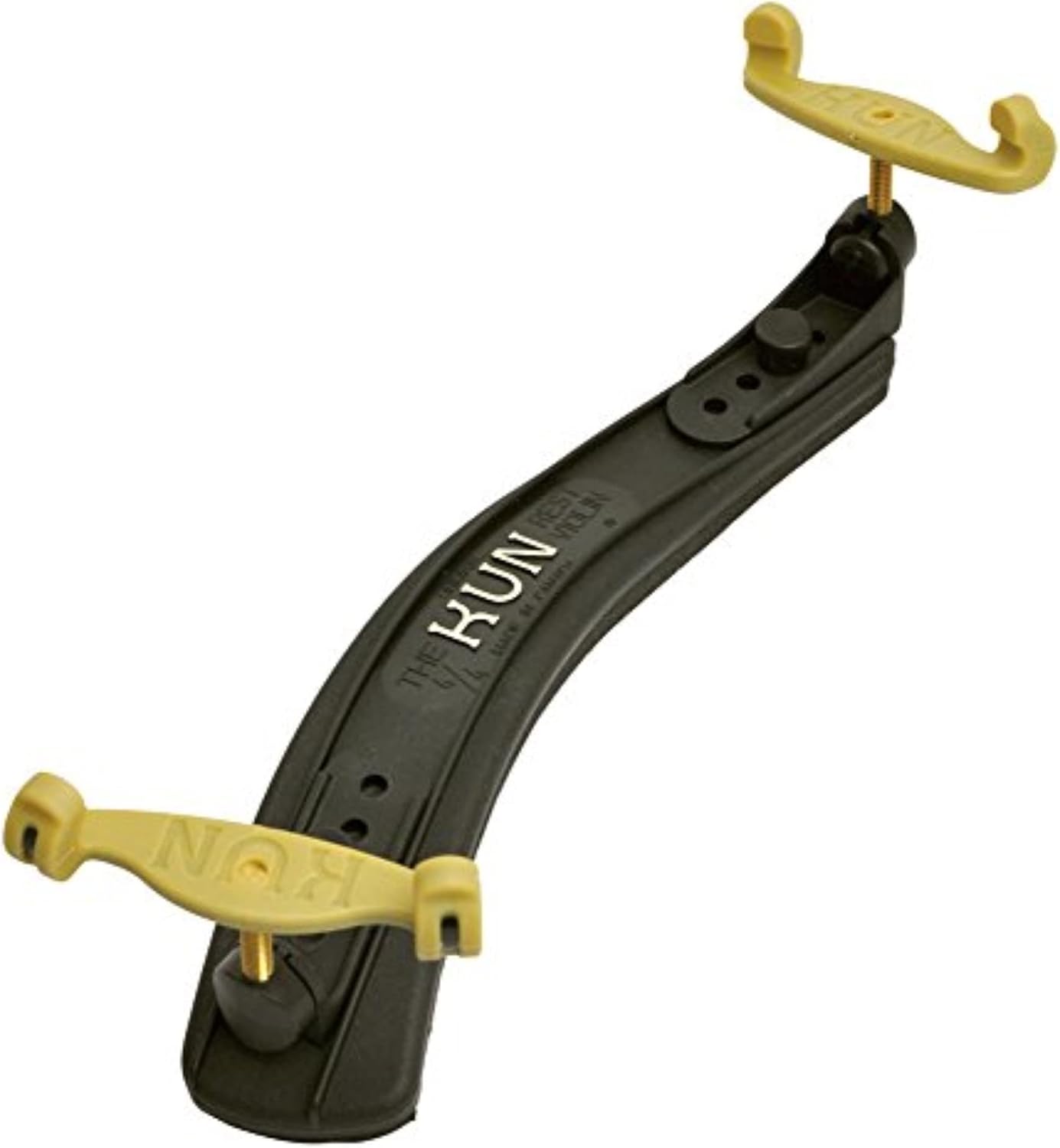
Kun
In stock on Amazon
Check price on AmazonSUEWIO — The Honest Budget Option
SUEWIO earns its place in this comparison honestly: it carries a low entry price, it comes bundled with a practice mute (a small rubber or metal accessory that clips to the bridge to soften the instrument’s tone for quiet practice), and it does the basic job of bridging the shoulder-to-instrument gap. For a player who has never used a shoulder rest and wants to confirm whether one helps before spending more, or for someone who needs a spare for a travel violin kept in a separate bag, SUEWIO is a reasonable answer to a specific problem.
The documented limitations are equally honest and consistent across owner feedback. The SUEWIO does not fold flat and does not fit inside a standard violin case, which means it is an additional loose item to manage in your bag or gig kit. It also adds slight weight compared to lighter-profile rests. Neither limitation is catastrophic in isolation, but they accumulate into friction over repeated use in a way that a Kun Collapsible simply does not.
Kun
In stock on Amazon
Check price on AmazonFrequently Asked Questions
Will a shoulder rest’s rubber feet scratch or gouge my violin’s varnish over time? Yes, this is a documented risk rather than a hypothetical one. Long-term Kun owners specifically flag this concern in community discussions on Violinist.com, and The Strad’s instrument care guidance acknowledges that rubber accessories in prolonged contact with varnish can cause surface damage, particularly as rubber ages, hardens, and discolors. Inspect your rest’s feet every six to twelve months and replace them if they have stiffened. Electric violin players on instruments with urethane or composite finishes face a lower risk than players on traditional oil-varnished acoustics, but the inspection habit is still worth building.
Does the Kun Collapsible actually fold flat enough to fit inside a standard violin case? Based on owner reports across multiple review sources including Sweetwater’s accessory feedback, yes — the collapsible mechanism is designed specifically to clear the standard violin case interior. Players consistently cite case compatibility as the primary reason to choose the collapsible version over the standard Kun. If your case has an unusually shallow lid or a non-standard interior layout, verify clearance before assuming compatibility.
Is the Bonmusica worth the extra cost over a Kun for an intermediate player? If your technique is stable enough that you are already noticing fatigue or instrument drift during longer playing sessions, yes. If you are still working through foundational position and hold mechanics, a Kun is the smarter starting point. The Bonmusica’s two-point lock benefits become perceptible once your baseline position is consistent enough that you can feel what the stabilization is doing for your bow arm.
Can I use a full-size 4/4 shoulder rest on a slightly smaller violin? Generally, no without modification. Shoulder rests are sized to match specific instrument body dimensions, and a 4/4 rest on a smaller body creates an unstable fit that defeats the purpose. Most manufacturers including Kun and Everest produce size-matched versions — use the size that corresponds to your instrument’s body length.
What shoulder rest works best for players with neck or shoulder injuries? Based on aggregated player feedback and The Strad’s published guidance on ergonomics for string players, the Fiddlerman wood rest stands out specifically for injury-related strain relief. For players with more severe or ongoing issues, Strings Magazine recommends consulting a physical therapist or Alexander Technique practitioner alongside any equipment change, since rest selection is one variable among several that affect tension and posture.
Does a shoulder rest affect sound or resonance on an electric violin? On acoustic violins, shoulder rests are known to influence resonance by dampening the back of the instrument — a concern documented in The Strad’s coverage of acoustic performance. On a solid-body or semi-hollow electric violin where sound is primarily captured by a pickup rather than acoustic projection, this effect is negligible. For electric players, the ergonomic and stability considerations in this ranking outweigh any acoustic resonance concern.
Your Next Step
If you are an intermediate or advancing player with a current instrument in hand: the Bonmusica is where the upgrade money goes if you are performing regularly and bow-arm fatigue is already a variable you are managing. The Kun Collapsible is the correct default if you want reliability, adjustability, and case compatibility without the Bonmusica’s fit-and-adjustment learning curve. If you are playing a body-less electric and fighting your hold, try the Fiddlerman wood rest before you conclude the problem is your technique — sometimes the equipment is the problem. If you are buying for a growing child, Everest’s adjustable-width design makes it the practical choice. And if your budget is genuinely constrained right now and you want to test whether a shoulder rest helps your playing at all before spending more, SUEWIO is a reasonable starting point — not a long-term solution for a working player, but an honest entry point. Search each model by name to compare current pricing and availability, and confirm your case dimensions accommodate a collapsible fold before you order.