If you’ve ever watched a violinist adjust and readjust a small curved bracket on the bottom edge of their instrument before playing, that’s a shoulder rest — a support device, usually foam-padded and foot-mounted, that bridges the gap between the violin’s back and your collarbone and shoulder, letting you hold the instrument without cramping your neck. For electric violin players in particular, shoulder rest choice is one of those decisions that looks trivial on a spec sheet and ends up mattering enormously on a four-hour gig. Material — whether the main arch is wood, carbon fiber, or injection-molded plastic — affects weight, vibration transfer, durability, and how the rest interacts with your instrument’s finish over time. This article breaks down exactly what each material costs you and gives you in the real world, with an “if X, then Y” decision frame you can use right now.
Why Material Actually Matters Beyond Aesthetics
Most players buy a shoulder rest based on brand recognition or price, ignore the material, and then troubleshoot fit problems for months. Material isn’t just cosmetic — it determines flex behavior, long-term foot integrity, and resonance characteristics.
The three-way breakdown by material:
| Material | Typical price band | Weight | Flex profile | Varnish risk |
|---|---|---|---|---|
| Plastic (ABS/polypropylene) | $15–$50 | Light to medium | Moderate, degrades with age | Moderate-to-high (feet can crack) |
| Carbon fiber composite | $40–$120 | Very light | Stiff, consistent | Low (feet usually silicone-tipped) |
| Wood (maple, walnut) | $35–$200+ | Medium | Resonant, instrument-like | Low-to-moderate (depends on feet) |
By the numbers:
- Kun Collapsible (plastic): approximately 68 grams
- Fiddlerman Carbon Fiber: approximately 47 grams
- Resonans wooden shoulder rest (maple): approximately 85–100 grams depending on size
- Bonmusica (steel/ABS hybrid): approximately 110–130 grams
That 60-gram spread between the lightest carbon fiber option and the heaviest wood-and-steel hybrid represents roughly the weight of a standard AA battery. On a lightweight electric violin body — the Yamaha YEV-104 runs noticeably lighter than a carved acoustic — that delta is perceptible during extended playing.
Plastic Shoulder Rests: The Workhorse With a Long-Term Warning
Who Plastic Rests Are Built For
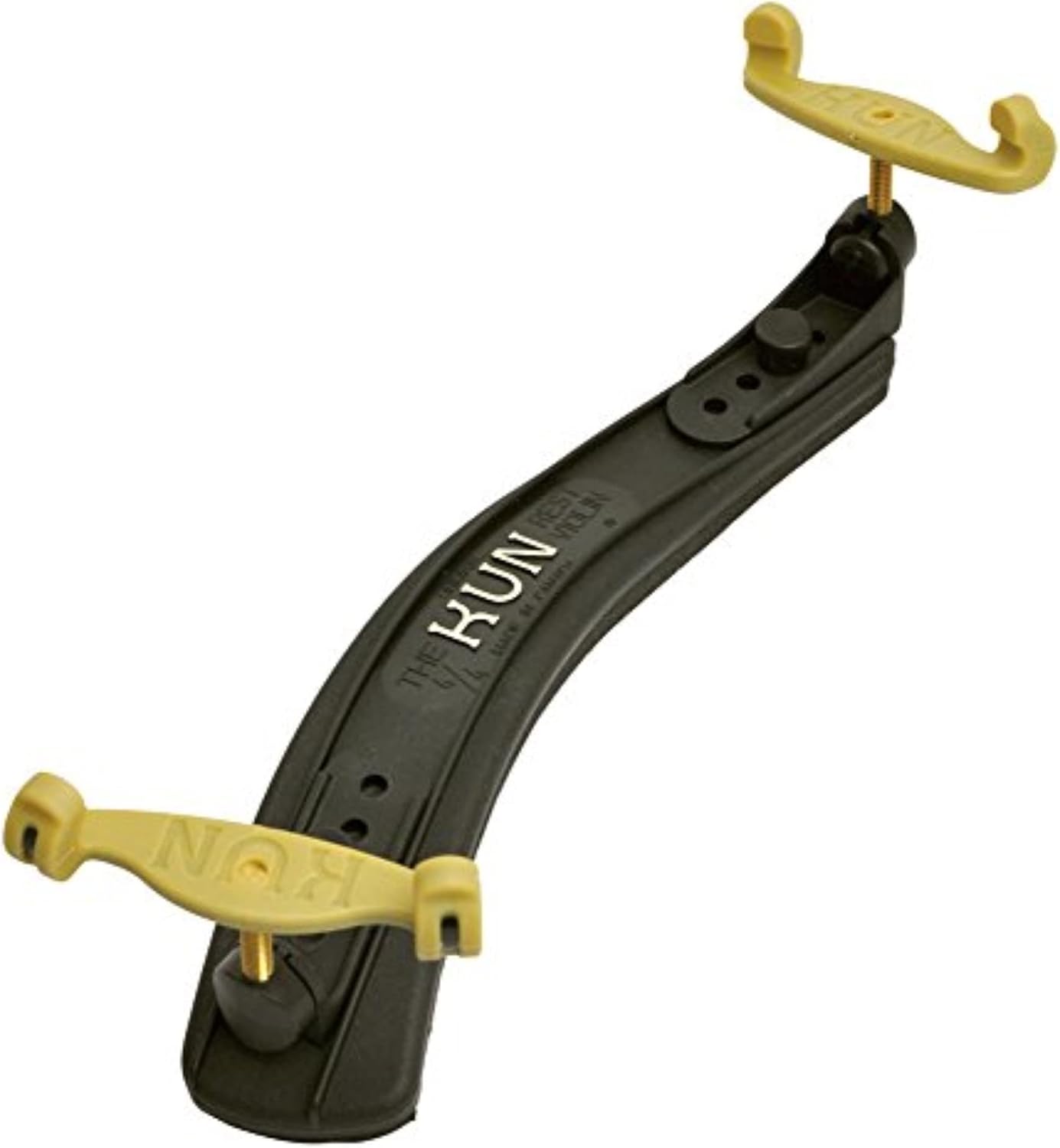
Plastic rests — Kun being the dominant name at this tier — have earned their place as the default recommendation from studio teachers and school programs for decades. The Kun Collapsible is genuinely well-engineered for its price: adjustable in both height and width, and its collapsible design means it folds flat against the violin’s back for case storage. Music teachers, per aggregated review threads documented on the violinist.com forums, list the Kun as their top student-level recommendation with near-unanimity. It is the rest most school orchestra programs order by the case, and for that use case — high rotation, variable players, limited budgets — it performs exactly as intended.
The Long-Term Ownership Problem
There is a long-term ownership data point that matters if you’re keeping an instrument for years. Forum contributors with fifteen or more years of Kun ownership, as documented in violinist.com owner threads, have reported that the plastic feet — the contact points where the rest grips the instrument’s edges — eventually crack and, in documented cases, began to gouge varnish. This is not an isolated complaint; it is a pattern that appears consistently across long-run owner reports. Strings Magazine’s shoulder rest roundup identifies plastic foot degradation as the most common reason players cite when they upgrade after five or more years of daily use.
For electric violin players whose instruments often feature painted or powder-coated finishes rather than oil varnish, the stakes for surface damage are even higher: factory touchups are harder to match, and refinishing a composite or painted body is not the same low-stakes operation as touching up a student spruce top.
Kun
In stock on Amazon
Check price on AmazonCarbon Fiber: The Electric Violin Player’s Natural Pairing
Performance Characteristics in Live Contexts
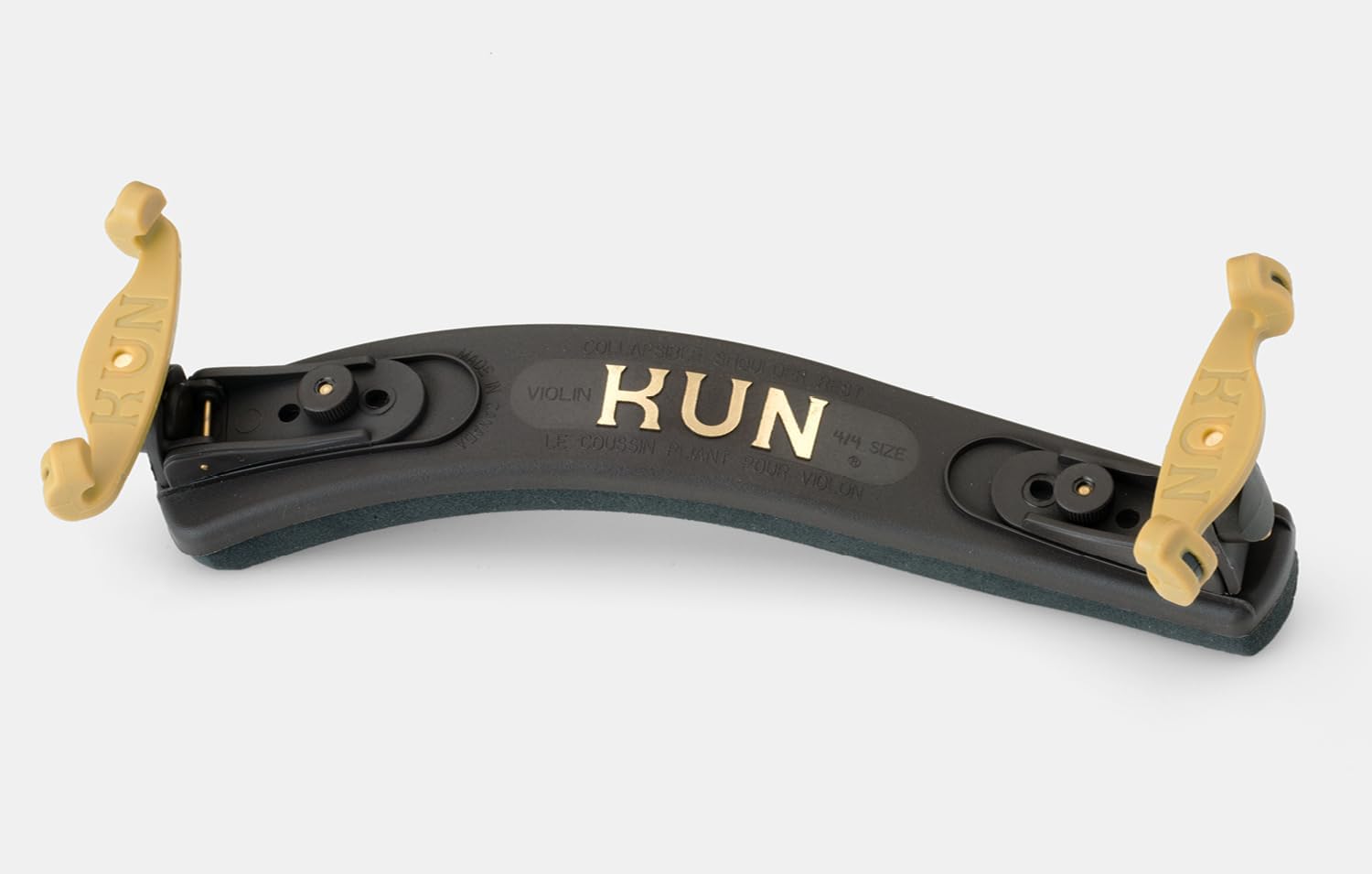
Carbon fiber shoulder rests occupy a compelling position for electric violin players specifically. The Fiddlerman carbon fiber model has drawn consistent praise in owner reviews for its shoulder contouring geometry and for a stability characteristic that matters in live performance: the fit dialed in during soundcheck holds through a full set. Unlike plastic, which can flex differently as temperatures shift — relevant for outdoor folk festivals or unventilated rehearsal rooms — carbon fiber’s stiffness is stable across a wide range of ambient conditions. Strings Magazine has noted in equipment coverage that thermal consistency is an underappreciated variable in shoulder rest performance for players who move between climate-controlled studios and outdoor stages.
Carbon fiber is also genuinely light. For electric players already managing onboard electronics, heavier instrument bodies, clip-on tuners, or wireless belt-pack transmitters, reducing mass at the instrument itself is a meaningful ergonomic gain across a long set.
Aesthetic Compatibility With Modern Electric Instruments
The visual pairing point is worth taking seriously beyond vanity. Carbon fiber’s matte or gloss black finish pairs naturally with the industrial aesthetics of contemporary electric violin makers — instruments from NS Design, ZETA, and Wood Violins share a visual language that a beige plastic rest actively disrupts. Stage presence is part of the professional package, and reviewers who have documented the Fiddlerman carbon fiber rest alongside electric instruments specifically call out that the pairing reads as intentional rather than mismatched.
One Caution on Heavier Composite Designs
Not every foam-over-composite design delivers the same weight advantage. Some composite rests, including certain padded designs reviewed in violinist.com owner threads, add noticeable weight to an already compact, lightweight electric violin body. On a travel-sized or ultra-light electric body, a heavier rest can shift the instrument’s balance point forward, increasing left-hand fatigue over long sets. Verify the rest’s gram weight against your instrument body weight before purchasing rather than assuming all carbon fiber or composite options are light.
Kun
$28.75
In stock on Amazon
Check price on AmazonWood Shoulder Rests: The Resonance Argument and Who It Actually Helps
The Acoustic Case — and Why It Doesn’t Apply to Electric Players
Wooden shoulder rests — the Resonans maple rest is the most frequently referenced name in this category — carry a genuine acoustic rationale for traditional violin players. Wood vibrates sympathetically with the instrument, potentially contributing to a more open, resonant tone. The Strad has discussed this phenomenon in its coverage of historical setup practices, noting in the feature article “Ergonomics and the Modern Violinist” that luthiers have long debated the degree to which chinrests and shoulder rest materials influence acoustic output, with the sympathetic resonance argument most commonly made for materials that match or approximate the instrument’s own tonewoods.
For electric violin players, this argument largely dissolves. Your tone is captured by a pickup and shaped by a preamp before it reaches any amplification system. The sympathetic vibration between a maple shoulder rest and your carbon fiber or solid-wood electric body contributes negligibly to what comes out of the speaker. So wooden rests for electric players become a decision about weight, aesthetics, and ergonomics rather than acoustics.
The Custom Ergonomics Advantage
Wood rests do offer one genuine ergonomic advantage that neither plastic nor carbon fiber can match: they can be shaped and carved to custom contours. For players with unusual anatomy — very sloped shoulders, significant height difference between left and right, or post-injury restrictions — a carved wooden rest from a luthier is the only category that can be genuinely customized to individual geometry. This is a niche case, but it is worth knowing the option exists before assuming the only solutions are mass-market models.
Barcus
$109.99
In stock on Amazon
Check price on AmazonThe Bonmusica Case: When Geometry Matters More Than Material
The Bonmusica shoulder rest sits in its own category because its primary differentiator is not material — it uses a steel wire armature with plastic and composite elements — but geometry. Reviews from working players across violinist.com’s aggregated forum discussions use unusually specific anatomical language to describe why it works: words like “clavicle,” “sternum,” and “scroll height” appear repeatedly in Bonmusica endorsements, which signals that players are experiencing a genuinely different fit rather than writing marketing language.
The Bonmusica’s wave-curved shape addresses a problem that the Kun and most standard plastic rests ignore: the shoulder isn’t flat. Most rests treat the contact surface as a simple inclined plane. The Bonmusica’s contour follows the clavicle-to-sternum line more accurately, which for players with certain body types — particularly those who have struggled with neck tension or left-shoulder elevation after long sessions — can represent a meaningful ergonomic correction rather than a marginal improvement.
Is it worth the price premium over a Kun? If you have already ruled out fit issues as the source of chronic shoulder or neck discomfort and you simply want better durability or aesthetics, probably not. If you are still troubleshooting why standard rests do not sit right and you have the budget to experiment, yes. Violinist.com forum contributors consistently flag the Bonmusica as the recommendation for players with non-standard anatomy or persistent fit problems — not as the universal upgrade path.
Frequently Asked Questions
Will a shoulder rest scratch or damage my violin’s varnish over time? Yes, this is a documented risk, particularly with plastic rests. Long-term owners of Kun rests have reported in violinist.com forum threads that cracked plastic feet contact and abrade varnish after five or more years of daily use. Carbon fiber rests with silicone-tipped feet present lower risk. Whatever rest you use, inspect the feet every six months and replace them at the first sign of hardening or cracking.
Which shoulder rest works best with an electric violin specifically? Carbon fiber is the most frequently praised material pairing for electric violin based on owner reports aggregated across violinist.com forums and Strings Magazine equipment coverage. The combination of stable stiffness across temperature ranges, low weight, and visual compatibility with modern electric instrument aesthetics makes it the natural pairing. The Fiddlerman carbon fiber rest is among the most frequently cited specific models in the context of electric violin use.
Is the Bonmusica worth the extra cost over a Kun? It depends on what problem you are solving. If a Kun fits you comfortably and you are upgrading for durability or aesthetics, the Bonmusica is not the right tool. If you have struggled with shoulder elevation, neck tension, or poor fit with standard rests, the Bonmusica’s anatomical contouring addresses a structural problem that price-shopping cannot fix. Budget for it when fit is the actual issue.
What is the difference between collapsible and non-collapsible shoulder rests for case storage? A collapsible rest folds flat against the violin’s back so both instrument and rest fit inside a standard case without removing the rest. Non-collapsible rests must be detached and stored separately. For gigging players traveling with tight cases or gig bags, collapsibility is a genuine practical consideration — it reduces setup time and the chance of leaving the rest behind after a quick pack-up.
Can I use a violin shoulder rest on a viola, and which ones fit both? Most shoulder rests are sized for specific body lengths. Violin rests are designed for instruments with body lengths around 35–36 cm at 4/4 size. Violas run 38–43 cm and require wider rests. Manufacturers including Kun and Bonmusica produce viola-specific versions. The Everest shoulder rest — frequently cited by music educators in violinist.com forum discussions as a top institutional recommendation — is available in multiple sizes and is among the most teacher-recommended options spanning both instruments in appropriately sized versions.
Your next step: If you play electric violin primarily and you are still running a stock plastic rest, cross-reference the weight specs of your instrument against the rest weights in the table above. If your total rig weight already pushes toward the heavy end, a carbon fiber rest is the immediate upgrade that pays off in endurance over a full set. If fit has been your persistent problem regardless of material, the Bonmusica is worth a targeted trial before you spend more on the instrument itself.