A shoulder rest is the foam or plastic bracket that clips onto the back of a violin or fiddle and bridges the gap between the instrument’s body and your collarbone — it keeps the violin stable so your left hand can move freely up and down the neck instead of gripping for dear life. For acoustic players, choosing one is already a significant decision. For electric violin players, the stakes are slightly different: the instrument’s body shape, weight balance, and chin rest geometry can vary wildly from a traditional violin, which means the shoulder rest you inherited from a classical teacher may not serve you at all on a Yamaha YEV-104 or an NS Design CR series.
If you’ve been gigging or practicing seriously for six months to two years, you’ve probably already cycled through at least one cheap foam pad and wondered whether the $40–$80 jump to a name-brand rest is actually worth it. This article answers that directly. We’ve aggregated owner reviews, musician forum discussions, and editorial analysis from Strings Magazine and The Strad to give you a decision framework — not a vague “it depends.” By the end, you’ll have a clear if-X-then-Y rule for each of the four rests we’re comparing.
| EDITOR'S PICKKun Collapsible Shoulder Rest -… | Mid-tierFiddlerman Wood Violin Shoulder… | Budget pickKun Original - 4/4 Violin Shoul… | |
|---|---|---|---|
| Fits sizes | 4/4 | 4/4 & 3/4 | 3/4 & 4/4 |
| Collapsible | ✓ | ✓ | — |
| Adjustable feet | — | ✓ | — |
| Material | — | Wood | — |
| Brand | Kun | Fiddlerman | Kun |
| Model | Collapsible | Wood | Original |
| Price | $28.75 | $22.89 | |
| See on Amazon → | See on Amazon → | See on Amazon → |
The Four Contenders at a Glance
Before diving into tradeoffs, here’s the basic landscape:
| Rest | Best-known feature | Price tier | Adjustability |
|---|---|---|---|
| Kun Collapsible | Folds flat for case storage | Entry–mid | Moderate |
| Everest | Lightweight, secure grip | Entry–mid | Low–moderate |
| Bonmusica | Ergonomic curve, clavicle hook | Mid–premium | High |
| Fiddlerman Wood / Carbon Fiber | Natural feel, strain relief | Mid | Low–moderate |
Now let’s go deeper on what actually separates them when the lights are low and the stage is loud.
Comparing the Rests: Head-to-Head by Player Type
Kun Collapsible: The Default Setting Everyone Has an Opinion About
Kun
In stock on Amazon
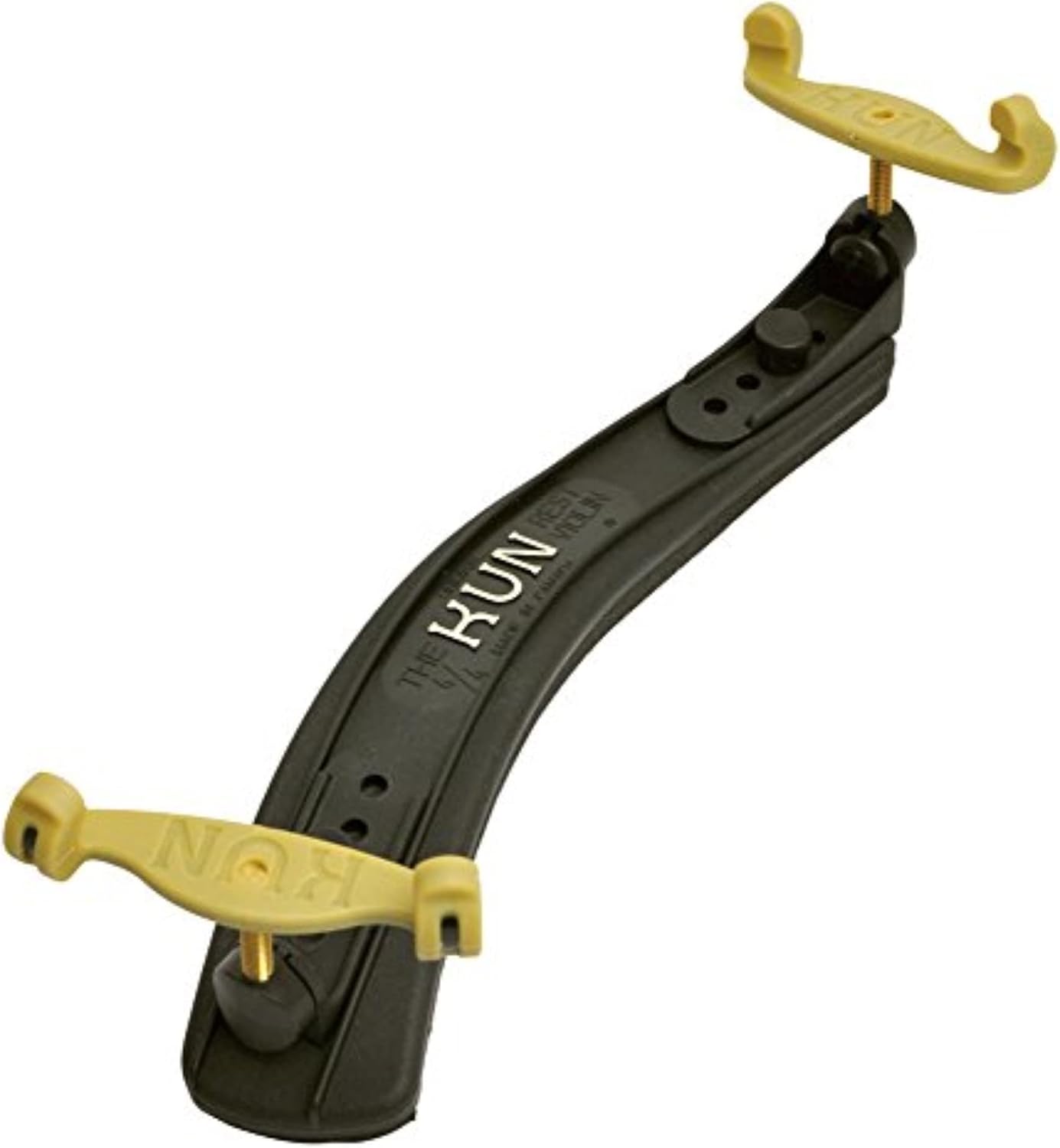
Check price on AmazonThe Kun is, in many ways, the Honda Civic of shoulder rests. It’s everywhere, it works, and there’s a reason music teachers have been recommending it for decades. The Kun Collapsible specifically has earned an almost cult following among players who pack and unpack their cases constantly — forum discussions on Violinist.com consistently cite the fold-flat mechanism as the primary purchase reason, not comfort. That’s a meaningful signal: you’re buying it for logistics convenience, not because it’s the most comfortable rest on the market.
The Collapsible’s legs fold inward, allowing the entire rest to sit inside most standard violin case lid compartments. For touring fiddlers who already have every cubic centimeter of their case accounted for, this is a genuine quality-of-life win. Reviewer commentary gathered on Violinist.com makes a blunt case: don’t cycle through progressively cheaper alternatives first. That path wastes time and money — the kind of direct buyer guidance that saves people $30 and several months of frustration.
The tradeoff: the Kun’s adjustability is serviceable but not exceptional. You can spread the legs and tilt the feet, but players with unusual shoulder geometry — steeply sloped shoulders, longer necks, asymmetric posture from old injuries — often hit the limits of what the hardware allows. If you’re in that category, keep reading.
Best for: Players who prioritize case-portability and want a proven, widely available rest without premium pricing.
Kun
In stock on Amazon
Check price on AmazonEverest: The Underrated Option Nobody Talks About Enough
Kun
In stock on Amazon
Check price on AmazonThe Everest shoulder rest doesn’t get the marketing attention of Kun or the ergonomic cachet of Bonmusica, but owners consistently report that it punches above its weight class for lightweight secure playing. Its foam pad and leg system are well-reviewed for grip stability — the rest tends to stay put even during aggressive bowing and position shifts — and several players note it as a strong choice for smaller adult frames where a bulkier rest creates an awkward angle.
What it lacks is the kind of deep adjustability that advanced players need when dialing in setup for hours of stage use. The height range is narrower than Bonmusica, and the foot grips, while functional, don’t offer the same customization latitude. Think of the Everest as the right tool if your body fits its default geometry and you want a lightweight, reliable rest at an accessible price point. If you need to sculpt the rest to your anatomy rather than adapt to the rest, you’ll outgrow it.
Strings Magazine’s shoulder rest fitting guides for violin and viola players (referenced in plain text; see Strings Magazine, “Shoulder Rest Fitting Guide for Violin and Viola Players”) identify lightweight grip as a key criterion for players on smaller fractional or borderline full-size instruments — and the Everest consistently satisfies that criterion.
Best for: Intermediate players on a tight budget who fit an average-to-small shoulder profile and want a lightweight, no-fuss setup.
Kun
In stock on Amazon
Check price on AmazonBonmusica: The One That Earns a Music Major’s Endorsement
Kun
$28.75
In stock on Amazon
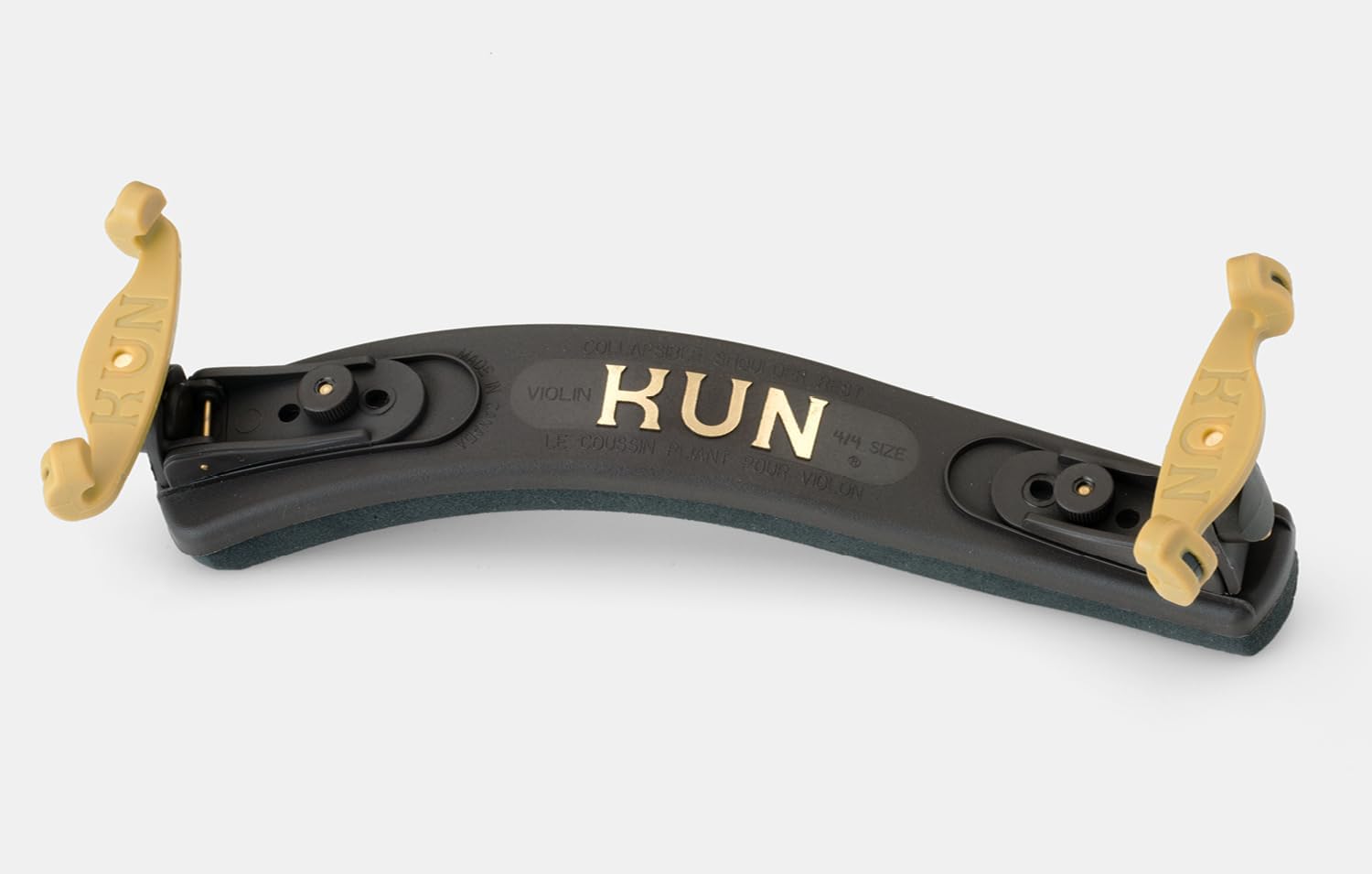
Check price on AmazonThe Bonmusica is the rest that polarizes people — mostly because it looks unusual. The bent metal arm that hooks under your shoulder and curves toward the sternum reads as over-engineered until you understand the biomechanical logic behind it.
Players with anatomy coursework in their background — including a music major whose review notes have circulated widely on Violinist.com discussion threads — have described the shoulder hook and clavicle-sternum placement with real clinical specificity: the curved arm is designed to prevent the violin from pivoting or sliding during shifting and sustained phrases. The hook engages the natural shelf formed by the shoulder and clavicle joint, distributing the instrument’s weight in a way that a straight-legged rest structurally cannot replicate. For players who’ve experienced the violin “swimming” during a long set — that subtle instability that forces micro-corrections in bow arm and left hand — this is the anatomical fix, not just marketing language.
Comparative owner reviews that pit Bonmusica directly against Kun reach a consistent conclusion: comfort is roughly equivalent at matched settings, but the Bonmusica’s adjustability ceiling is significantly higher. The framing in those reviews is precise — if you don’t need the extended range, you’re paying a premium you may not use. But if you do need it, nothing else in this price tier comes close.
The higher price is real, typically running $30–$50 more than a standard Kun depending on vendor and instrument size. Whether that delta is worth it comes down to one question: have you already maxed out the adjustment range of a standard rest and still felt unstable or uncomfortable? If yes, the Bonmusica is not a luxury — it’s a diagnostic solution.
The Strad’s editorial coverage of shoulder ergonomics (plain text reference; see The Strad, “The Case for and Against Shoulder Rests”) acknowledges that rests with higher adjustability ceilings serve players with non-standard shoulder geometry better than entry-tier options, and the Bonmusica is the clearest example of that principle in this price range.
Best for: Players who have already maxed out a Kun or Everest adjustment range and still feel instability, or those with sloped shoulders, longer necks, or asymmetric posture.
Kun
$28.75
In stock on Amazon
Check price on AmazonFiddlerman: The One for Injury Recovery and Electric Violin Setups
Fiddlerman
$22.89
In stock on Amazon
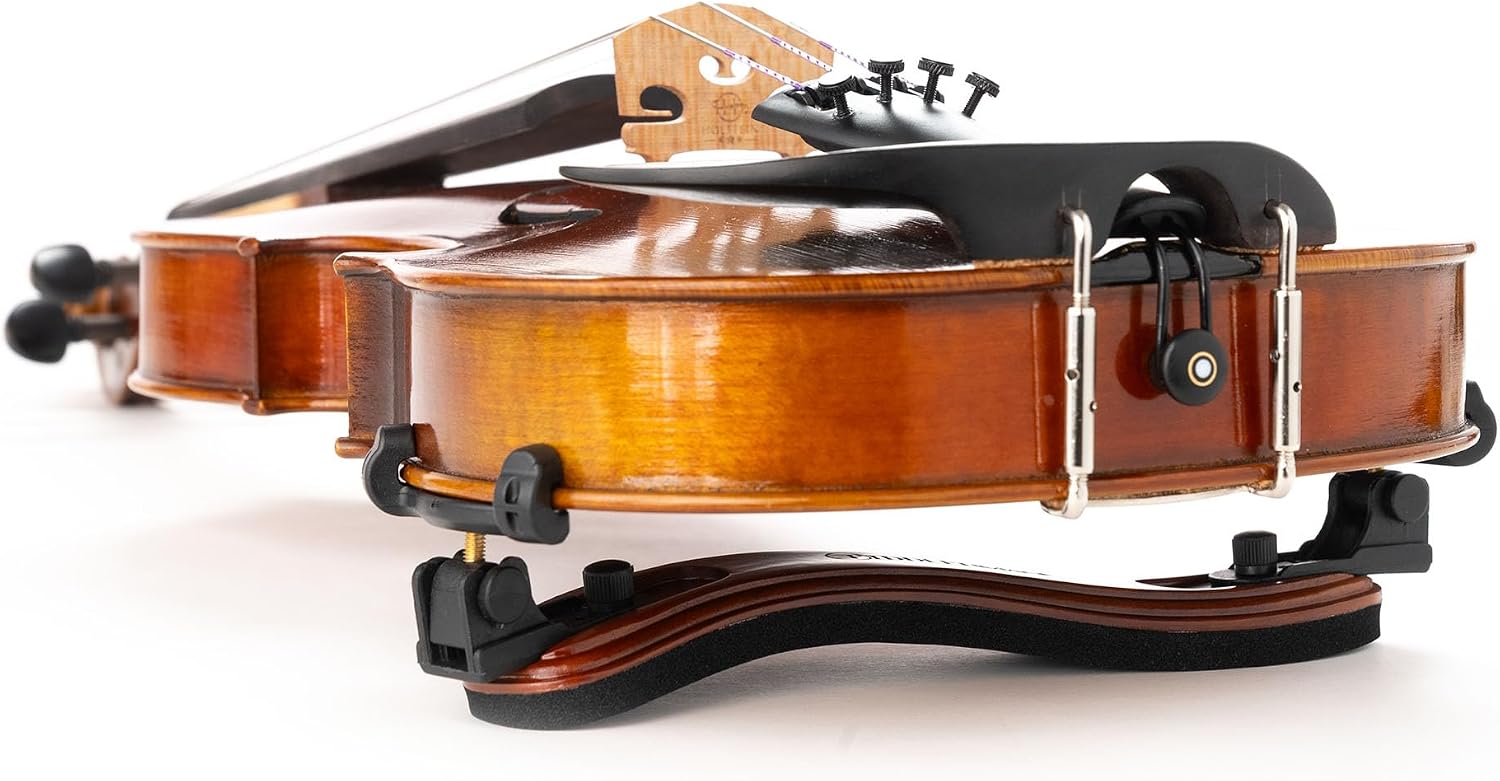
Check price on AmazonThe Fiddlerman shoulder rest occupies a niche that the other three don’t serve well: players dealing with neck, shoulder, or upper-back strain, and electric violin players who want a rest with documented compatibility against their specific instrument.
The wood version earned a notable endorsement from a player managing an ongoing neck injury, for whom strain relief was the stated primary evaluation criterion — not aesthetics, not adjustability, but whether the rest reduced chronic pain during playing. Wood transmits vibration differently than plastic and metal; owners report a warmer, less mechanical feel under the instrument, which some players find reduces muscular tension in subtle but cumulative ways over a long practice session.
More relevantly for the ElectricFiddles.com audience: the carbon fiber Fiddlerman was specifically trialed on a Yamaha SV-250 electric violin by a reviewer who documented the fit in detail. That matters. Most shoulder rest reviews are written for acoustic violins with traditional body profiles. The Yamaha SV-250 — and similar instruments in the Yamaha YEV series — have a different weight distribution and sometimes a shallower body depth than acoustic instruments, which affects how a shoulder rest sits and stays. The Fiddlerman carbon fiber version’s reported compatibility with that instrument gives electric players a verified starting point rather than guesswork.
One honest limitation: the wood rest’s profile means it doesn’t fold flat. Based on owner reports, it does not fit conveniently inside a hard case alongside the violin — plan for a separate case pocket or a dedicated accessory bag if you’re gigging regularly.
Best for: Electric violin players on Yamaha SV or YEV-series instruments, and players managing chronic neck or shoulder strain who need strain relief as the primary criterion.
Fiddlerman
$22.89
In stock on Amazon
Check price on AmazonThe Decision Framework: If X, Then Y
Here’s the honest ranking based on aggregated owner evidence and editorial analysis from Strings Magazine and The Strad:
If portability and case storage are your primary constraints → Kun Collapsible. Buy it directly, skip the cheaper alternatives, and don’t look back. The fold mechanism alone justifies the price difference over no-name rests.
If you’ve already hit the walls of a Kun or Everest and still feel unstable → Bonmusica. The higher adjustability ceiling and clavicle-engagement design solve problems the Kun structurally cannot. The premium is real; so is the difference.
If you play a Yamaha SV-250, YEV-104, or similar mid-body electric violin → Start with the Fiddlerman carbon fiber version. It has documented compatibility with that instrument class, which is more than most competitors can say.
If you’re managing a neck or shoulder injury → Fiddlerman wood, evaluated against your specific strain pattern. It won’t replace physical therapy, but owners consistently report meaningful relief compared to harder-edged alternatives.
If you’re an intermediate player on a tight budget who fits an average shoulder profile → Everest. It’s lightweight, grips well, and doesn’t overcomplicate things.
Can I Use a Standard Shoulder Rest on an Electric Violin?
The short answer is yes — with caveats. Most standard shoulder rests clip onto the bottom ribs (the curved edge) of an instrument body, and many electric violins replicate this geometry closely enough that Kun, Everest, and Bonmusica feet will grip adequately. However, solid-body electrics — such as the NS Design CR series or Wood Violins Stingray — often have a body profile that diverges significantly from acoustic violin proportions. The rib depth may be shallower, the curve more pronounced, or the body narrower at the lower bout.
Forum discussions on Violinist.com note that solid-body electric players sometimes need to experiment with foot-width adjustment more aggressively, and in some cases, a rest that fits securely on an acoustic will slip or sit at an awkward angle on an electric. The Fiddlerman carbon fiber rest’s documented compatibility with the Yamaha SV-250 is a useful data point — but if your electric is an NS Design or similar boutique instrument, check the manufacturer’s documentation or ask in owner forums before committing to any rest.
Frequently Asked Questions
Does the Kun Collapsible shoulder rest actually fit inside a violin case? Multiple owners confirm it does — the legs fold inward flat, allowing the rest to fit inside most standard violin case lid pockets without occupying the main instrument compartment. It’s the primary reason many players choose it over standard Kun models.
Is the Bonmusica shoulder rest worth the higher price over a Kun? Based on aggregated owner reviews, it depends entirely on whether you need the higher adjustability range. Reviewers who compared both directly found comfort equivalent at comparable settings, but the Bonmusica’s hardware allows significantly more customization — particularly useful for players with sloped shoulders, longer necks, or specific posture needs. If a Kun fits you well, you may not gain much. If it doesn’t, the Bonmusica may be exactly what you need.
Which shoulder rest works best for a child whose violin size may change? The Kun series, particularly the original model in the appropriate size, is the most widely recommended option for growing students because it’s available in every fractional size, is inexpensive enough to replace as the student sizes up, and is stocked by most music retailers. Strings Magazine’s fitting guides (see Strings Magazine, “Shoulder Rest Fitting Guide for Violin and Viola Players”) consistently point teachers toward size-matched Kun rests for younger students.
Can I use a standard shoulder rest on an electric violin? Generally yes, but fit varies by instrument. Hollow-body and semi-hollow electrics such as the Yamaha YEV-104 and Bridge Draco usually accept standard rests without issue. Solid-body instruments may require more adjustment. The Fiddlerman carbon fiber rest has documented compatibility with the Yamaha SV-250 specifically.
What is the sponge method for shoulder rests and when should I try it? The sponge method involves attaching a small household sponge to the back of the violin with rubber bands to create a customized, soft lift under the instrument. The Strad has discussed it as a legitimate option for players who find all commercial rests uncomfortable, or for those working with unusual shoulder geometry that no adjustable rest accommodates (see The Strad, “The Case for and Against Shoulder Rests”). It’s worth trying before an expensive purchase if you’ve already found multiple commercial rests unsatisfying — it costs essentially nothing and occasionally works better than hardware for specific body types.
Does the Fiddlerman wood shoulder rest fit in a hard case? Based on owner reports, not conveniently. Its profile and rigidity mean it typically needs to be stored separately, in a case accessory bag or a dedicated pocket rather than inside the main case compartment.
Your Next Step
If you’ve made it this far, you have enough information to make a decision. The most common mistake at this stage is waiting for perfect information — but shoulder rest fit is ultimately personal, and the rests covered here are priced low enough that a wrong first choice isn’t a catastrophe.
Start with the decision framework above. If the Bonmusica is calling to you based on what you’ve read about the ergonomic design, trust that instinct — the music-major endorsement and comparative owner reviews are genuine buyer signal, not marketing copy. If you’re an electric violin player specifically on a Yamaha SV-series instrument, the Fiddlerman carbon fiber is the evidence-backed starting point.
The one thing the data is unambiguous about: don’t cycle through cheap no-name rests hoping one will click. Pick a named rest that matches your situation, and spend the money once.