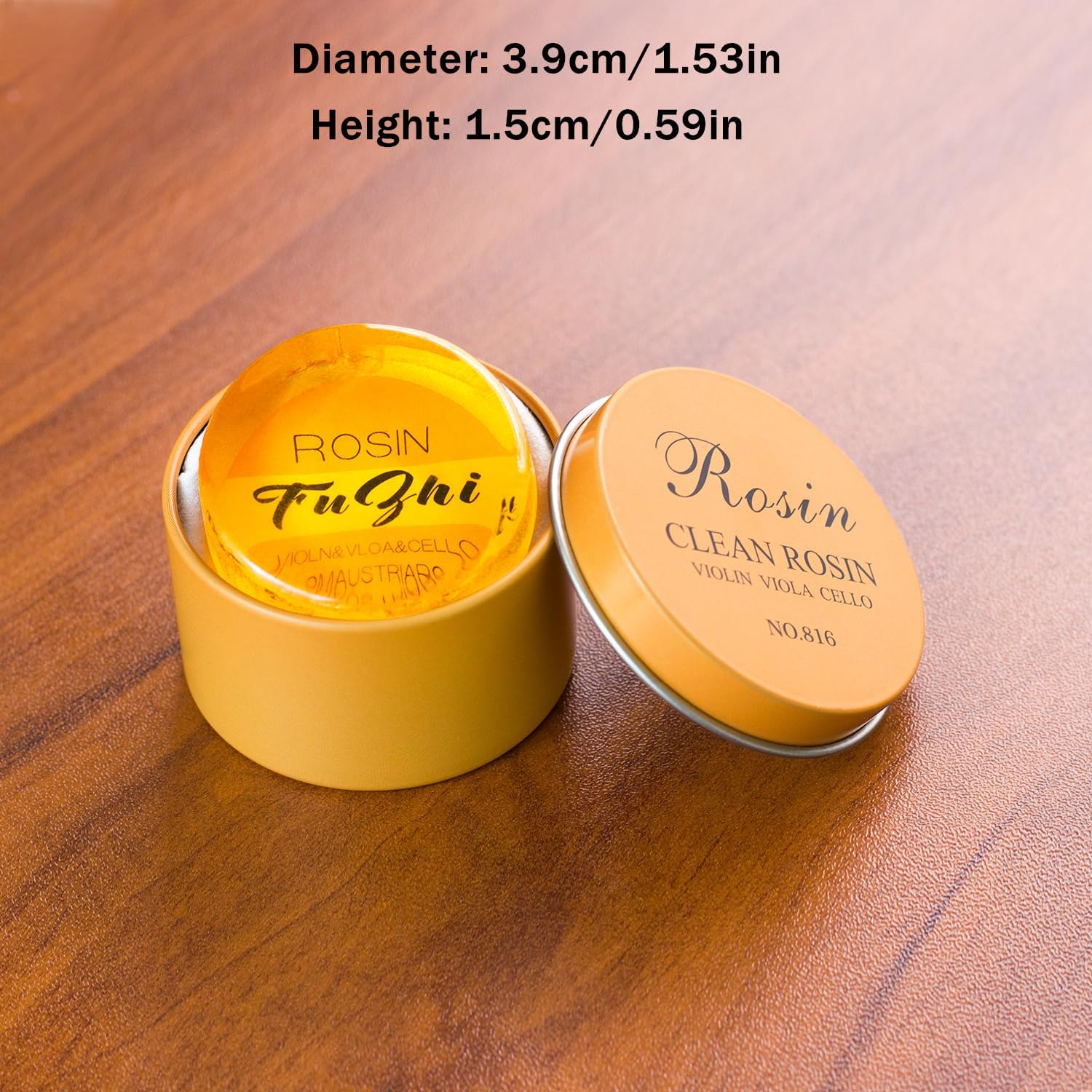
If you’ve ever wondered why two violinists playing the same notes on the same instrument can sound so different, the answer is often hiding in the small stuff. Rosin (a sticky resin applied to the bow hair that lets it grip and vibrate the strings — without it, the bow slides silently), strings (the four metal or synthetic wires that actually produce the pitch), and fingerboard guides (sticker strips or tape that mark where fingers should land) are consumable accessories — meaning they wear out, get used up, or eventually need replacing. They’re also chronically under-discussed, because they’re cheap and unsexy compared to a new instrument. That’s a mistake. This guide walks you through each category, explains exactly when and why to upgrade, and gives you a clear decision rule for every stage of the journey.
Rosin: The Accessory That Directly Shapes Your Sound
Here’s the thing most beginner materials won’t tell you: rosin is not just a grip aid. It is an active participant in your tone.
Rosin works by depositing microscopic particles of resin onto the bow hair. As the bow moves across the string, those particles alternately grip and release in a rapid cycle — that’s the physics behind the sound wave. The quality, hardness, and formulation of the rosin affects how cleanly that grip-release cycle happens, which means it affects clarity, warmth, and the amount of “scratch” in your tone.
Why this matters more than you think. Parent reviewers of the Fansjoy rosin — a commonly recommended beginner option — report an immediate and audible improvement in their child’s violin sound after switching from the cheap cake of rosin that typically ships with starter instruments. The improvement wasn’t subtle: it was audible enough for a non-musician parent to notice. That’s a meaningful signal. The rosin bundled with most entry-level kits is a manufacturing afterthought. Replacing it is often the single highest-leverage accessory upgrade available for under $15.
Rosin formulation basics. The Strad’s overview of rosin notes the key distinction between light (harder) and dark (softer) formulations. Light rosins produce less dust and are better suited to warmer climates and synthetic strings. Dark rosins are stickier, generate more grab, and tend to suit gut or steel strings in cooler or drier conditions. For beginners on steel-core strings — which is most players starting out — a medium-light rosin hits the right balance.
The electric violin consideration. If you’re playing a dedicated electric instrument like the NS Design CR Series or a Yamaha YEV-104, you may be going through a pickup system rather than projecting acoustically. That doesn’t eliminate the rosin variable — the pickup still reads the mechanical vibration of the string, which is shaped by bow-hair-to-string contact. Sweetwater’s electric violin buyer’s guide notes that players moving between acoustic and electric instruments often forget that tone-shaping starts at the string, not the amp. Rosin still matters.
Decision rule for rosin:
- Playing less than 6 months? Replace the included rosin with any reputable beginner brand. The upgrade is cheap, fast, and audible.
- Playing intermediate repertoire or gigging? Try a quality amber or light rosin and swap out seasonally if humidity in your region swings significantly.
- On electric, full-time? A light-formula rosin produces less residue buildup on your pickup housing — a minor maintenance win.
Strings: The Most Underrated Lever on Your Tone and Playability
Strings (the four stretched wires — E, A, D, G from high to low — that your bow sets in motion) are a consumable that wears on a timeline most beginners don’t track. Strings oxidize, lose flexibility, and go acoustically “dead” even if they haven’t broken. A dead string still makes a pitch. It just doesn’t make a good one.
When do strings need replacing? Strings Magazine advises that most student players should replace strings every 3 to 6 months under regular practice conditions, or sooner if the winding (the coiled metal wrapped around the core) shows visible unraveling or dark discoloration from rosin buildup and skin contact. The rule of thumb: if you can’t remember the last time you changed them, it’s time.
The breaking-on-installation fear is real — and addressable. One of the most widely reported anxieties in beginner string reviews is the E string snapping during installation. The E string is the thinnest and most under tension; it’s also the one most likely to slip off a peg, kink, or pop if you bring it up to pitch too aggressively. Reviewers of entry-level 8-piece steel-core string sets — the type that includes a full spare set — consistently note relief that the E string survived installation with careful technique. Having a spare E string is not paranoia; it’s standard preparation. An 80-year-old beginner reviewer of one such set specifically called out that surviving E-string installation as a major point of satisfaction, which tells you how common this concern is across age groups.
Durability vs. expectation. An interesting real-world data point: one orchestra student’s parent reported switching to a widely available string set after her local music shop closed and found her daughter needed replacements less frequently than expected — suggesting acceptable durability from a non-boutique option. This aligns with Violinist.com’s community guidance that mid-tier steel-core strings for students represent solid cost-efficiency without meaningfully sacrificing longevity.
By the Numbers: String Replacement Math
| Player stage | Recommended change interval | Annual string cost (est.) |
|---|---|---|
| Beginner (< 1 yr) | Every 4–6 months | $15–$40 |
| Intermediate (1–3 yrs) | Every 3–4 months | $30–$80 |
| Advancing/gigging | Every 6–8 weeks | $80–$250+ |
Note: Professional touring players on synthetic-core or gut strings may change more frequently; steel-core strings for students have longer practical lifespans.
Decision rule for strings:
- If you’re a beginner on a sub-$200 instrument: a steel-core set with a spare E is your tier. Optimize for durability and installation confidence.
- If you’re on a mid-range instrument (Yamaha YEV-104 range): consider a branded synthetic-core set — your instrument can now translate the tonal upgrade. Strings Magazine’s reviews of mid-tier synthetic strings consistently show a warmth and responsiveness gap over basic steel.
- If you’re on a premium instrument ($1,200+): string choice is instrument-specific. NS Design players and Wood Violins Stingray owners frequently discuss string pairings on luthier forums; the pickup system interacts with string output character in ways worth researching before committing.
Fingerboard Guides: Learning Aid or Crutch?
A fingerboard guide (a sticker, tape strip, or printed overlay placed on the fingerboard — the long neck beneath the strings — to show finger placement) is a legitimate pedagogical tool when used correctly. The controversy around them usually comes down to one question: will they damage the instrument’s finish?
On installation and removal. A practicing violin maker who tested multiple fingerboard guide brands and documented the comparison found the Fantastic Finger Guide to be the winner on ease of installation — and specifically called out the included QR-code installation video as genuinely helpful. That’s a meaningful endorsement from someone whose livelihood depends on instrument condition. The general guidance from luthiers (per Violinist.com community discussions) is that guides using low-tack repositionable adhesive are safe for varnished fingerboards when removed carefully after short-term use. The risk isn’t the adhesive itself — it’s leaving any sticker in place for months in a warm case where the adhesive can bond more aggressively.
Decision rule for fingerboard guides:
- Using them for a defined learning purpose (first-position note placement, shifting landmarks)? Use them. Set a calendar reminder to remove them within 4–6 weeks.
- Worried about finish damage? Test the sticker’s tack on the inside of your wrist before applying — it should lift cleanly with no residue.
- Beyond beginner stage? Remove them. Playing in tune requires your ear and muscle memory, not visual confirmation. Guides are a runway, not a destination.
Mutes: A Separate Tool with a Specific Job
A mute (a small clamp or rubber device placed on the bridge — the wooden upright that transfers string vibration to the instrument body) reduces volume and changes tone. There are two main types worth understanding:
Tourte-style mutes are small, lightweight, and designed for concert use. They sit on the bridge and reduce volume modestly — primarily removing upper-harmonic brightness for a softer, more veiled tone. They are not practice mutes.
Claw-style practice mutes are heavier, clamp over multiple strings at the bridge, and produce a more dramatic volume drop. A violin teacher who buys the 4-piece mute set for her entire studio explicitly noted that the larger claw-style practice mutes in that set outperformed the Tourte-style mutes included in the same pack for actual volume reduction. That’s a practitioner-level verdict worth taking seriously.
The rubber mute reality check. Reviewers of the eBoot rubber mute, including one who measured the reduction, report it reduces volume “almost by half.” That’s meaningful — but it is not apartment-silent. If you’re in a thin-walled building at 10 PM, a rubber-muted acoustic violin is still audible in the next room. This is where electric violin owners have a genuine structural advantage: a fully electric instrument like the NS Design CR5 or ZETA Jazz through headphones can approach near-silence. For acoustic players, a quality claw-style practice mute is the practical ceiling for volume reduction.
Frequently Asked Questions
Does rosin type actually affect how my violin sounds, or just how the bow grips? Both — and they’re connected. Rosin formulation affects the quality of the bow-hair-to-string contact, which directly shapes tone. Per The Strad’s rosin overview, different formulations produce different densities of rosin dust particles, affecting grip intensity and the resulting sound character. It’s not just about traction.
When should I change my violin strings for the first time? Strings Magazine recommends every 3 to 6 months for regular student practice. If your strings are discolored, feel rough to the touch, or your tone sounds dull even with fresh rosin, change them regardless of timeline.
Can fingerboard sticker guides damage my violin’s finish when removed? They can, if left on too long or in heat. Low-tack guides removed within a few weeks pose minimal risk to most modern varnish. Luthiers recommend testing adhesive tack first and never leaving guides in a hot case for extended periods.
How much does a rubber mute actually reduce volume — is it enough for apartment practice? Reviewer-reported measurements on the eBoot rubber mute suggest roughly a 50% volume reduction. That’s useful but not silent. Electric violin through headphones remains the only solution that approaches true silence for late-night practice.
What is the difference between a Tourte-style mute and a claw-style practice mute? A Tourte-style mute is small, clips between bridge strings, and softens tone for concert dynamics. A claw-style practice mute is heavier, bridges across multiple strings, and produces a significantly larger volume drop. Per a violin teacher’s firsthand assessment of a multi-mute pack, the claw-style wins for actual practice purposes.
In what order should a beginner upgrade their violin accessories for the most improvement per dollar?
- Rosin — cheapest upgrade, fastest audible result.
- Strings — especially if yours haven’t been changed in 6+ months.
- A claw-style practice mute — if volume is a real constraint.
- Fingerboard guides — temporary learning tools only, not permanent fixtures.
Your next step is concrete: look at your rosin. If it came in the box with your instrument and you’ve never replaced it, that’s your first upgrade. The improvement is real, it costs almost nothing, and it takes five minutes. From there, check when you last changed your strings. Those two moves alone will change how your instrument sounds and responds — without touching the instrument itself.