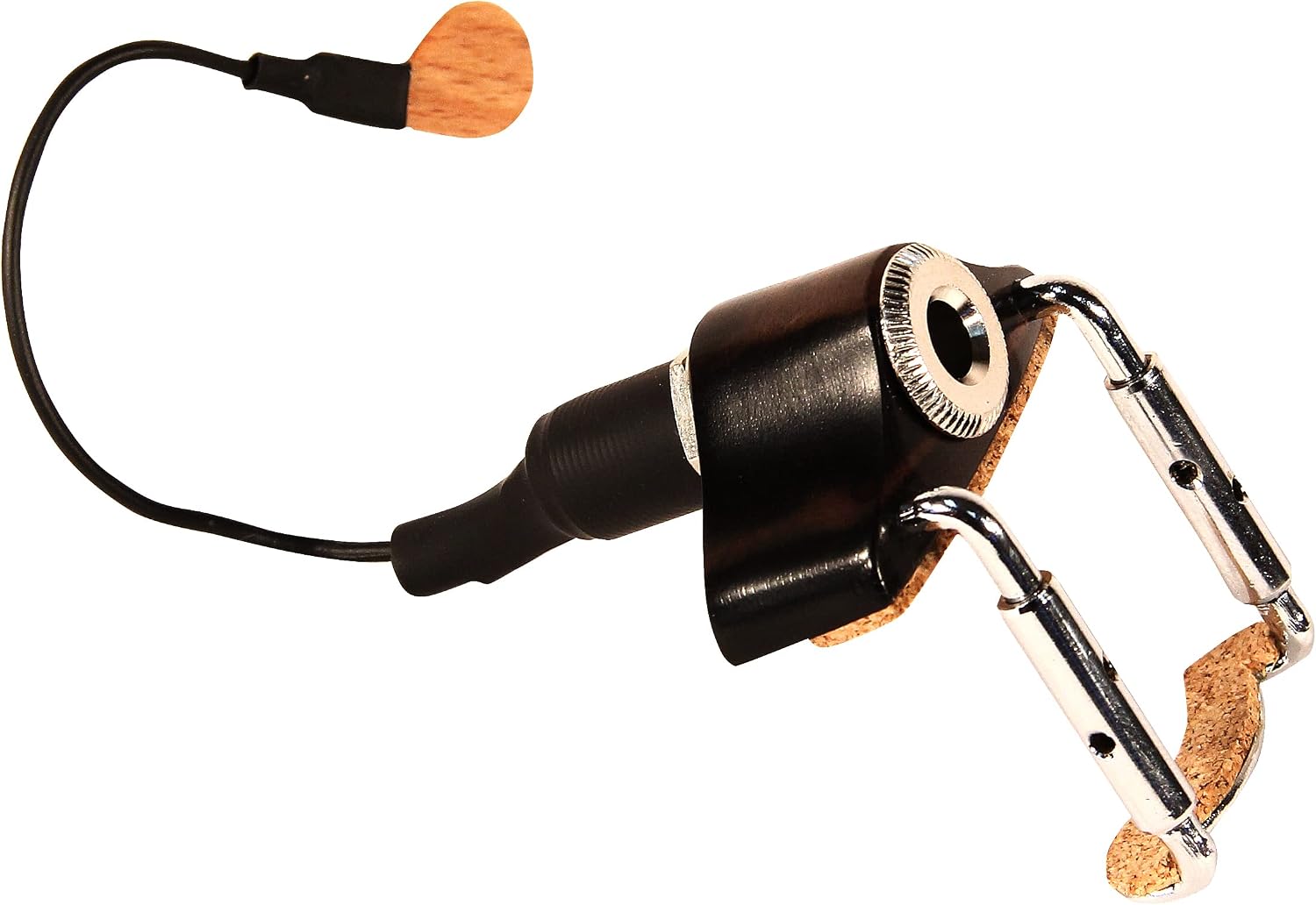
You’re about to walk onto a stage — or into a session — and your acoustic violin needs to be heard over a drummer, a bodhran, or a full bluegrass band PA. That means you need a pickup: a small device that converts the physical vibrations of your instrument into an electrical signal that an amplifier or PA system can project. If you’ve shopped for one recently, you’ve likely hit three distinct categories — piezo (pronounced “pee-AY-zo”), magnetic, and hybrid — and found that the marketing copy for each sounds equally convincing. This guide cuts through that. By the end, you’ll understand exactly what each pickup type does to your tone, what it costs you in dollars and in practical trade-offs, and which one makes sense for your specific use case. Whether you’re a Celtic fiddler playing a 200-seat venue or a session violinist chasing studio-clean amplified tone, there’s a concrete decision framework waiting for you below.
| EDITOR'S PICKFishman V-300 Concert Series Vi… | Mid-tierFishman V-200 Classic Series Vi… | Budget pickBarcus Berry 3100 Clamp-On Brid… | |
|---|---|---|---|
| Pickup type | — | — | Piezo |
| Mount style | — | — | Clamp-on bridge |
| Series | Concert | Classic | 3100 |
| Color | — | MultiColored | — |
| Brand | Fishman | Fishman | Barcus Berry |
| Price | $229.95 | $178.54 | $134.87 |
| See on Amazon → | See on Amazon → | See on Amazon → |
What Each Pickup Type Actually Does to Your Sound
Understanding the mechanism isn’t just academic — it directly predicts how the pickup will behave on your instrument and on stage.
Piezo Pickups
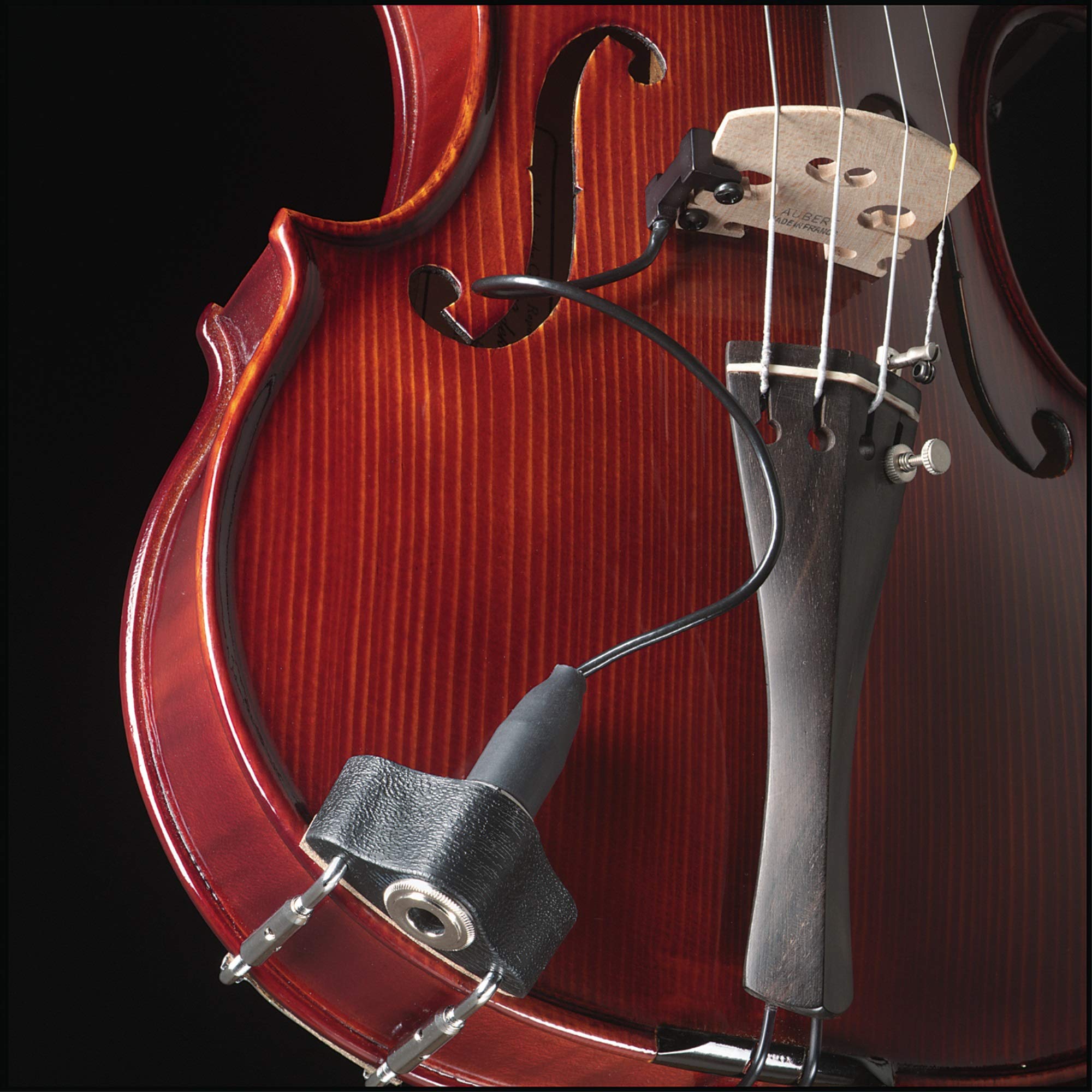
A piezo transducer works by reading mechanical vibration — specifically, it generates a small electrical charge when physically compressed or flexed. On a violin, this element is typically mounted under the bridge foot (bridge-wing style) or embedded in a clip that attaches to the tailpiece or body. Because it’s reading vibration directly from the wood, it captures a broad frequency range including the woody resonance of the top and the complex overtone structure of the instrument.
The trade-off is well-documented. Sound On Sound’s feature on piezo transducer behavior and impedance matching explains that piezo elements carry a very high output impedance, meaning they need to feed into a high-impedance preamp or buffer, or the tone becomes thin, harsh, and nasally “quacky.” Players across amplification discussion threads on violinist.com consistently report this as the number-one mistake with budget piezo setups: plugging a piezo bridge pickup directly into a standard guitar DI or amp input without an impedance-matched buffer strips the low-midrange warmth that makes the pickup worth buying in the first place.
When matched correctly, reviewers and working players describe the piezo as delivering the most “acoustic-adjacent” tone of the three categories — full body, natural transient attack, and relatively transparent reproduction of the instrument’s own character. That’s why it dominates the folk, Celtic, and bluegrass worlds.
Piezo in practice: The Realist Copperhead (bridge wing mount, approximately $175–$200) and the K&K Sound Vio (approximately $130) are the two most-cited names in player reviews and are regularly discussed in Strings Magazine’s coverage of amplified fiddle rigs. Both require an external preamp for best results; players commonly pair them with the LR Baggs Venue DI (approximately $200) or the Radial PZ-Pre (approximately $200) for impedance correction and onboard EQ.
Barcus
$134.87
In stock on Amazon
Check price on AmazonMagnetic Pickups
A magnetic pickup works on the same principle as an electric guitar pickup: it generates a signal by detecting the movement of a metal string through a magnetic field. On a violin, this typically means a small unit that mounts over the fingerboard end or fits against the strings near the bridge.
Because it’s reading string movement rather than body vibration, a magnetic pickup ignores the acoustic resonance of the wood entirely. The result is a tone that sounds noticeably more electric — closer to a processed synthesizer string or an electric guitar tone than to an acoustic violin. That’s not always wrong. For players doing aggressive rock crossover work, heavy distortion rigs, or looped ambient textures, the magnetic pickup’s rejection of acoustic feedback and its lower output impedance — compatible with standard guitar gear without special preamps — are genuine advantages.
MusicRadar’s roundup of violin and fiddle amplification options specifically notes that magnetic violin pickups suffer far less feedback in high-SPL environments, which is useful when you’re standing in front of a loud stage monitor. For Celtic, bluegrass, or acoustic folk contexts, however, most experienced players find the tone too “electric” and the loss of body resonance a deal-breaker.
The Kremona Vio M-series and Barbera Transducer Systems Multivibe are frequently named in boutique-level discussions. The Barbera in particular is mentioned in The Strad’s coverage of amplified performance contexts for its hybrid-adjacent tonal behavior, which gives it more acoustic warmth than typical magnetic-only designs.
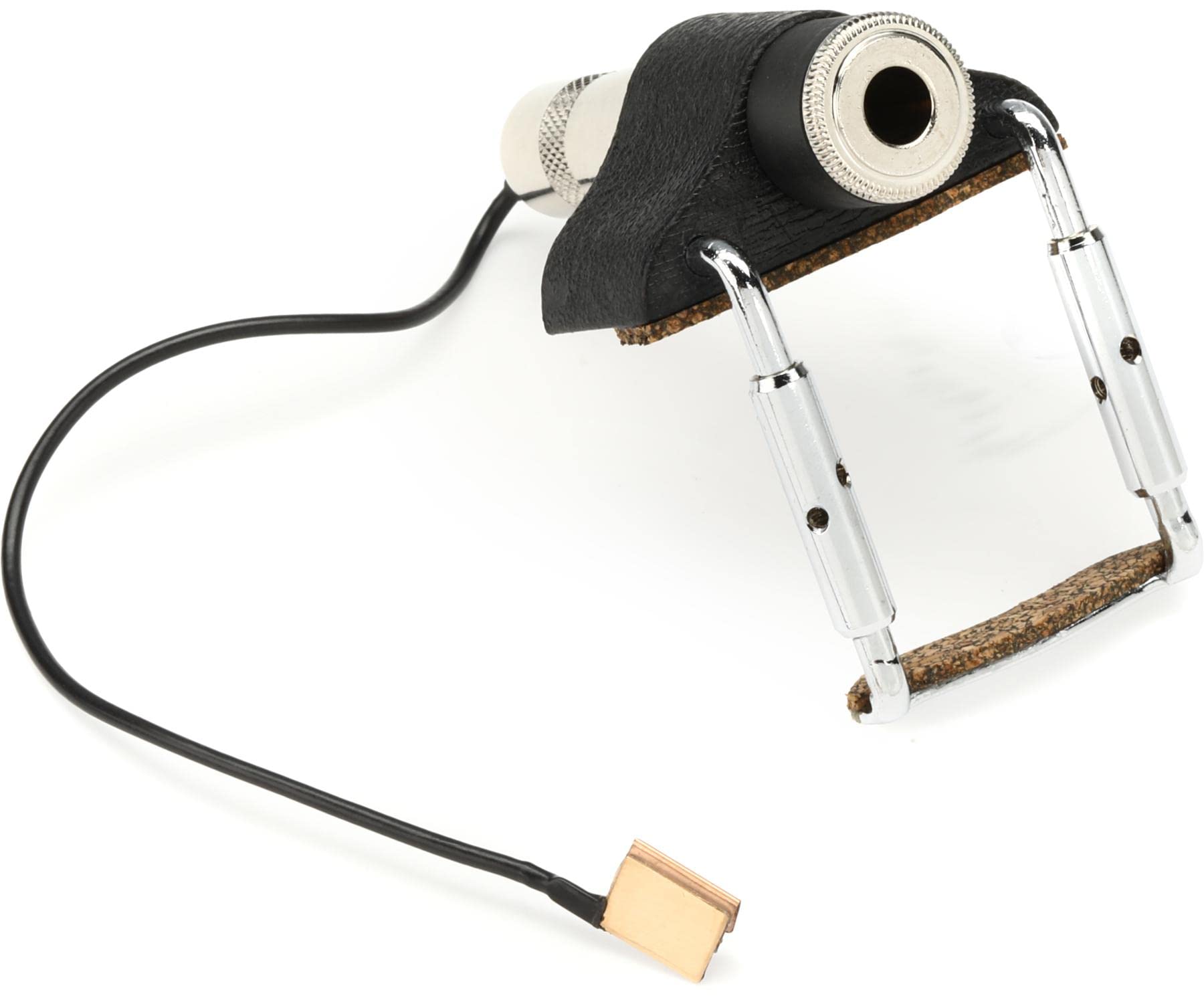
Fishman
$178.54
In stock on Amazon
Check price on AmazonHybrid Systems
A hybrid pickup combines piezo transducer elements with either a magnetic pickup or, more commonly, an internal microphone element, blending the two signals through either a passive network or an active onboard preamp. The goal is to capture acoustic body resonance via the piezo while using the second element to fill in directness, clarity, or feedback rejection.
Sweetwater Sound’s violin pickup and preamp matching documentation notes that hybrid systems are increasingly common among professional-tier touring players precisely because they offer blend control — the ability to dial in more microphone character for a warm room or push toward the piezo for a loud stage. The trade-off is complexity: more components, more potential failure points, and a higher price of entry.
The Barbera Transducer Systems Twin Hybrid (approximately $450–$600 depending on configuration) and the Realist Lifeline (approximately $350) are the two hybrid designs most consistently discussed at the professional folk and session level. The Lifeline in particular has developed a following among working Celtic session musicians for its relatively low-profile installation and consistent stage behavior, a pattern noted in Strings Magazine’s coverage of professional Irish music performance gear.
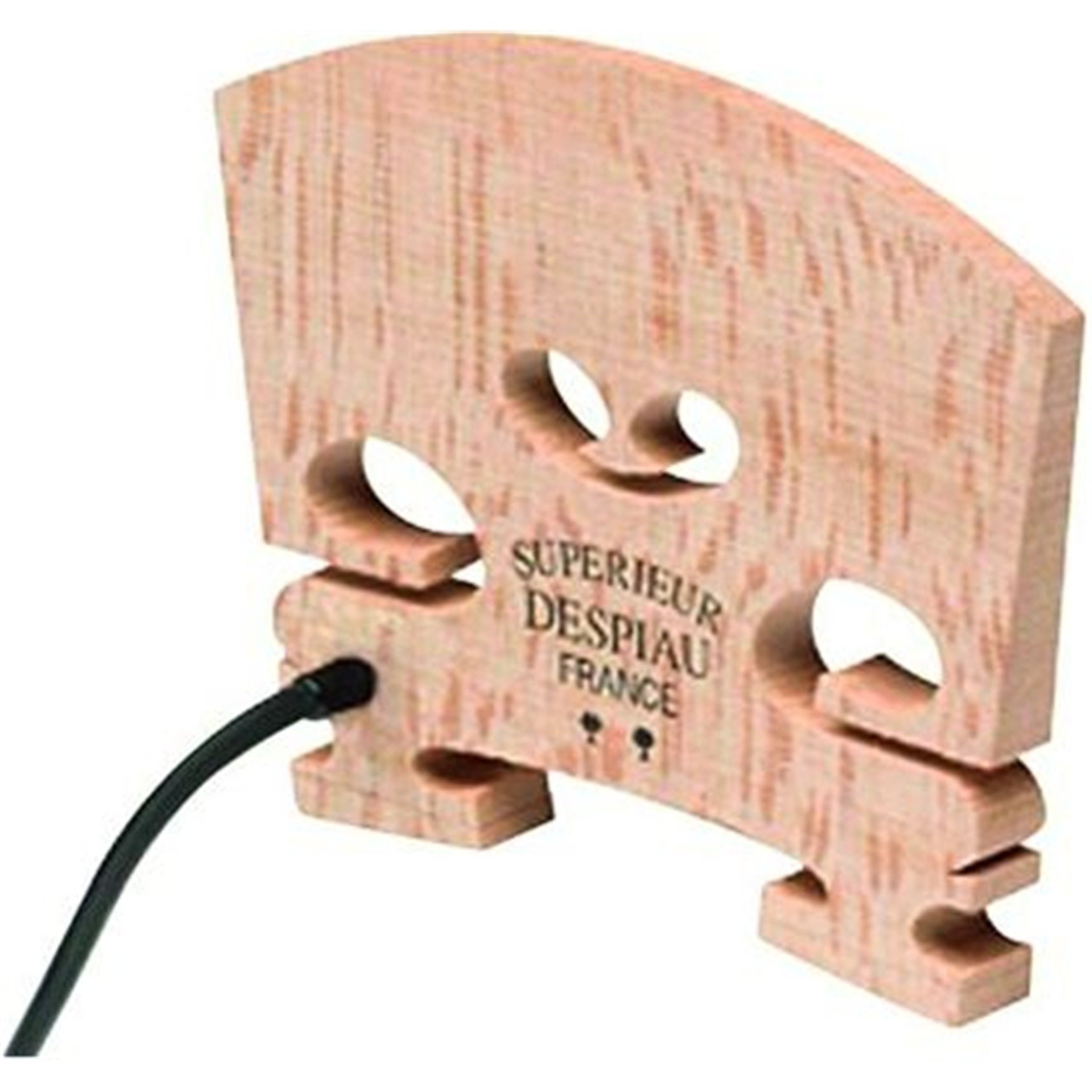
Fishman
$229.95
In stock on Amazon
Check price on AmazonThe Numbers: Budget Reality Check
| Pickup Category | Entry Price Range | Pro Price Range | Required Accessories | Tier |
|---|---|---|---|---|
| Piezo (bridge/wing) | $80–$175 | $175–$400 | Preamp/DI ($150–$250) | Barcus — $134.87 |
| Magnetic | $100–$200 | $300–$600 | Standard DI or amp input (low cost) | Fishman — $178.54 |
| Hybrid (active blend) | $250–$350 | $400–$650 | Often self-contained; preamp helps | Fishman — $229.95 |
The true cost of a piezo rig is almost always higher than the sticker price suggests. A $130 K&K Sound Vio plus a $200 LR Baggs Venue DI lands you at $330 before cables. A hybrid system at $450 with its own onboard blend control may be the more economical professional solution once you factor in the full accessory chain.
Stage Reliability: What Working Players Report
This is where practical experience diverges sharply from manufacturer marketing, and it’s worth spending time here.
Piezo systems are the most commonly reported category for feedback sensitivity in loud live environments. Players in amplification discussion threads on violinist.com consistently note that bridge-wing piezos require careful placement relative to monitors and tend to be more susceptible to low-frequency stage rumble than magnetic or hybrid alternatives. The fix is usually a high-pass filter applied either at the DI or at the board, but this requires a sound engineer who understands the issue — not guaranteed at a small folk venue.
Magnetic pickups show a strong reliability advantage in player reports for high-volume situations — bar gigs, open stages, loud bands — with significantly fewer feedback complaints. The reliability trade-off is installation: magnetic violin pickups often require modification to the instrument’s nut or tailpiece, which raises concerns for players using a valuable acoustic instrument.
Hybrid systems generate the fewest catastrophic failure reports in aggregated reviews, but the failure modes when they do occur tend to be more complex — internal blend pots failing, preamp battery drain causing signal dropout mid-set. Players who use hybrids at the professional level consistently emphasize keeping a backup passive piezo signal path available for emergencies.
A pattern worth noting from Strings Magazine’s live performance coverage: working players on extended touring schedules lean toward piezo-plus-external-preamp rigs not because they’re sonically superior in every situation, but because the failure mode is simple and field-repairable. A piezo bridge element can be replaced quickly with tools available at any luthier shop; a failed hybrid preamp board mid-tour is a more serious logistical problem.
The Folk and Celtic Specific Case
For players whose primary genre is traditional folk, Celtic, or bluegrass, the tone benchmark is always “acoustic-adjacent” — the audience knows what a fiddle sounds like, and the amplified version needs to honor that expectation. This narrows the realistic field considerably.
Magnetic pickups are rarely the right answer in this context. The Strad’s coverage of amplified performance in traditional music contexts makes clear that acoustic fiddle tone authenticity remains the dominant priority for both players and audiences, and magnetic-only systems consistently fall short of delivering it.
The decision then becomes piezo plus quality preamp versus hybrid. The math here is less about tone quality — both can sound excellent when set up correctly — and more about how you work.
If you play multiple acoustic instruments and already own (or plan to own) a quality DI preamp like the LR Baggs Venue or the Radial PZ-Pre, a bridge-wing piezo is the more versatile investment. As Sweetwater Sound’s preamp matching documentation explains, the same preamp will serve a mandolin, a bouzouki, or an acoustic guitar with appropriate cable swaps, making the single-preamp investment extend across your whole acoustic rig.
If the violin is your primary income-generating instrument and you’re playing loud venues without a dedicated sound engineer, a hybrid with onboard blend control gives you more real-time sonic management without relying on the house board.
The Decision Framework: If X, Then Y
Here’s the explicit decision tree, based on the patterns in professional player reviews and published spec comparisons across Strings Magazine, MusicRadar, Sound On Sound, and violinist.com amplification discussions:
Scenario 1: Folk, Celtic, or Bluegrass — Moderate Volume, Quality Preamp in Hand
If you play mostly acoustic-forward folk, Celtic, or bluegrass in moderate-volume settings and already own a quality DI preamp: → Go piezo. A K&K Sound Vio or Realist Copperhead paired with an LR Baggs Venue DI is the most field-proven combination in this genre. Total investment of approximately $330–$400 gives you a rig that works across multiple instruments.
Barcus
$134.87
In stock on Amazon
Check price on AmazonScenario 2: Loud Stages, Bars, or Festivals Where Feedback Is a Real Risk
If you play loud stages, bars, or festival slots where feedback is a genuine risk and tone authenticity is secondary to reliability: → Consider magnetic, with the understanding that you’re accepting a more “electric” character. Evaluate the Barbera Multivibe if you want the closest approach to acoustic tone within the magnetic category, as its design moves it closer to hybrid behavior than most magnetic-only units.
Fishman
$178.54
In stock on Amazon
Check price on AmazonScenario 3: Primary Professional Instrument, Varied Venues, No Consistent FOH Engineer
If the violin is your primary professional instrument, you play varied venue sizes without a consistent front-of-house engineer, and your budget reaches $450 or more: → Hybrid is the right category. The Realist Lifeline and Barbera Twin Hybrid appear most consistently in professional-level coverage across The Strad and Strings Magazine for a reason: they offer onboard control that lets you manage tone in real-time without relying on someone else’s board.
Fishman
$229.95
In stock on Amazon
Check price on AmazonScenario 4: First Pickup, Under $200 Total Budget
If you’re still on a first acoustic violin pickup budget of under $200 total: → Start with a piezo element only and plug it into whatever DI is available, but treat that first rig as a learning exercise rather than a final answer. You will quickly feel the impedance mismatch problem firsthand and understand exactly what the preamp investment is solving — making your next purchase a much more informed one.
Barcus
$134.87
In stock on Amazon
Check price on AmazonYour Next Step
The single most useful action right now is to identify which scenario above most closely matches your current performance context: venue size, genre expectations, whether you already own a preamp, and whether you’re running your own signal chain or depending on a house engineer. That one variable — who controls your signal at the venue — does more to determine the right pickup category than tone preference alone.
Once you’ve mapped your scenario, the ElectricFiddles buying guide to onboard preamps and DI boxes for string instruments goes deeper on the impedance-matching question and names the specific preamps worth budgeting for at each tier. It’s the natural companion read to this guide and will sharpen your total-system thinking before you commit any money.