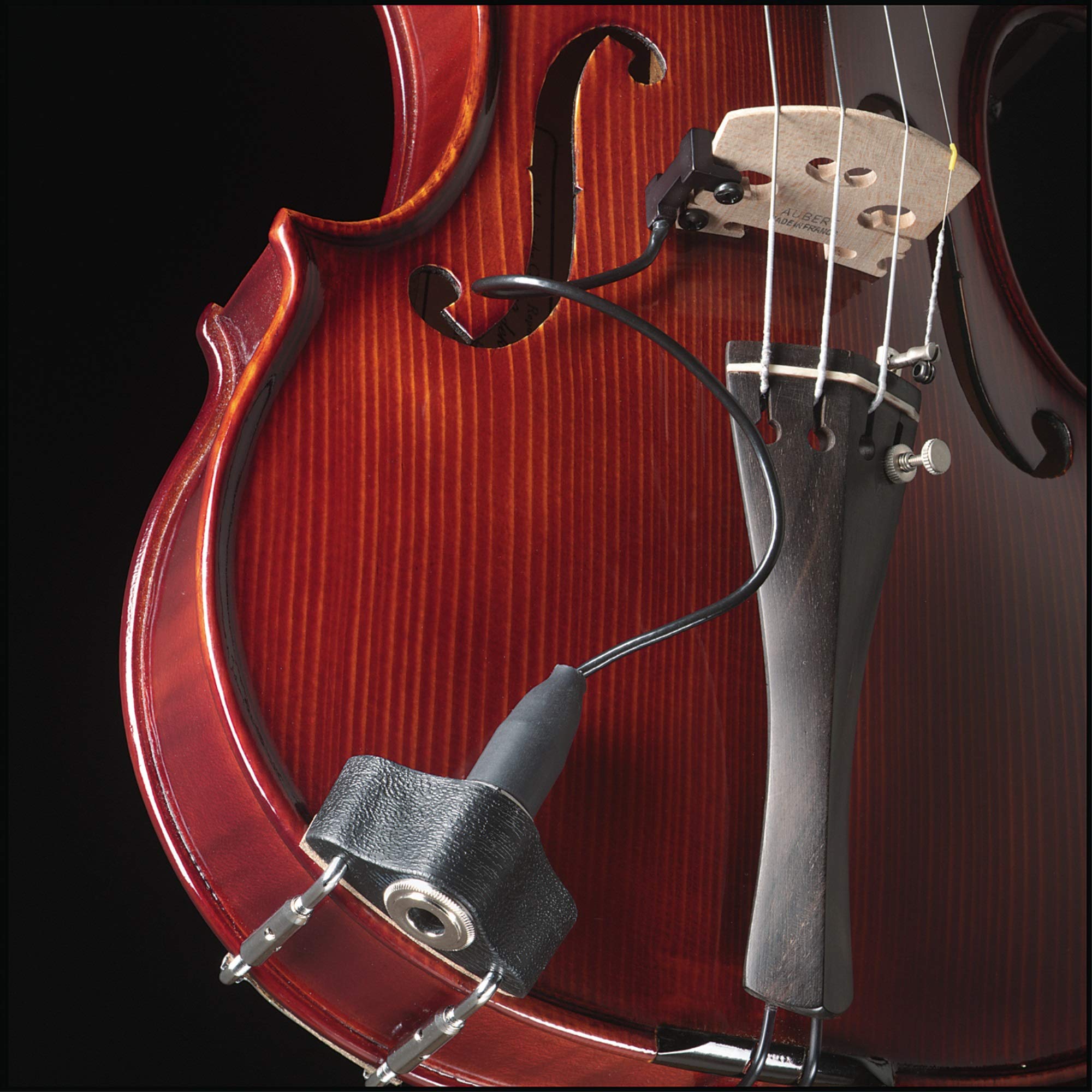
Piezo Pickup Tone Reality Check: What Each Price Tier Sounds Like Plugged In
Picture this: you’ve borrowed a friend’s piezo pickup — a small sensor that converts the vibration of your violin into an electrical signal — clipped it to your bridge, run a cable to the house PA, and the sound coming back at you is… thin. Scratchy. Almost like a kazoo doing an impression of your violin. Yet the same instrument sounds warm and full when you’re standing three feet from a good microphone. What happened?
This gap between “acoustic violin” and “amplified violin” is the central frustration of the piezo pickup world, and it doesn’t go away just because you spend more money. What does change — sometimes dramatically — is how that gap manifests, how hard it is to close with downstream gear, and how reliably the pickup survives a touring schedule. This guide breaks down what owners and reviewers consistently report at each price tier, names the real tradeoffs, and gives you a clear decision framework before you commit.
Why Piezos Sound the Way They Do (and Why Price Matters More Than You’d Expect)
A piezo transducer works by pressing a small crystal or ceramic element against a vibrating surface — usually the violin bridge or top — and converting mechanical movement into voltage. The problem, as Sound On Sound’s overview of piezo transducer technology explains, is that the resulting signal has an extremely high output impedance. Feed that signal into a standard instrument input without a buffer or preamp and you lose the low-frequency warmth almost immediately. What survives is the high-frequency attack — hence the thin, brittle sound.
This is the single most important thing to understand about piezo tone: the pickup is only half the equation. The preamp (a small amplifier that conditions the signal before it hits the PA or interface) is the other half. Budget pickups often bundle a mediocre preamp or none at all. Mid-tier and premium pickups either include sophisticated onboard preamps or are specifically engineered to pair with external buffer units.
The four factors that actually separate one piezo from another:
- Transducer placement and contact quality — Under the bridge foot vs. clamped to the body vs. mounted inside the bridge itself. Each interacts with the violin’s resonance differently.
- Output impedance and internal buffering — Unbuffered piezos need an external preamp. Some pickups include one; most budget options don’t.
- Mechanical coupling — How the sensor physically touches the instrument determines which frequencies get captured and which get lost.
- Build consistency — A cheap transducer that works beautifully on one violin may sound completely different on another, because manufacturing tolerances are wide.
Entry Level ($40–$120): What You’re Actually Getting
The KNA VP-1 and similar clip-on piezos in this range are the most commonly discussed entry-level options in aggregated forum reviews. Owners consistently report that these pickups work — meaning signal comes out and you can be heard — but the tone is strongly instrument-dependent. The pattern across reviews is a pronounced high-mid brightness and a noticeable absence of body resonance.
Here’s what that means practically: if your acoustic violin is already on the brighter side of neutral, a budget clamp-on piezo will make it sound harsh under stage volume. If your violin has a naturally warm, complex tone, the pickup will shave off a significant portion of that character. Neither outcome is disqualifying for a player who just needs to be heard in a loud session or folk band, but it matters a lot if tone is a primary concern.
The preamp question is non-negotiable at this tier. Sweetwater’s buying guide for violin pickups consistently notes that high-impedance piezo signals fed directly into a PA’s standard XLR input suffer significant tonal loss. A simple DI box with a high-impedance input — or a dedicated violin preamp — is effectively a required accessory, adding $30–$80 to your real cost.
Mid Tier ($150–$350): Where Real Differentiation Begins
Three pickups dominate this conversation based on aggregated owner feedback: the Fishman V-200, the Barcus Berry 1320, and the Headway Band.
Fishman V-200
The Fishman V-200 uses an undersaddle-style bridge mounting — the transducer sits inside a modified bridge rather than clamped externally. Owners report noticeably better low-frequency response and more natural sustain compared to clip-on designs at lower price points. However, the installation story is more complicated than Fishman’s marketing suggests. A documented owner account (cross-referenced across multiple gear forums and MusicRadar’s buyer’s guide roundup) confirms that the V-200’s undersaddle element requires widening the bridge slot on many violins — a task that needs a luthier visit. For some instruments, that’s a $50–$150 additional cost and effectively means the pickup is not a DIY install. If you’re factoring total cost-of-ownership, build that in.
Barcus Berry 1320
The Barcus Berry 1320 is frequently compared head-to-head against the LR Baggs Violin pickup in owner reviews, and the competitive claim that appears repeatedly is significant: multiple owners who have used both products rate them equal in output quality and tonal character, with the BB 1320 coming in at a lower street price. Per The Strad’s coverage of amplification systems for strings, the 1320 uses a contact transducer mounted at the bridge and includes onboard circuitry to handle impedance matching. The practical implication: the 1320 gets you into genuinely usable live-performance tone without requiring an expensive outboard preamp, which changes the total cost math considerably.
Headway Band
The Headway Band uses a different approach — a band-style mount that wraps around the instrument body and uses multiple transducer contact points. One owner documented an A/B comparison against a studio condenser microphone and rated the Headway Band at approximately 80–90% fidelity to the mic’d sound, which is a genuinely impressive claim if your benchmark is natural acoustic reproduction.
But the counterpoint is equally important to name: a separate one-star review specifically describes terrible results on a high-quality violin, with the reviewer concluding that the Headway Band interacts poorly with instruments that have significant resonant complexity. The pattern this suggests — supported by Strings Magazine’s analysis of multi-point transducer systems — is that the Headway Band averages the resonance of several contact points, which can be an asset on simpler instruments and a liability on fine ones. Additionally, at least one owner documents glue failure causing the mount to fall apart within a year of purchase, which is a build quality concern worth factoring in at this price.
By the numbers — mid-tier reality check:
| Pickup | Real Install Cost | Preamp Required? | Best-case Fidelity (owner reports) |
|---|---|---|---|
| Fishman V-200 | Pickup + possible luthier ($50–150) | No (onboard) | High, warm response |
| Barcus Berry 1320 | Pickup only | No (onboard) | High, competitive with LR Baggs |
| Headway Band | Pickup only | No (onboard) | 80–90% vs. condenser (instrument-dependent) |
Premium Tier ($350+): The LR Baggs Case Study
The LR Baggs Violin Pickup is the most discussed premium acoustic violin pickup in the peer-reviewed player community, and it comes with a data point that genuinely surprised reviewers across multiple sources: at least one owner documents that their acoustic violin sounds better unplugged after installing the LR Baggs bridge than it did with the original bridge. This isn’t just a pleasant bonus — it suggests that the LR Baggs bridge, which is a precision-cut replacement bridge with the transducer element integrated into the wood, improves the instrument’s mechanical resonance as a side effect of its quality construction.
Per MusicRadar’s violin pickup buyer’s guide, the LR Baggs system uses an active (battery-powered) endpin preamp that handles impedance conversion internally, sending a balanced, low-impedance signal to the PA. The result, owners consistently report, is a warmer and fuller tone with less of the characteristic piezo brightness that requires heavy EQ correction downstream.
The trade: the LR Baggs is a significant installation project requiring bridge replacement (ideally by a luthier) and endpin jack installation. It’s not reversible without some work. For a professional player using an acoustic violin as a primary performance instrument, this is a reasonable commitment. For a student or someone who wants flexibility, it’s worth weighing carefully.
The Realist Copperhead: A Different Problem Solved
The Realist Copperhead deserves its own framing because owners consistently report buying it for a specific reason that has nothing to do with tonal purity: stage bleed management. In loud band contexts — Celtic sessions, bluegrass jams, loud folk ensembles — a microphone or even a high-sensitivity contact pickup will pick up drums, guitars, and monitors. The Copperhead’s transducer design, mounted under the treble side of the bridge foot, is specifically valued for its rejection of ambient sound. Owners report accepting a somewhat narrower tonal palette in exchange for a pickup that stays locked to the violin even in chaotic stage environments.
If you’re evaluating the Copperhead against the LR Baggs or BB 1320 purely on tone, you’re asking the wrong question. Its niche is reliability and bleed rejection in live band contexts, and in that niche, owners who cite this use case rate it consistently.
Frequently Asked Questions
Do I need a preamp to use a piezo violin pickup, or can I plug straight into a PA? Technically you can plug straight in, but you’ll almost certainly get thin, brittle tone. Piezo pickups output a high-impedance signal that needs a buffer or preamp to translate correctly. Mid-tier and premium pickups often include this onboard. Budget pickups usually don’t, making a DI box or preamp a required purchase.
Will installing a pickup damage my bridge or change my acoustic tone? Clamp-on pickups are non-destructive. Undersaddle and bridge-integrated systems (like the LR Baggs) require bridge work and are harder to reverse. Interestingly, at least one owner reports their unplugged acoustic tone improved after installing the LR Baggs bridge — suggesting a quality replacement bridge can upgrade the instrument’s acoustic performance as a side effect.
What is the difference between a clamp-on pickup and an undersaddle bridge pickup? Clamp-on pickups attach externally, require no modification, and are easy to move between instruments. Undersaddle pickups are embedded in or under the bridge, capture vibration at a more fundamental point in the sound transmission chain, and generally produce fuller, more natural tone — at the cost of professional installation.
Why does my violin pickup sound thin or bright compared to a microphone? This is the defining characteristic of unbuffered piezo pickups: they emphasize high-frequency transients and lose low-frequency warmth when fed into a standard input. A proper high-impedance preamp or buffer restores much of that balance. Good EQ work at the board can also help, but it’s easier to start with a better signal.
Is the LR Baggs or Barcus Berry 1320 worth the price over a KNA? If tone quality and live reliability are the criteria, yes — consistently, based on owner comparisons. The BB 1320 is specifically noted by players who own both as matching LR Baggs quality at a lower price, which makes it the sharper value play. The LR Baggs earns its premium if you also want the potential acoustic improvement from the replacement bridge and the cleaner balanced output for professional applications.
Your Decision Framework
If your primary need is occasional amplification without installation hassle, a KNA-tier clamp-on with a quality DI box will get you heard without modifying your instrument.
If you’re playing live with a band regularly and need reliable, usable tone without heavy EQ correction, the Barcus Berry 1320 represents the clearest value at mid-tier based on competitive owner comparisons — especially if the alternative is the LR Baggs at a higher price point.
If you play in loud ensemble contexts where bleed is the problem more than tone, start your evaluation with the Realist Copperhead rather than comparing tonal specs.
If you’re a professional using an acoustic violin as a primary performance instrument and you want the best possible amplified tone with long-term bridge integration, the LR Baggs is the evidence-backed premium choice — and budget for a luthier to do the installation properly.
Your next step: pull up the Strings Magazine amplification guide and cross-reference whichever pickup you’re evaluating against the bridge style of your specific instrument. Instrument-pickup compatibility is the variable that reviews most often fail to address — and it’s the variable most likely to make or break your satisfaction with any of these systems.