If you’ve ever lived in an apartment and picked up your violin at 9 p.m., you already understand the problem: acoustic violins — instruments that produce sound purely through vibrating wood and strings, with no electronics required — are genuinely loud. Even gentle playing can push through walls. A practice mute — a small device that clamps onto the bridge (the thin wooden piece that holds the strings up) — reduces that volume by dampening the bridge’s vibration before it transfers into the instrument’s body. There are three practical options most players land on: a heavy rubber mute designed specifically for silent practice, a Tourte-style mute (a lightweight rubber or metal mute originally designed for orchestra performance), or simply playing unmuted. Each involves real tradeoffs. This guide lays them out directly so you can make a fast, confident call.
What Each Mute Actually Does — and Doesn’t Do
The confusion in this category starts with mismatched expectations. All three options produce fundamentally different results, and understanding why matters before any purchase decision.
No mute gives you the full acoustic experience — all the bow feedback, resonance, and projection your instrument is capable of. It’s the baseline. If you’re in a detached home, practicing before 9 p.m., or working on tone production specifically, unmuted practice is almost always the right call. You can’t train your ear or your bow arm on a dampened sound and expect clean results in performance. Strings Magazine, in their practice accessories overview, consistently emphasizes that heavy muting should be situational, not habitual, precisely because it masks the feedback loop players depend on for technique development.
A Tourte-style mute — the small, light rubber or metal clip that most orchestral players keep on their strings “at the ready” during concerts — is designed to reduce volume by roughly 20–30% and soften the upper overtones for performance effect. It is not a practice mute. It won’t meaningfully quiet you for a neighbor with thin walls. Its real value is in tone shaping: it produces the veiled, darker sound called for in passages marked con sordino (with mute) in classical scores. If you’re rehearsing those passages and want accurate sonic feedback, a Tourte is correct. If you’re trying not to wake a sleeping partner, it is not.
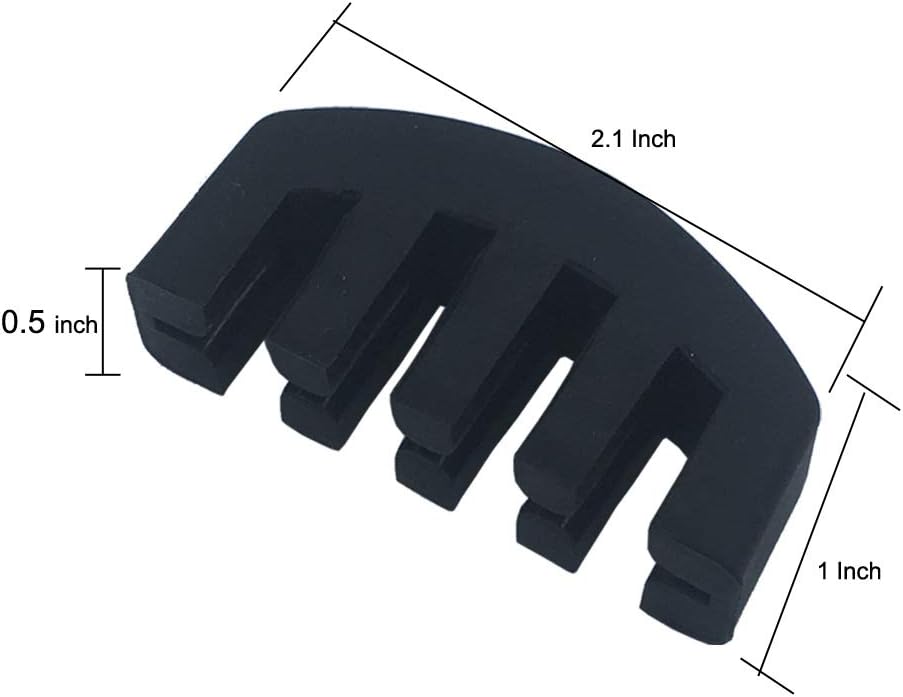
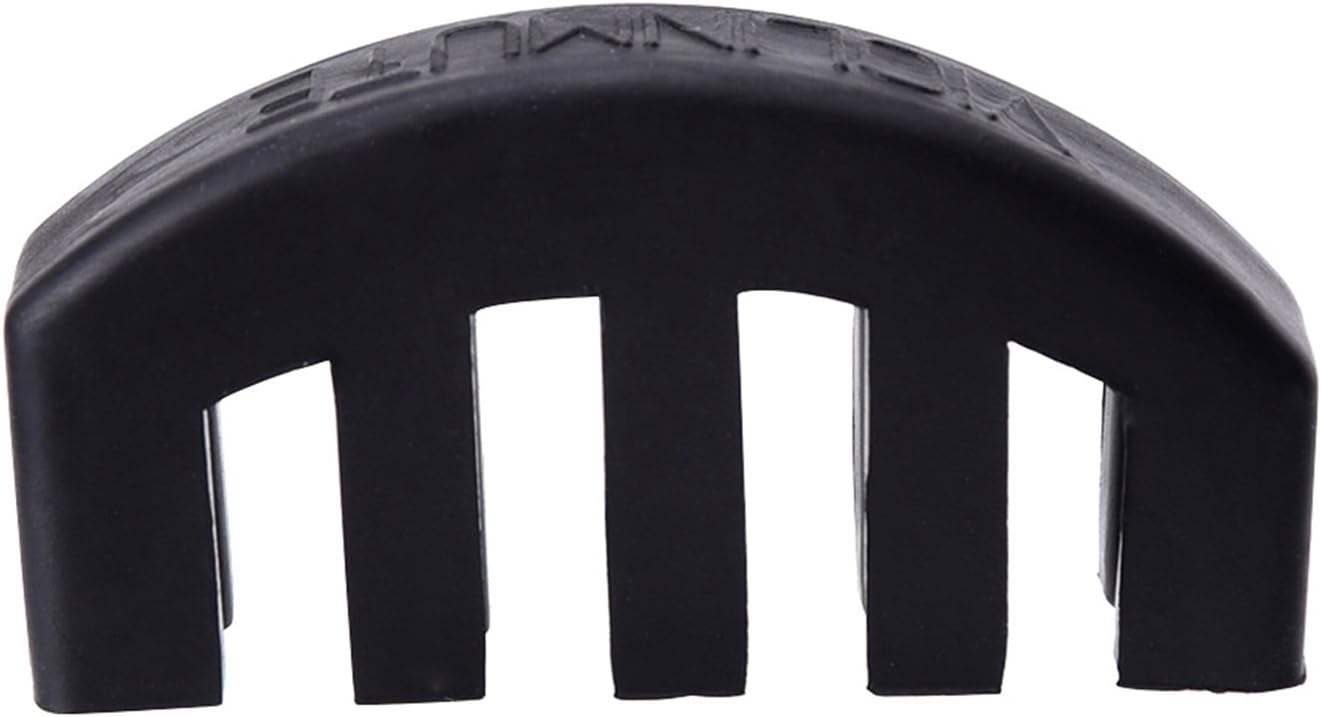
A heavy rubber practice mute — the thick, multi-pronged rubber block that grips the bridge from behind — is a different category entirely. It dampens significantly more vibration, reducing output by roughly 40–50% compared to open playing, based on aggregated owner reports across major retail review pools. The eBoot rubber mute is the most-cited example in this category, with a consistent pattern of strong reviews from players specifically in apartment and dormitory situations. That said — and this is the point multiple buyers arrive at the wrong way — even the heaviest rubber practice mute does not make an acoustic violin as quiet as an electric violin played silently through headphones. That distinction matters enormously, and we address it directly in the FAQ below.
The Three Options, Compared Directly
The three H3 sections below each represent one tier of the mute category. Read through all three before committing — the differences are categorical, not incremental.
Option 1: No Mute — Full Acoustic Practice
Playing without any mute is not an oversight — it’s a deliberate choice for the right context. Unmuted practice delivers full bow feedback, complete resonance, and accurate projection so your ear and arm can calibrate together. The Strad, in their reader Q&A on practice acoustics and muting, makes this point plainly: muting is a situational tool for managing neighbors, not a practice philosophy. Players preparing for auditions, working on tone production, or developing bow technique should spend the majority of their practice time unmuted, in a space and at a time when that’s feasible.
Best for: detached home, daytime practice, tone work, audition preparation, technique development. Not for: apartments with thin walls, late-night sessions, noise-sensitive housemates.
4
$5.99
In stock on Amazon
Check price on AmazonOption 2: Tourte-Style Mute — Orchestral Tone Shaping
The Tourte-style mute is the standard orchestral tool. Sweetwater, in their product category notes on orchestral and practice accessories, draws a categorical line between performance mutes and practice mutes, noting that conflating them drives the most common buyer regret in this category. A Tourte reduces volume modestly — roughly 20–30% — and shifts the timbre toward the darker, veiled quality that composers request when they write con sordino. It is the correct tool for rehearsing those passages accurately. It is not a noise-management device.
Metal Tourte variants (sometimes called “wire mutes”) are standard in many professional orchestras because they can be clipped to the strings between the tailpiece and bridge and slid into position quickly during a performance. Rubber Tourte variants work the same way but tend to be slightly lighter and quieter in transit. Either version belongs in an orchestral player’s case as a matter of course — but neither belongs in the “apartment practice” conversation.
Best for: orchestral rehearsal, chamber music, con sordino passage work, light acoustic softening. Not for: apartment noise concerns, late-night practice, situations requiring significant volume reduction.
4
$5.99
In stock on Amazon
Check price on AmazonOption 3: Heavy Rubber Practice Mute — Noise Management
The heavy rubber practice mute is designed for one purpose: reducing the acoustic output of your violin enough to practice in a noise-sensitive environment. The eBoot multi-prong rubber mute is the most widely reviewed product in this category and the most commonly recommended starting point in community discussions, including Violinist.com’s ongoing threads on rubber practice mutes and apartment noise.
Owners consistently describe it as genuinely usable for late-night practice, and violin teachers who buy them in bulk cite the psychological benefit — students practice without anxiety about being overheard, which matters for consistency. The volume reduction with a heavy rubber mute is real: owner reports across major retail pools converge on roughly 40–50% compared to open playing. For most standard apartment situations — reasonable wall construction, a floor between you and the nearest neighbor — this brings late-evening practice into a manageable range.
That said, Violinist.com community discussion threads on rubber practice mutes and apartment noise are consistent on one point: the reduction helps in most apartment contexts, but players in truly noise-restricted buildings — shared walls, very thin construction — sometimes find that even this level of muting isn’t sufficient, and ultimately move to a silent electric instrument.
Best for: apartments, dormitories, late-night practice, any situation where volume management is the primary goal. Not for: tone development, technique sessions requiring accurate bow feedback, orchestral rehearsal.
eBoot
$5.99
In stock on Amazon
Check price on AmazonComparison at a Glance
| Mute Type | Approx. Volume Reduction | Tone Impact | Primary Use Case |
|---|---|---|---|
| None | 0% | Full resonance | Home practice, tone work, performance prep |
| Tourte-style | ~20–30% | Slight darkening | Orchestral con sordino passages |
| Heavy rubber (e.g., eBoot) | ~40–50% | Significant dampening | Apartment/late-night noise management |
| Electric violin + headphones | ~95–100% | Separate instrument entirely | Near-total silence required |
The bottom row is included intentionally. A silent electric violin routed through headphones — the Yamaha YEV-104 is a frequently cited example in this instrument category — produces near-total silence from the instrument body, leaving only the faint mechanical scratch of bow on string. No mute on an acoustic instrument approaches that level of quiet. If your situation demands near-total silence, the correct solution is a different instrument category, not a heavier mute.
Instrument Fit Issues — Especially for Viola Players
One of the most consistent complaints in the heavy rubber mute category involves fit, and it specifically affects viola players. The eBoot mute marketed as a “violin and viola” mute is sized for standard 4/4 violin bridge dimensions. Owner reviews confirm it does not seat securely on a 15-inch viola body, and multiple buyers have noted it is also ineffective on 16-inch violas. If you’re a viola player: that “violin/viola” label is marketing copy, not a dimensional guarantee. Viola players should verify bridge width specifications and seek mutes explicitly sized for viola, or contact the manufacturer directly to confirm fit before purchasing.
For 4/4 violin players, fit is not typically an issue. The eBoot mute’s multi-prong design grips the bridge consistently across the standard bridge widths found on full-size instruments.
One commonly reported characteristic of new rubber mutes is a strong rubber odor on first opening. This is normal manufacturing residue. Owners across retail review threads consistently report that the smell fades within a few days to a week of airing out, and it does not affect playability or instrument finish.
The Rubber Mute’s Effect on Bow Feel
This is a real and underappreciated tradeoff. Under a heavy rubber practice mute, the tactile feedback through the bow changes. Because the bridge is dampened, it transfers less vibration back up through the strings, and the bow arm experiences less of the “grip and release” sensation that players use to calibrate stroke weight and speed. Owners who use heavy rubber mutes regularly note that returning to unmuted practice can feel briefly disorienting — the instrument suddenly feels louder and more responsive than expected.
This is not a reason to avoid practice mutes. It is a reason to be deliberate. Strings Magazine, in their practice accessories overview, recommends treating muted and unmuted practice as different modes serving different goals — not substitutes for each other. Use the mute for sessions where noise management is the priority, and carve out unmuted time — even brief sessions — to keep your bow arm calibrated to the instrument’s real behavior.
Frequently Asked Questions
How much does a heavy rubber practice mute actually reduce volume — is it enough for apartment walls?
Owner reports consistently converge on roughly 40–50% volume reduction with heavy rubber mutes, which is meaningful but not transformative. For most standard apartment situations — reasonable wall construction, some physical distance between you and neighbors — this brings late-evening practice into an acceptable range. For thin shared walls or direct next-door neighbors, the reduction helps but may not be sufficient on its own. Players in truly noise-sensitive situations often layer the mute with soft furnishings to absorb room sound, or ultimately move to a silent electric instrument.
Does a rubber mute change tone or bow response?
Yes, on both counts. Tone becomes noticeably dampened and loses upper harmonic brightness — players describe it as muffled or “closed.” Bow feedback through the strings is also reduced, which changes the tactile feel of the stroke. This is manageable for maintenance practice but is not appropriate for sessions focused on tone refinement or technique development.
Will a 4/4 violin mute fit a 15-inch or 16-inch viola?
Generally, no. Owner reports confirm that mutes marketed as “violin/viola” — including the widely reviewed eBoot mute — do not fit securely on 15-inch or 16-inch viola bridges. Viola players should verify bridge width dimensions and seek mutes specifically sized for viola.
What is the difference between a Tourte mute and a heavy practice mute?
They are categorically different tools. A Tourte mute reduces volume by roughly 20–30% and is designed for orchestral tone shaping. A heavy rubber practice mute reduces volume by 40–50% and is designed for noise management. Neither is ideal for the other’s purpose. As Sweetwater notes in their product category coverage of orchestral and practice accessories, conflating these two mute types is the most common source of buyer regret in this category.
Is a muted acoustic violin quieter than an electric violin played through headphones?
No — and this is the most common misunderstanding in this category. An electric violin routed through headphones produces near-total silence from the instrument body. A heavy rubber mute on an acoustic violin still leaves substantial acoustic volume. If your situation demands near-total quiet, an electric violin with headphone output is the correct solution.
Does the rubber odor from a new mute go away?
Yes. Owners consistently report that the strong rubber smell present on opening dissipates within a few days to a week if the mute is left to air out. It does not appear to affect the instrument or its finish.
The Decision Rule
- Noise management, acoustic instrument: a heavy rubber practice mute is the right starting point. Go in knowing the limits — it reduces volume meaningfully, not completely.
- Orchestral con sordino rehearsal: a Tourte-style mute is correct. Don’t substitute a practice mute.
- Tone development, technique, audition prep: no mute. The feedback your bow arm needs is exactly what a heavy rubber mute suppresses.
- Near-total silence required: no acoustic mute will get you there. An electric violin with headphone output is the real solution — and that’s a separate buying decision worth exploring in depth.
If you’re still weighing whether a practice mute solves your situation or whether a silent electric instrument makes more sense for your setup, the ElectricFiddles.com guide to entry-level and mid-range silent practice instruments walks through that comparison directly.