You’re standing in the wings, thirty seconds before your entrance, and your cable just got stepped on — again. Going wireless is the obvious fix. But when you start shopping for a wireless violin system, you hit a fork in the road almost immediately: do you go with a gooseneck microphone transmitter (a small flexible-neck mic that clips near your instrument and picks up acoustic sound through the air) or a wireless piezo transmitter (a system that reads vibration directly from the instrument body or bridge, then sends that signal wirelessly to a receiver)?
Both solve the cable problem. But they solve almost everything else differently — tonal character, feedback resistance, setup complexity, and how they behave the moment a loud drummer sits down beside you. If you’re 6–24 months into working live gigs and this decision is sitting in front of you right now, this article is the decision-frame you need. We’ll name the tradeoffs explicitly, show the math where it matters, and give you a clear “if X, then Y” rule at the end.
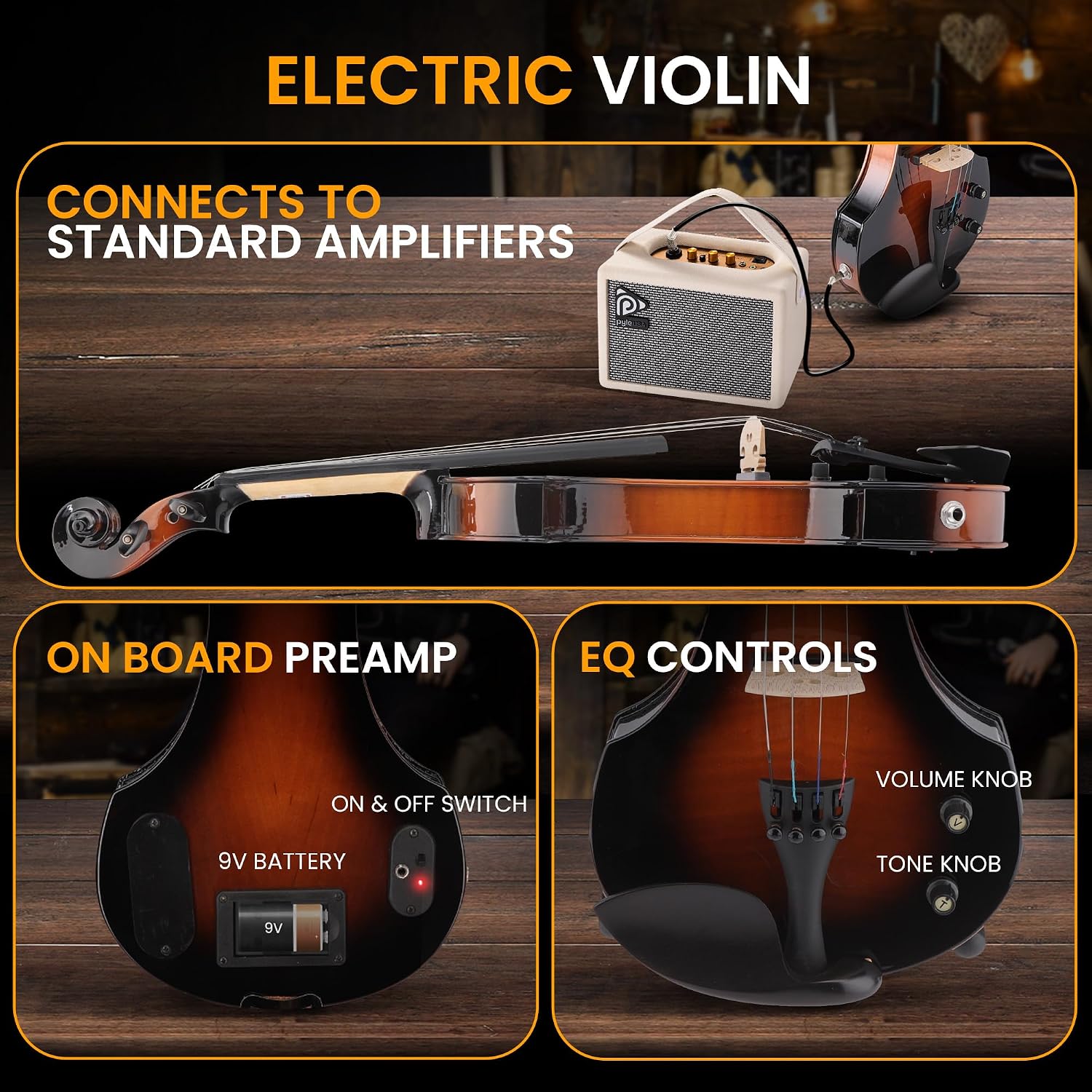
| EDITOR'S PICKPyle 4/4 Silent Electric Violin… | Mid-tierVT-5 Violin Microphone Wireless… | Budget pickMOOER Air Plug AP10 2.4Ghz Char… | |
|---|---|---|---|
| System type | Silent electric violin | UHF wireless mic | 2.4GHz wireless |
| Includes mic | — | ✓ | ✗ |
| Includes amp | ✓ (10W) | ✗ | ✗ |
| Pickup type | — | — | Piezoelectric |
| Wireless band | — | UHF | 2.4GHz |
| Charging | — | — | Rechargeable |
| Price | $221.99 | $129.00 | $88.00 |
| See on Amazon → | See on Amazon → | See on Amazon → |
How Each System Actually Captures Your Sound
Understanding what each system is capturing helps you predict how it will behave before you ever set foot on a stage.
Gooseneck mic systems — like the XTUGA wireless violin mic or the VT-5 clip transmitter — mount a miniature condenser or dynamic microphone on a flexible neck that positions the capsule near the f-holes or bridge. They capture airborne acoustic sound, which means they’re picking up your instrument’s full resonance: the body’s warmth, overtones, and natural projection. That’s the upside. The downside is that they’re also picking up everything else in the air: monitor bleed, crowd noise, and — critically — the stage volume that causes feedback (that howling squeal when a mic’s output loops back through a speaker near it).
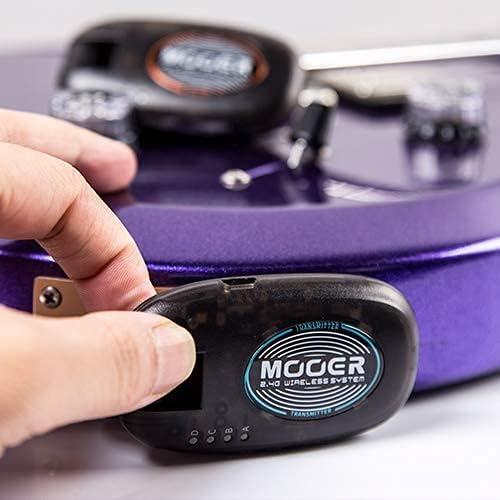
Wireless piezo transmitter systems — like the KNA VV-Wi or the MOOER Air Plug AP10 — work differently. A piezo element (a crystal or ceramic sensor that converts physical vibration into an electrical signal) attaches to the instrument, and the transmitter sends that electrical signal wirelessly. There’s no microphone capsule involved. Because you’re capturing vibration rather than airborne sound, feedback is dramatically less of a concern. The tradeoff is tonal: piezo pickups have a characteristic bright, sometimes thin or “quacky” quality that varies by instrument and pickup placement. Strings Magazine’s amplification coverage notes this tonal character consistently across discussions of piezo transducer options for bowed strings.
One important nuance flagged repeatedly in owner reviews: if you don’t already have a pickup installed on your violin, a wireless piezo system doesn’t automatically solve that. The MOOER AP10, for instance, plugs into your existing output jack — meaning it requires a violin that already has an onboard pickup. If you’re playing an acoustic violin with no existing electronics, your options narrow to either adding a separate piezo transducer first, or going the gooseneck mic route.
The Stage Reality: Feedback, Range, and Battery Life
This is where the marketing specs and the lived experience of working players diverge most sharply. Let’s go category by category.
Feedback Resistance
Gooseneck mics struggle at volume. At a quiet worship service or a folk session in a small room, they can sound beautiful — owners of the VT-5 system specifically report it working well in church worship settings with 30-foot line-of-sight to the receiver. But scale that up to a loud rock stage with wedge monitors behind you, and you’re fighting an uphill battle. Sound On Sound’s coverage of stage wireless systems notes that omnidirectional capsules (common in budget clip mics) are particularly vulnerable to feedback because they hear equally in all directions — a structural disadvantage in high-SPL live environments.
Wireless piezo systems are largely feedback-immune by design. Owners of the KNA VV-Wi report this as the primary reason they switched away from wired or mic-based solutions. One well-documented owner account notes switching specifically from the Barcus Berry 3100 wired pickup because the wired cable was muting the instrument’s acoustic resonance — the wireless elimination of that physical cable was as important as the feedback improvement.
Usable Range
UHF (Ultra High Frequency) wireless systems — which operate in the 500–900 MHz range — are the industry workhorse for stage use. Per Sweetwater Sound’s Wireless Systems Buying Guide, UHF systems offer reliable performance up to 100–300 feet in open environments, though real-world venue conditions (concrete walls, interference from other wireless systems, RF congestion) consistently reduce that figure. In a typical church or small club — the most common use scenarios for working violinists — 30–60 feet of reliable range is a realistic expectation, not the 300-foot spec-sheet number.
2.4 GHz digital systems (used by some compact transmitters) can be more vulnerable to interference from Wi-Fi networks in busy venues. MusicRadar’s Best Wireless Systems for Live Performance 2025 roundup flags this as a growing concern in urban venues where dozens of Wi-Fi networks compete in the same frequency space.
Battery Life and the Problem Nobody Talks About
By the numbers:
- VT-5 transmitter: owners report 5+ hour sessions without failure in worship settings
- MOOER AP10: manufacturer-rated at approximately 5 hours per charge
- ACEMIC dual-channel system: rechargeable, but reviewers flag unclear charge-level indication
- Most compact transmitters: no real-time battery percentage display
That last point is worth dwelling on. Across aggregated reviews of the VT-5, the ACEMIC dual-channel system, and similar compact transmitters, battery status indication is consistently flagged as confusing or absent. You get an LED that turns red when you’re almost dead — but “almost dead” might mean twenty minutes or two minutes, and no one tells you which. If you’re playing a five-set night, that ambiguity is not acceptable. A practical workaround used by experienced players: charge fully before every gig, keep a charged spare transmitter in your case, and treat the low-battery LED as an “exit now” signal rather than a warning.
The Hardware Fit Problem: Don’t Assume It Will Work on Your Violin
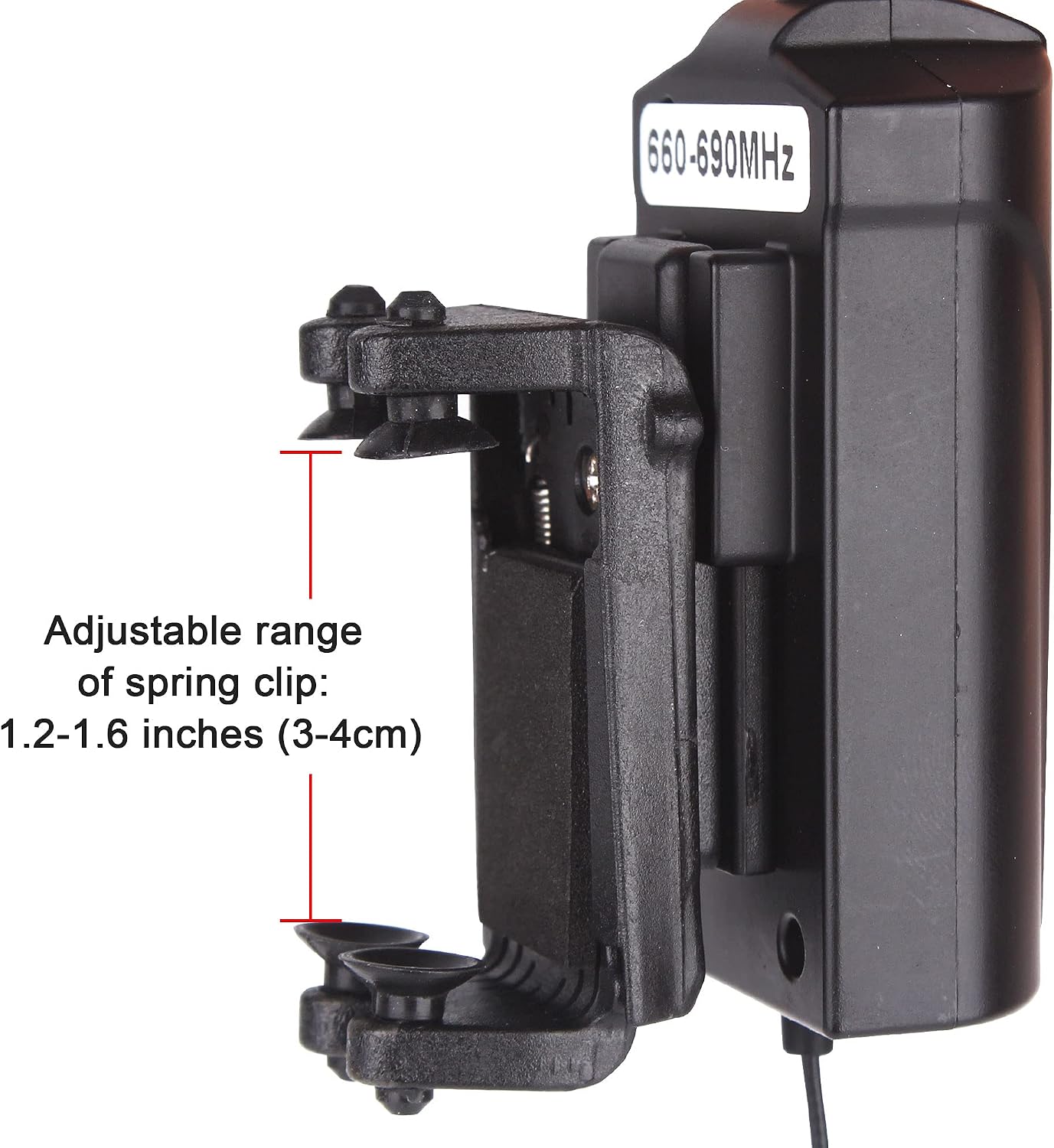
One of the most valuable pieces of real-world intelligence on this comparison comes from players who’ve flagged a specific physical incompatibility with clip-on systems: the clamps on some compact transmitters have a fixed width that may not fit standard 4/4 violin ribs (the sides of the violin body). This is exactly the kind of problem that never appears in product descriptions or spec sheets — it only surfaces when a player tries to mount the unit.
Before purchasing any clip-on wireless transmitter, measure your violin’s rib depth and cross-reference with the transmitter’s clamp range. Most standard 4/4 violins have rib depths between 29–32mm; fiddles built for Celtic or old-time traditions sometimes vary. The XTUGA gooseneck system’s marketing extends to multiple instruments, but reviewers note it doesn’t translate well to ukulele despite those broad claims — a reminder that “works with stringed instruments” marketing language is often optimistic.
The MOOER AP10 sidesteps the clamp problem entirely by plugging into the output jack of an instrument that already has electronics. Owners report using it not just for stage amplification but also for direct-to-computer recording with an audio interface — making it genuinely dual-purpose for players who also do home recording sessions.
Comparing Your Options: Three Tiers of Wireless Violin Systems
Different budgets and performance demands point toward different systems. Here’s how the landscape breaks down across three practical tiers.
Budget Entry Point: Gooseneck Clip Systems for Low-Volume Settings
For players whose gigs are primarily acoustic worship services, school recitals, or small folk sessions, a gooseneck clip transmitter like the VT-5 represents the lowest-cost path to going wireless. The tonal character is the most natural of any wireless option — you’re capturing acoustic sound, not transducer signal — and documented owner reports show clean performance at 30-foot range in low-SPL environments. The critical caveat: this is not a loud-stage solution. Feedback risk scales directly with stage volume, and no amount of EQ fully compensates once you’re standing near monitor wedges.
MOOER
$88.00
In stock on Amazon
Check price on AmazonMid-Tier: Wireless Piezo Plug-In Transmitters for Working Band Players
For violinists already playing electric instruments with output jacks installed, the MOOER Air Plug AP10 and similar plug-in piezo transmitters hit a strong middle ground. They require no clamp fitting, no separate transducer purchase, and no mic placement fussing before each show. The 2.4 GHz format used by some of these systems introduces potential Wi-Fi interference in congested urban venues — a concern MusicRadar’s Best Wireless Systems for Live Performance 2025 specifically raises — but in most club, church, and theater environments, performance is clean. Battery life of approximately five hours covers most multi-set gigs with margin. Sound On Sound’s wireless system coverage notes that plug-in digital transmitters in this class have matured significantly since their early-generation reliability issues.
VT-5
$129.00
In stock on Amazon
Check price on AmazonPremium Application: Dual-Channel and UHF Systems for Professional Touring Use
When two players need to share a single receiver — worship teams, duet acts, educational settings — or when you’re playing large stages where 30-foot range isn’t enough, you move into dedicated UHF dual-channel territory. The ACEMIC dual-channel system addresses the two-player use case directly: two independent transmitters feed one receiver with two outputs. The tradeoffs are real: clamp compatibility must be verified for both instruments before the gig (not during it), and the battery status readout is ambiguous enough that experienced users treat any warning indicator as an immediate switch signal. Sweetwater Sound’s Wireless Systems Buying Guide recommends prioritizing frequency coordination and interference management at this tier — spec-sheet range figures of 100–300 feet presuppose clean RF environments that most real venues don’t provide.
Pyle
$221.99
In stock on Amazon
Check price on AmazonDecision Frame: Which System Is Right for Your Situation
Here’s the explicit “if X, then Y” framework:
If you play primarily acoustic violin in low-to-medium volume settings (worship, folk sessions, acoustic duo gigs, string quartet performances in small halls): a wireless gooseneck mic system is a legitimate option and will give you the most natural-sounding result. The VT-5’s documented performance in church worship environments is a relevant data point — line-of-sight range is adequate, battery life covers a service, and tonal character is close to your instrument’s acoustic voice.
If you play electric violin in any setting with loud stage volume, monitor wedges, or a full band: go with a wireless piezo system. Feedback risk from a gooseneck mic in these conditions is not theoretical — it’s a recurring complaint documented across aggregated reviews. The KNA VV-Wi or MOOER AP10 both route your existing pickup signal wirelessly, keeping the signal chain you’ve already dialed in while cutting the cable.
If your violin has no existing pickup: either add a clip-on piezo transducer (a separate purchase) before adding a wireless transmitter, or go the gooseneck mic route and accept the feedback management tradeoff. There is no shortcut here.
If you need to run two players wirelessly from one receiver (worship teams, duet acts, educational settings): the ACEMIC dual-channel system is the primary product addressing this use case, but verify clamp compatibility with both instruments before committing, and confirm that both players understand the battery status indicators before you’re live.
Frequently Asked Questions
How do I know when my wireless violin transmitter battery is about to die during a performance? Most compact transmitters use a single LED indicator that shifts color (green to red) as battery drops. The problem, flagged consistently across VT-5 and ACEMIC reviews, is that the red zone gives you no reliable time estimate. Best practice: charge fully before every performance, treat red as “switch now,” and carry a charged spare transmitter if your budget allows.
Will a wireless gooseneck mic cause feedback problems at loud gigs? Yes, this is a documented risk. Sound On Sound’s coverage of live wireless systems notes that small-capsule mics in high-SPL environments are feedback-prone, especially if you’re standing near monitor wedges. Piezo systems are strongly preferable for any loud stage application.
Can I use a wireless piezo system without a dedicated violin pickup already installed? Not directly. Systems like the MOOER AP10 require an existing output jack on your instrument. If your violin is purely acoustic with no installed electronics, you’ll need to add a transducer pickup first, or opt for a gooseneck mic system instead.
What is the real usable range of a UHF wireless violin system in a church or small venue? Per Sweetwater Sound’s Wireless Systems Buying Guide, the realistic figure in indoor venue conditions — accounting for walls, interference, and RF congestion — is 30–60 feet rather than the headline spec-sheet numbers. That’s sufficient for nearly every worship or small-venue scenario, but doesn’t cover large outdoor festivals or arena-scale productions.
Can a dual-channel wireless system work with two different players simultaneously? The ACEMIC dual-channel system is designed for this — two transmitters, one receiver with two independent outputs. The key caveat from real-world reviewers: verify that the clamps fit both players’ instruments before the gig, not during it.
Your Next Step
The clearest path forward depends on your current instrument setup. If you’re playing an electric violin with an output jack already installed, the wireless piezo route (KNA VV-Wi or MOOER AP10) is the more stage-reliable choice for most working players. If you’re on acoustic violin in a low-volume setting, explore the VT-5 or similar gooseneck clip systems — but go in with a feedback management plan. Strings Magazine’s coverage of violin amplification options and Sweetwater Sound’s Wireless Systems Buying Guide are both worth reading in full before you commit to any live rig decision.