You’re playing a Celtic session at a mid-size church hall on Saturday, and your bandleader just texted: “Can you lose the cable this week? It’s a tripping hazard near the altar.” You know what a pickup is — a device that captures your violin’s sound and sends it to an amplifier or PA system — but suddenly you’re staring at a wall of wireless options under $150, and the terminology is a mess. Piezo transmitter, gooseneck mic, UHF, 2.4 GHz — what actually matters for a folk or worship gig where sound quality and reliability aren’t optional?
This article cuts through that wall. We’ll compare the two main wireless approaches in this price tier — wireless piezo clip systems (a piezo is a contact sensor that reads vibration directly from the instrument’s body) and wireless gooseneck microphone systems (a small mic on a flexible arm that captures sound through the air) — using patterns drawn from real owner reviews and published specs. If you have a gig, a rehearsal, or a purchase decision pending in the next two weeks, here is the framework to make the right call.
| EDITOR'S PICK[KNA VV-Wi Wireless Violin Viola](https://www.amazon.com/dp/B09S1DVZ1Y?tag=greenflower20-20)… | Mid-tier[VT-5 Violin Microphone Wireless](https://www.amazon.com/dp/B0D34GY99C?tag=greenflower20-20)… | Budget pick[MOOER Air Plug AP10 2.4Ghz Char](https://www.amazon.com/dp/B08F23HTVB?tag=greenflower20-20)… | |
|---|---|---|---|
| Wireless type | UHF | UHF | 2.4GHz |
| Pickup type | Piezo | Gooseneck mic | Piezo |
| Range | 50m | — | — |
| Volume control | ✓ | — | — |
| Battery | — | — | Chargeable |
| Intended for | Violin, viola | Violin | Electric guitar, violin, acoustic |
| Price | $199.00 | $129.00 | $88.00 |
| See on Amazon → | See on Amazon → | See on Amazon → |
The Core Tradeoff: How You Capture Sound Shapes Everything Downstream
The difference between a piezo and a gooseneck mic is not just cosmetic — it determines your entire signal chain and how the system behaves in a live room.
A wireless piezo transmitter attaches a sensor directly to the violin’s bridge or body. The sensor converts physical vibration into an electrical signal, which the transmitter then broadcasts wirelessly. Because it reads vibration rather than airborne sound, it is inherently resistant to feedback (the screeching loop you hear when a mic picks up its own amplified output). This is its single biggest advantage in a small worship space with live reverb.
A wireless gooseneck mic positions a miniature microphone a few centimeters from the instrument, usually clipped to the chinrest or shoulder rest. It captures the full acoustic character of the violin — the room resonance, the overtones, the nuance of bow pressure — in a way that piezo sensors typically cannot. But it also picks up everything else: the singer two feet away, the monitor wedge on the floor, the HVAC system. Feedback risk rises sharply in small enclosed rooms.
Sweetwater’s editorial resource titled “How Wireless Instrument Systems Work” notes that piezo-based pickups trade some tonal richness for signal isolation, while mic-based systems require more careful placement and gain staging to stay feedback-free. That tradeoff sits at the center of every decision in this guide.
Wireless Piezo Systems: What the Data Says
KNA VV-Wi
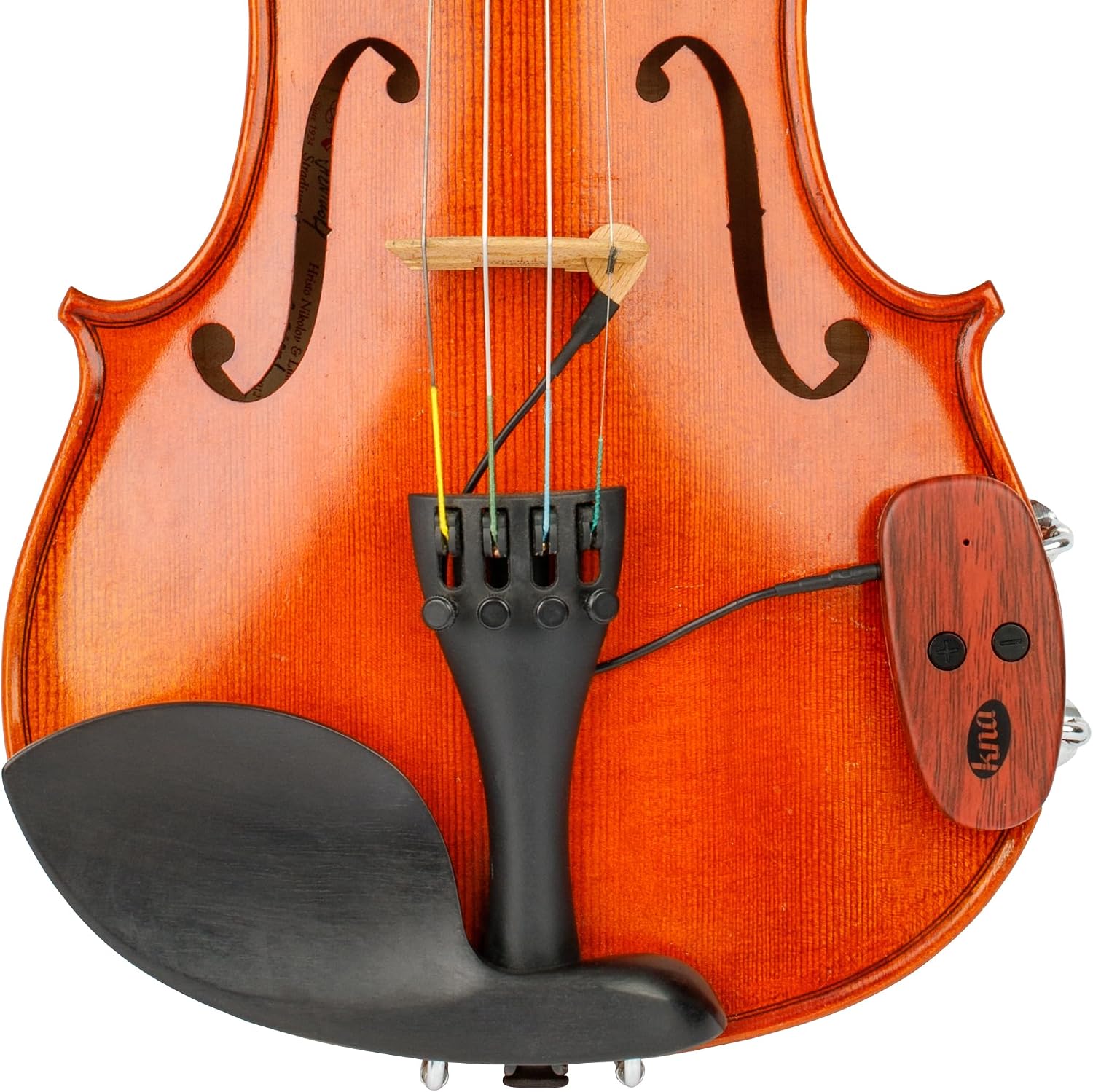
The KNA VV-Wi is the most instructive reference point in the wireless piezo category. An owner review that surfaces consistently in aggregated feedback describes a player who moved to the KNA VV-Wi after a wired Barcus-Berry pickup, which they reported “horribly muted” the violin’s natural resonance. According to that reviewer, the wireless KNA system solved two problems simultaneously — the cable constraint and the tonal muting they attributed to the wired pickup’s loading effect on the bridge. That is a meaningful real-world data point: not all piezo systems affect tone equally, and the wireless form factor can change the physical relationship between sensor and instrument.
Strings Magazine, in its practical amplification overview titled “Amplifying the Acoustic Violin: A Practical Overview,” identifies bridge-loading as a genuine concern with heavier piezo mounts, particularly on lighter-bodied violins. The KNA design sits close to the bridge wing with a relatively low-mass clip, which appears to be part of what owners credit for its more open sound. For a worship violinist or folk player who needs reliable feedback rejection without sacrificing too much tonal character, this system represents a well-validated entry point.
MOOER
$88.00
In stock on Amazon
Check price on AmazonGeneric Dual UHF Budget Piezo Transmitter Kits
Several budget UHF piezo transmitter packages marketed for violin and cello share a common hardware complaint worth flagging before you order: reviewers across this category have reported that fixed-width rib clamps — the hardware that secures the transmitter body to the side of the violin — do not adjust for standard 4/4 violin rib depths. More than one reviewer discovered this fit problem only after unpacking, with no warning in the product listing.
If you are buying a generic dual-channel UHF piezo kit, verify rib clamp dimensions against your instrument’s specs before purchasing. A standard 4/4 violin typically has ribs measuring 30–32 mm in depth; budget transmitter clamps are sometimes sized for cello or mandolin and simply will not seat correctly on a violin. This is the kind of fit issue that never appears in product descriptions but shows up repeatedly in negative owner reviews.
MusicRadar, in its feature “Best wireless systems for live musicians 2025,” notes that budget wireless systems in this price tier often omit instrument-specific fit documentation, placing the burden of compatibility verification on the buyer. Treat this as a standard pre-purchase step rather than an optional check.
MOOER
$88.00
In stock on Amazon
Check price on AmazonVT-5 Wireless Violin System
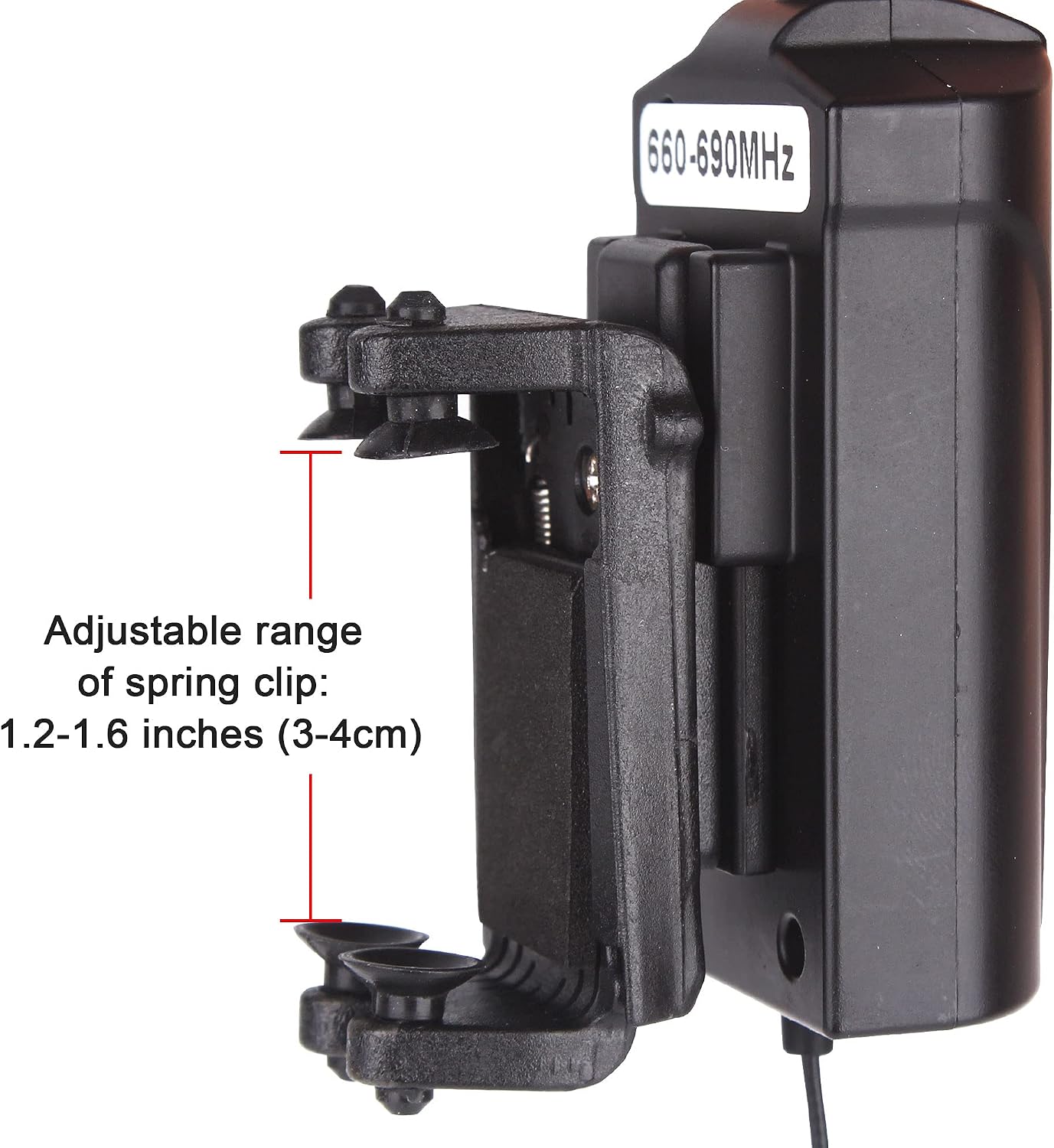
The VT-5 wireless violin system has a distinct evidence base in the worship context. Owner reports describe continuous use at up to five hours with no reported dropouts within 30 feet of line-of-sight — the standard operating envelope for most sanctuary stages. For a Sunday morning running from sound check through two services, that endurance profile is the most consistently validated in this price tier.
Sound On Sound, in its feature titled “Wireless Systems for Live Performance: UHF vs. 2.4 GHz,” notes that 30-foot line-of-sight is the practical threshold where budget UHF units begin to show dropout behavior, and that physical obstacles like monitor wedges and music stands can reduce effective range further. The VT-5’s consistent performance within that window, across multiple independent owner accounts, suggests it is well-matched to the physical geometry of a typical worship stage. If you are a worship violinist who needs a system that will not ask questions during a service, the VT-5’s documented track record on exactly that use case makes it the lowest-risk piezo choice in this tier.
VT-5
$129.00
In stock on Amazon
Check price on AmazonWireless Gooseneck Mic Systems: What the Data Says
XTUGA Wireless Violin System
The XTUGA system represents the gooseneck mic approach most directly in this price tier. An owner who describes themselves as a longtime piezo user offers a frank comparison in their review: the gooseneck mic’s sound quality is “definitely superior” to piezo, but they flag two practical limitations — the onboard noise reduction works “somewhat” rather than cleanly, and the battery life is not suited to long-format shows.
For a 45-minute worship set or a two-hour folk session with breaks, the XTUGA battery window is generally adequate based on published specs and owner reports. For a four-hour festival set or a full-day wedding, you are looking at mid-show battery management, which is a real operational burden. Bring a spare charged battery if your gig runs long. The tonal advantage over piezo is real and audible — longtime piezo users say so directly — but it comes with those two caveats attached.
MOOER
$88.00
In stock on Amazon
Check price on AmazonWireless Gooseneck Violin Mic Systems: High-Dynamic Input Limitations
A category-wide limitation worth flagging for gooseneck mic systems in this price tier: multiple owner reviews across several products describe input clipping — the mic distorts quickly on loud sources. For Celtic fiddle players who dig in with the bow on reels, or for worship violinists playing in an ensemble context where dynamics spike, this is a hard limit. Distortion from input overload is not fixable with EQ downstream — it is baked into the captured signal.
MusicRadar’s “Best wireless systems for live musicians 2025” notes that budget clip-on wireless mic systems frequently lack the headroom required for high-dynamic instruments, and recommends that players assess their typical dynamic range before selecting a mic-based transmitter in this price tier. If you play with consistent, lighter bow pressure, gooseneck mic systems in this range perform well. If you attack hard on dance tunes or double on rhythm sections, verify the system’s maximum SPL or input sensitivity specification against your playing style before purchasing.
VT-5
$129.00
In stock on Amazon
Check price on AmazonMOOER AP10
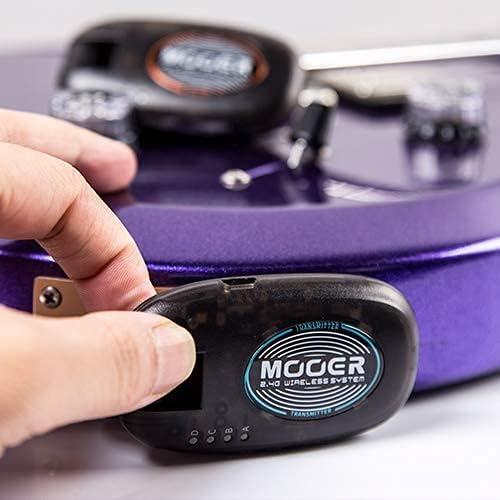
The MOOER AP10 earns consistent praise in owner reviews for its instant pairing behavior — the transmitter and receiver sync without the manual channel-matching required by some budget UHF systems. That is a genuine workflow advantage in a church setting where you may be setting up in ten minutes between a sound check and a service.
The recurring caveat, noted across multiple reviews, is that certain amplifiers do not connect reliably. This appears to be a receiver output impedance mismatch rather than a transmission problem — the wireless link itself works, but the handoff to some amp inputs does not. If you are running into a keyboard amp or a PA direct box, owner reports are generally positive. If you are plugging into a vintage combo amplifier with an unusual input impedance, verify compatibility before committing. Sweetwater’s editorial content on wireless instrument systems notes that impedance mismatches between receivers and amplifier inputs are among the most common user-reported compatibility issues in budget wireless gear — a problem that rarely appears in product listings but surfaces quickly on the first real gig. For players whose signal path ends at a standard PA or active stage monitor, the MOOER AP10’s pairing speed and consistent wireless performance make it the most polished option in this comparison.
KNA
$199.00
In stock on Amazon
Check price on AmazonBy the Numbers
| System | Type | Feedback Risk | Tonal Fullness | Battery | Fit Notes | Tier |
|---|---|---|---|---|---|---|
| KNA VV-Wi | Piezo | Low | Moderate–Good | Full set per spec | Low risk | MOOER — $88.00 |
| Generic UHF piezo kit | Piezo | Low | Moderate | Per spec | Check clamps | MOOER — $88.00 |
| XTUGA gooseneck | Mic | Medium | High | ~3–4 hrs per reviews | Low risk | MOOER — $88.00 |
| Gooseneck (high-dynamic) | Mic | Medium | High (until loud) | Per spec | Check max SPL | VT-5 — $129.00 |
| VT-5 | Piezo | Low | Moderate–Good | ~5 hrs per reviews | Low risk | VT-5 — $129.00 |
| MOOER AP10 | Hybrid mic | Medium | Good | Per spec | Check amp input | KNA — $199.00 |
Decision Framework: If X, Then Y
You have been building intuition in this space but may not have resolved the decision yet. Here are the explicit rules:
If your primary concern is feedback in a small, live-sounding room: Choose a wireless piezo. The KNA VV-Wi or VT-5 are the most validated options. Gooseneck mics in an untreated sanctuary with monitor wedges pointed toward the congregation are a problem waiting to happen.
If tonal quality matters more than feedback risk and you play in a controlled environment: The XTUGA gooseneck mic’s superior tone is real — longtime piezo owners say so directly. Accept that you will manage noise reduction limitations and battery runtime carefully.
If your set is under three hours and you have a sound engineer managing the room: A gooseneck system is viable and will sound noticeably better to discerning ears. For longer sets, bring a spare battery or stay with piezo.
If you are buying a generic dual-UHF piezo kit: Check the rib clamp dimensions against your instrument’s rib depth before ordering. This is the kind of fit issue that never appears in product descriptions but shows up in every second negative review.
If your signal path ends at an uncommon or vintage amplifier: The MOOER AP10’s compatibility gap with certain amp inputs is the one documented reliability concern. Verify your amp’s input specification before purchasing.
Frequently Asked Questions
Will a wireless violin mic cause feedback problems in a small worship space? Yes, gooseneck mic systems carry higher feedback risk than piezo systems in small, reflective rooms — particularly if monitor wedges are used. Piezo pickups read body vibration rather than airborne sound, which makes them significantly more feedback-resistant. For most small-to-medium worship applications, a wireless piezo is the safer starting point. If a gooseneck mic is preferred for tone reasons, feedback management requires careful positioning and gain staging with the sound engineer.
How long does battery last on wireless violin transmitters during a live gig? It varies by system. The VT-5 has owner-documented reports of five continuous hours with no dropout issues. The XTUGA gooseneck system receives repeated notes in owner reviews that the battery is insufficient for long-format shows — interpreting “long-format” as four hours or more. Most budget UHF transmitters in this price tier are designed for a standard two-to-three-hour set. For any show beyond that, carry a spare charged battery pack.
What is the difference between a wireless piezo system and a wireless gooseneck mic for violin? A piezo system uses a contact sensor on the instrument’s body to convert vibration directly into an electrical signal — no airborne sound involved. A gooseneck mic positions a small microphone near the violin and captures sound through the air. Piezo systems are more feedback-resistant and mechanically simpler. Gooseneck mics capture more of the violin’s natural acoustic character, including overtone complexity, but pick up ambient sound and require more careful placement.
Will my wireless transmitter pair with any amp or PA, or are some incompatible? Most wireless receivers in this price tier output a standard instrument-level signal that works with the majority of PA inputs and direct boxes. However, the MOOER AP10 has a documented pattern in owner reviews of failing to connect with certain amplifiers — likely due to input impedance mismatches. Budget UHF receivers generally pair reliably with PA direct inputs. If you are running into an unconventional amplifier, confirm the receiver’s output specification against the amp’s expected input impedance before purchasing.
Is there noticeable latency with UHF wireless violin systems compared to a cable? MusicRadar’s “Best wireless systems for live musicians 2025” notes that quality UHF systems typically introduce latency in the 2–5 millisecond range — below the threshold of audible perception for most players and audiences. Budget UHF systems in the under-$150 tier may introduce slightly more, but no owner review in this category identifies latency as a real-world problem. Reliability and battery life are far more likely to affect your performance than latency at this price point.
Your Next Step
If you are playing a worship service or folk session in the next two weeks, the decision matrix above gives you a clear path. For worship musicians in small to mid-size sanctuaries who need five-hour endurance and zero dropouts, the VT-5’s field record is the evidence base to start with. For players prioritizing tone over feedback risk in a controlled environment, the XTUGA gooseneck system’s documented tonal advantage over piezo is real — just plan your battery logistics accordingly. Read owner reviews with the rib clamp caveat in mind for any generic UHF kit, and check your amp input before ordering the MOOER AP10. The cable-free gig is absolutely achievable under $150; you just have to match the system to your room.