You’re standing at a pretty specific crossroads: you want a Yamaha electric violin — one of the most trusted names in the category — but Yamaha makes three different models in this price range, and their marketing copy doesn’t make it obvious why you’d choose one over the other. An electric violin is simply a violin whose sound is produced or heavily shaped by a pickup — an electronic sensor built into the body — rather than by acoustic resonance the way a traditional wood violin works. Some electric violins have a thin or skeletal body; others look nearly acoustic. Each design choice is a tradeoff between stage volume, practice-friendliness, and tonal character. The three Yamaha models you’re most likely to be comparing right now are the YEV104 (four strings, open-frame body), the YEV105 (five strings, same platform), and the YSV104 (four strings, “Silent” series with internal headphone amp). This guide walks through exactly what each instrument is built for, what owners actually report living with them, and a clean decision rule so you leave knowing which one to buy.
The Core Architecture Difference: What You’re Actually Choosing Between
Before you compare prices, understand that these three instruments are solving different problems, not just offering different feature counts.
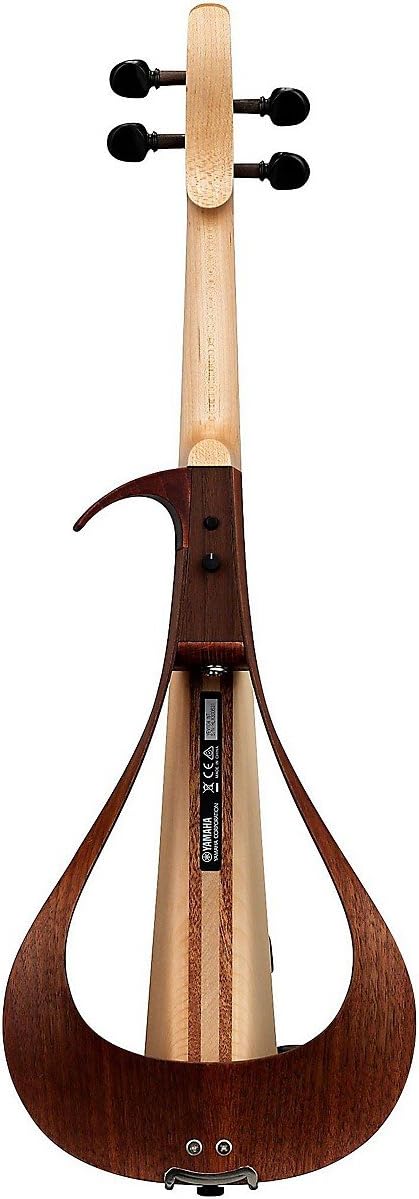
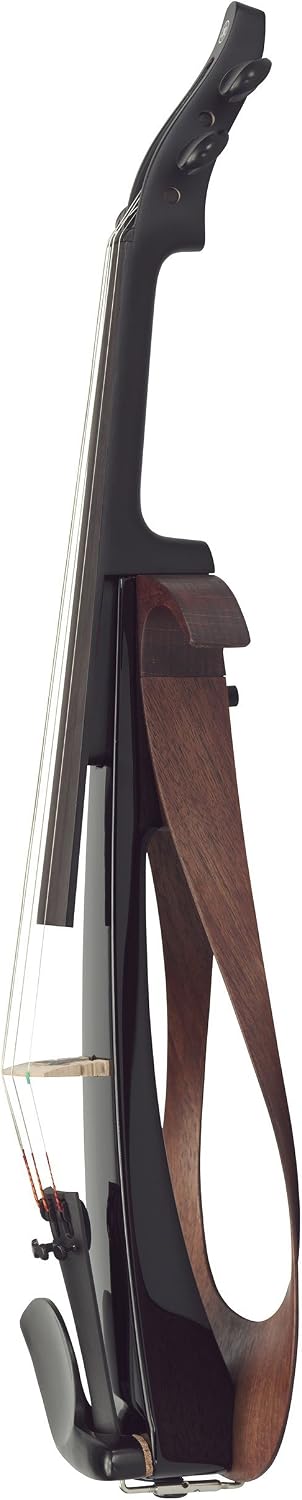
The YEV104 and YEV105 share the same fundamental platform: a contoured, semi-hollow spruce-and-maple body that is significantly thinner than a standard acoustic violin but still produces a small amount of resonant acoustic sound. The design goal is playability and stage tone — the instrument is meant to be plugged in. According to Yamaha Corporation’s published YEV Series product specification sheets, the signal path uses a piezo pickup system feeding a passive output; you plug it into a DI box, a preamp pedal, or a mixing board, and the front-of-house engineer shapes the sound from there. The only difference between the 104 and 105 is that the 105 adds a fifth string (typically tuned to a low C, extending down into viola range), a slightly wider neck, and a correspondingly wider bridge.
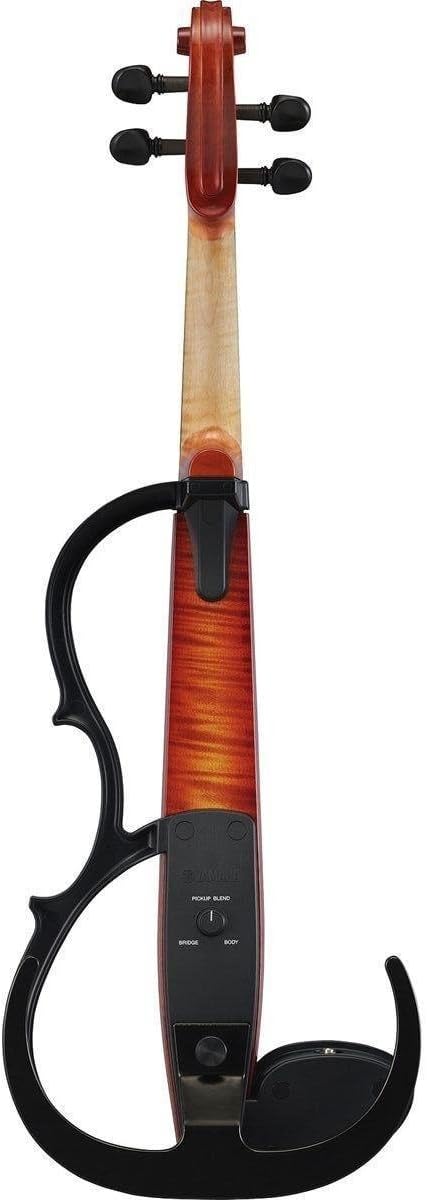
The YSV104 is from a different design lineage entirely. “Silent” in Yamaha’s branding means the instrument is engineered primarily for private practice — the acoustic output is reduced to near-inaudible levels, and the real signal path runs through an onboard SRT (String Resonance Technology) preamp that feeds directly into headphones. You can still run it to a PA, but the primary use case is practicing in an apartment at 11 p.m. without bothering anyone. Yamaha Corporation’s published YSV104 Silent Violin product specification sheet documents a built-in preamp with simulated acoustic resonance processing — a genuine technological investment that also explains why the YSV104 carries a significantly higher street price versus the YEV104.
Approximate mid-2026 street prices:
- YEV104 (4-string): ~$500
- YEV105 (5-string): ~$620–$650
- YSV104 (Silent, 4-string): ~$1,100
Model-by-Model Breakdown: Tonal Character and Real-World Use
YEV104 — The Stage-Ready Four-String
The YEV104 generates unusually strong word-of-mouth for a mass-market electric violin. Owner reviews aggregated in Sweetwater’s Yamaha YEV104 product listing and Q&A section consistently reach for words like responsive, nuanced, and articulate — descriptors normally associated with acoustic instruments in the $800–$1,200 range. The most specific and credible recurring compliment is that the instrument “sounds like an acoustic violin when plugged in,” which, as any working electric player knows, is the hardest thing to achieve at this price tier. Most electric violins in the $400–$600 range produce a thin, nasal, or overly brittle tone that marks them immediately as electric; the YEV104 appears to have genuinely avoided that trap based on aggregated owner reporting documented at Sweetwater.
For worship musicians, church players, and Celtic or folk jammers playing into a house PA, this matters enormously. The YEV104 gives you tonal credibility without requiring a sophisticated signal chain to compensate for an inferior pickup. Strings Magazine’s buyer coverage of electric violin options identifies Yamaha’s YEV series as a benchmark for players transitioning from acoustic instruments who need consistent live reinforcement without sacrificing expressiveness.
At approximately $500, the YEV104 represents the strongest price-to-performance ratio in Yamaha’s current electric lineup for four-string players.
Yamaha
$959.99
In stock on Amazon
Check price on AmazonYEV105 — The Five-String Working Musician’s Instrument
The YEV105 earns its premium over the YEV104 from a specific and underserved demographic: players who need both violin and viola range in a single instrument. The fifth string (low C) is not a novelty — it fundamentally changes what you can cover in a live set, a recording session, or an orchestral-adjacent context.
Owner feedback documented in Sweetwater’s Yamaha YEV105 product listing includes a credible account from an experienced violinist who plays in a 60-piece orchestra: his church soundman expressed a preference for the YEV105’s amplified signal over an acoustic violin fitted with a high-quality aftermarket pickup. That is a specific, real-world comparison made by someone with professional ears in a live reinforcement context. A separate account from a guitarist who crossed over to violin mentions that the YEV105’s expressive tonal response made the instrument’s steep learning curve more rewarding — the instrument does not punish developing technique the way harsher-sounding electrics can.
Community discussions in Violinist.com’s instrument forum reinforce this pattern: players who use the YEV105 in contexts requiring extended lower-range passages consistently report that the fifth string integrates naturally rather than feeling tacked on.
If you currently play only four-string violin repertoire, the fifth-string question deserves honest consideration before you commit. The wider neck requires a slight recalibration of left-hand position, and if you’ll never use the C string, you’re paying a $120–$150 premium and absorbing an ergonomic adjustment for no gain.
Yamaha
$959.99
In stock on Amazon
Check price on AmazonYSV104 — Silent Practice Specialist, With Caveats
The YSV104 is the most technically ambitious of the three models and has the most divided owner response of the group.
On the positive side, owners who purchased it for its intended purpose — nearly silent practice with a realistic acoustic feel — report that it delivers on both counts. The body shape, string tension, and bow response are all calibrated to approximate a standard violin, and the low acoustic output is genuine. The onboard SRT preamp provides a convincing simulated acoustic tone through headphones that surpasses what you’d typically get running a standard passive electric violin through a headphone amp. For apartment dwellers, touring musicians who need to maintain technique in hotel rooms, or students in shared housing, the YSV104’s core value proposition is real.
On the negative side, owner reviews documented in Sweetwater’s Yamaha YSV104 product listing include a persistent and serious concern: peg stability under playing tension. At least one detailed critical review traces a pattern of tuning drift caused by the peg mechanism failing to hold position reliably. For an instrument at $1,100, a tuning stability problem is not a minor quibble — a violin that won’t stay in tune mid-practice defeats the core purpose of the instrument. Players considering the YSV104 should research string swap options that other owners have used to address the tension profile issue before relying on the instrument in any professional or time-sensitive context.
The most urgent warning, however, is not tonal — it is a warranty protection issue. A one-star review in Sweetwater’s YSV104 listing traces the exact sequence of an unauthorized reseller purchase resulting in Yamaha voiding the warranty on a $1,100 instrument. Yamaha Corporation’s published warranty documentation explicitly ties coverage to purchases made through their authorized dealer network. If you find the YSV104 priced significantly below street price on an unfamiliar marketplace or third-party storefront, the apparent savings can be entirely wiped out by a single warranty claim that is denied. Purchase only from a verified authorized Yamaha dealer and retain documentation of the transaction.
Yamaha
$2,149.99
In stock on Amazon
Check price on AmazonThe Decision Frame: If X, Then Y
You now have enough information to apply a clean decision rule.
If your primary need is stage performance or live worship playing, and you play standard four-string violin repertoire: The YEV104 is the correct answer. It delivers a tone that owners consistently describe as close to acoustic, it’s stage-reliable, and its price-to-performance ratio at approximately $500 is the strongest in this lineup. Sweetwater’s YEV104 owner Q&A section reinforces the instrument’s reputation as a serious gigging violin, not a beginner toy.
If you play five-string, want to cover viola range, or perform in any context where a low C string would expand your repertoire: The YEV105 is worth the premium. Owner evidence cited above suggests it integrates naturally into live sound contexts. The neck adjustment is real but manageable for an intermediate or advanced player.
If your primary use case is private practice in a noise-restricted environment, and you can verify you’re purchasing from an authorized Yamaha dealer: The YSV104 earns serious consideration, but only with the tuning stability issue on your radar. Research peg and string alternatives, secure your warranty documentation, and go in with clear expectations.
If you’ve found a YSV104 at a steep discount from an unfamiliar seller: Verify Yamaha’s authorized dealer list before purchasing, or walk away. The warranty void outcome documented in Sweetwater’s YSV104 owner reviews is a predictable consequence of buying outside the authorized channel, not an edge case.
Frequently Asked Questions
What is the difference between the Yamaha YEV104 and the YSV104 Silent Series? The YEV104 is a stage-focused electric violin with a passive piezo pickup — built to be plugged into a PA or amp for live performance. The YSV104 is Yamaha’s “Silent” series instrument, engineered primarily for private headphone practice with an onboard preamp and near-zero acoustic output. Different tools for different jobs; choosing between them starts with knowing where you’ll use the instrument most.
Does the Yamaha YEV104 sound like an acoustic violin when plugged in? Based on aggregated owner reviews documented in Sweetwater’s YEV104 product listing, yes — more so than most instruments in this price range. “Sounds like an acoustic violin when plugged in” is the most consistent specific compliment the instrument receives, and it appears frequently enough across independent owner accounts to weight seriously.
Is the Yamaha YEV105 fifth string worth it if I only play violin, not viola? Probably not. The fifth string adds approximately $120–$150 over the YEV104 price and requires a wider neck that affects left-hand position. If you’ll never use the low C string, you’re absorbing both the cost and the ergonomic adjustment with no practical benefit.
Can I use standard shoulder rests and chin rests with the YSV104? The YSV104’s body dimensions are close to a standard full-size violin, but its silhouette differs enough that some aftermarket accessories may not seat correctly. Yamaha Corporation’s published YSV104 product specification sheet confirms the instrument is designed for standard violin shoulder rest foot placement, but players on Violinist.com’s instrument forum report mixed results with non-standard chin rest configurations. Test your preferred accessories before finalizing your setup.
How do I protect my warranty when buying a Yamaha electric violin? Purchase only from an authorized Yamaha dealer. Yamaha Corporation’s warranty documentation explicitly ties coverage to the authorized dealer network. A detailed owner review documented in Sweetwater’s YSV104 listing traces a complete warranty void to an unauthorized reseller purchase. Before buying from any unfamiliar online storefront, cross-reference Yamaha’s official authorized dealer locator on yamaha.com.
Are the YEV104 or YEV105 suitable for church worship performance? Based on owner reporting documented in Sweetwater’s product listings for both instruments, yes — both have been used in live worship contexts with strong results. A review of the YEV105 from an experienced orchestral violinist explicitly records a church soundman preferring its amplified signal over an acoustic violin with a quality aftermarket pickup. For worship applications, either instrument is credible; the YEV104 is the stronger value if you don’t need five strings.
Your Next Step
If the YEV104 fits your situation — stage player, four-string, budget-conscious — that’s the instrument to start with. If the five-string case applies to you, the YEV105 is a straightforward upgrade on the same platform. And if silent practice is genuinely your priority, the YSV104 is worth the price, provided you buy through an authorized dealer and go in aware of the tuning peg reports documented in Sweetwater’s owner Q&A. Violinist.com’s instrument discussion forums maintain active threads on all three models with extended firsthand owner accounts — searching the site’s electric violin discussion section will surface current player perspectives before you commit.