So you’ve outgrown your starter instrument — or you never bought one at all and you want to skip the learning-tax and land somewhere useful right away. You’re eyeing the $300–$600 range, which is where the electric violin market (instruments that run a signal through a pickup and cable to an amplifier or headphone output, rather than projecting sound acoustically through a wooden body) actually starts to get interesting. Three names come up constantly in this bracket: the Yamaha YEV104, the Bunnel Edge, and the Kinglos. Each one has a legitimate claim on your money. None of them is obviously wrong. But they are not interchangeable — and buying the wrong one for your situation is a $400 mistake that will sit in a corner making you feel guilty. This article compares all three honestly, names the tradeoffs explicitly, and ends with a clear decision rule so you can stop second-guessing.
| EDITOR'S PICKYamaha YEV104NT Electric Violin… | Mid-tierElectric Violin Bunnel NEXT (cl… | Budget pickKinglos 4/4 White Blue Flowers… | |
|---|---|---|---|
| Size | — | 4/4 | 4/4 |
| Finish | Natural | Honey | White/Blue |
| Case included | — | ✓ | — |
| Headphones | — | ✓ | — |
| Mini amp | — | ✓ | — |
| Fittings | — | — | Ebony |
| Price | $881.99 | $528.88 | $227.99 |
| See on Amazon → | See on Amazon → | See on Amazon → |
Why These Three? (And the Framing That Makes This Comparison Work)
Before the head-to-head, one framing point worth internalizing: the Yamaha YEV104 exists at what reviewers on the Sweetwater YEV104 product Q&A threads and in community discussions on Violinist.com have described as a diminishing-returns inflection point. The instruments priced meaningfully above it — NS Design CR series, ZETA Jazz — cost two to three times more for improvements that are real but incremental for most use cases. The instruments priced below it — sub-$150 bolt-together OEM kits — are not even close in build quality, playability, or tonal consistency. The Yamaha is the line where “good enough for serious use” begins. That framing shapes everything below.
The Bunnel Edge (distributed by Johnson String Instrument, reviewed by working musicians across multiple instrument-community platforms) and the Kinglos (a Chinese manufacturer building name recognition in the budget-to-mid segment) both occupy the territory just below and around the YEV104’s price. That positioning is exactly why this comparison matters: if the Bunnel or Kinglos delivers 85% of the Yamaha’s real-world utility at 60% of the price, the math changes. If it doesn’t, you need to know that before you pay shipping both ways on a return.
The Instruments, Plainly Described
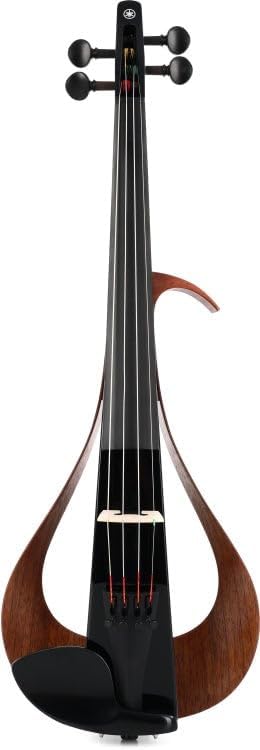
Yamaha YEV104
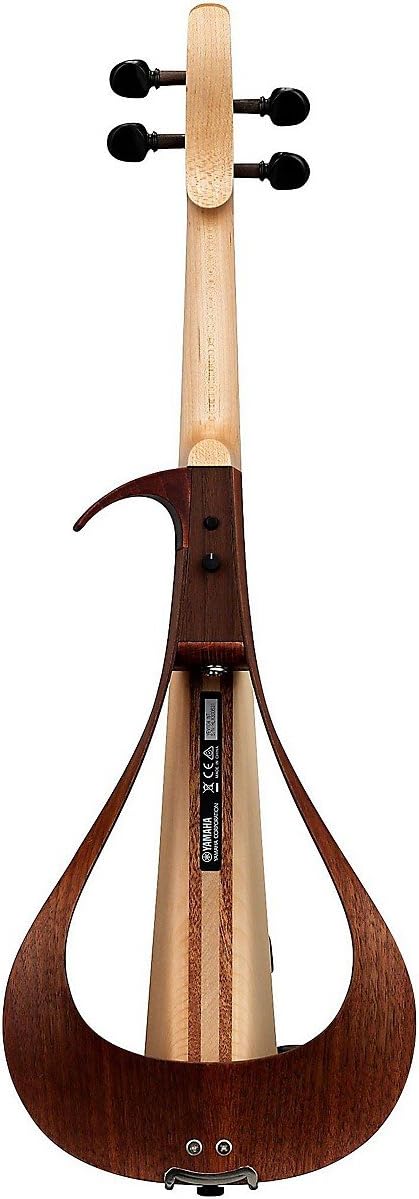
Street price ~$500 as of May 2026. A 4-string electric violin with a distinctive partial-body design — Yamaha calls it a “resonance chamber” — that gives the instrument a more acoustic-like overtone response than a fully solid-body electric. It uses Yamaha’s own piezo pickup system (a piezo is a crystal-based sensor that converts string vibration to an electrical signal) and ships with a 3.5mm headphone output built into the body, a 1/4-inch output jack for amplifiers, and a passive preamp. It does not include a case. It does not include rosin. The bow quality is considered adequate for the price by most reviewers, but Sweetwater’s YEV104 product Q&A threads consistently note that a bow upgrade is worthwhile once you’re past the honeymoon period.
Yamaha
$881.99
In stock on Amazon
Check price on AmazonBunnel Edge
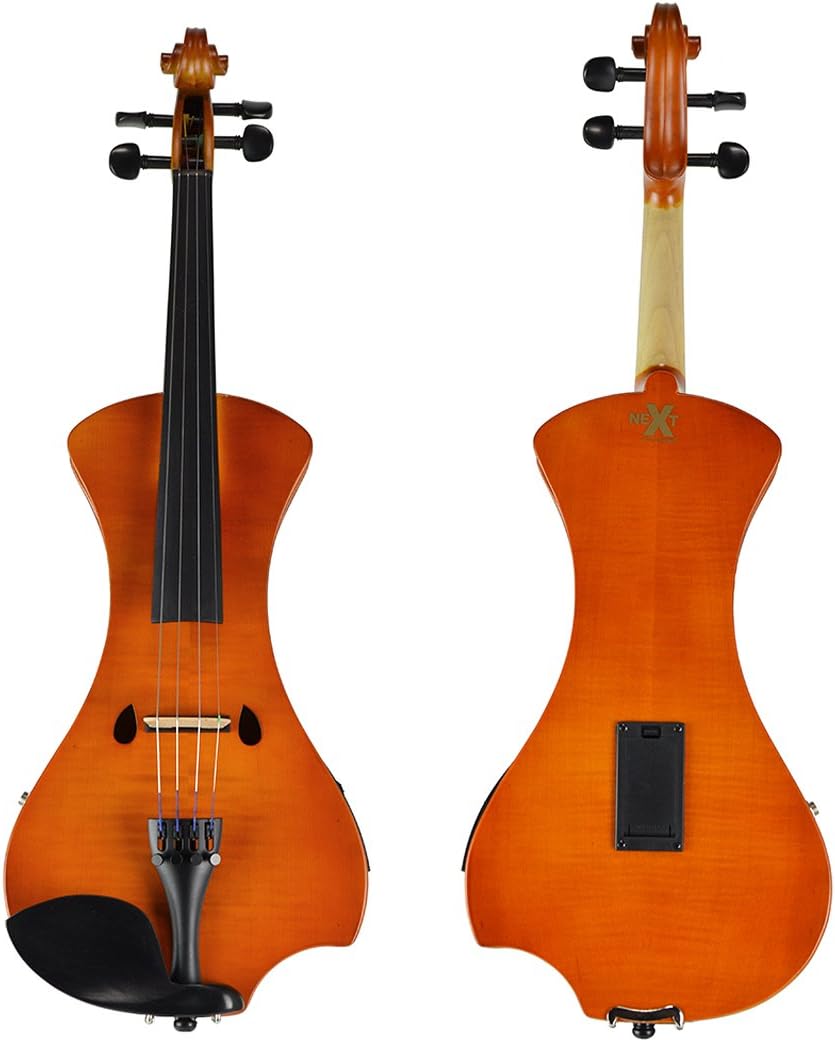
Street price ~$300–$350. A full solid-body electric violin from Johnson String Instrument, one of the more established names in the orchestral string instrument market. It ships as a complete system: violin, bow, lightweight case, mini amplifier, rosin, and cable. The pickup is piezo-based. The mini amp is small — roughly the size of a thick paperback book — and runs on batteries or wall power. For players who need everything out of one box, this package approach is a genuine differentiator.
Electric HONEY
$528.88
In stock on Amazon
Check price on AmazonKinglos (Mid-Configuration)
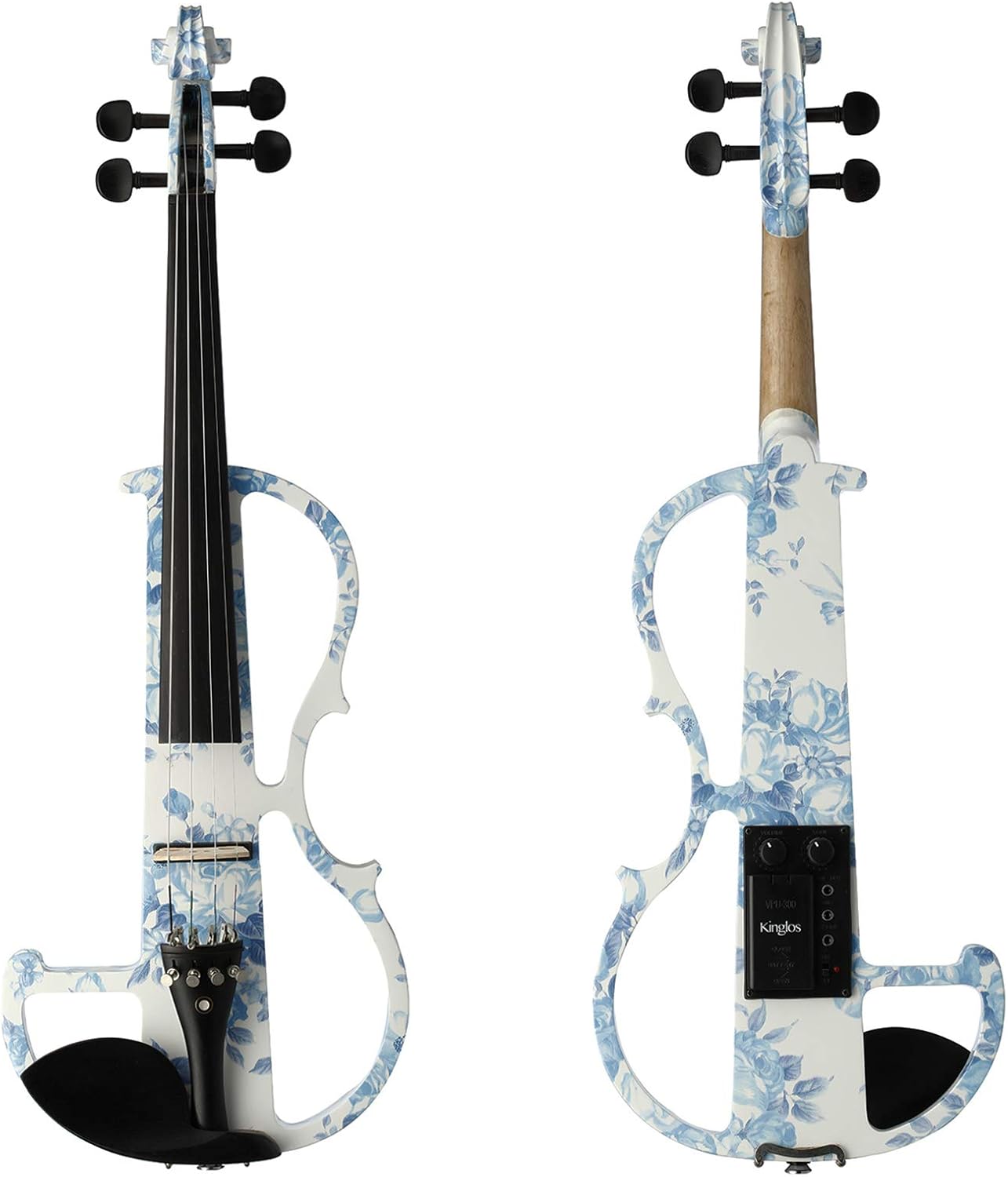
Street price ~$200–$350 depending on configuration. A solid-body electric violin from a Chinese manufacturer that has built a reputation primarily on visual customization (multiple finish options, some decorative inlay designs) and value-per-dollar positioning. It ships with a basic case, bow, and cable. No amp included. Pickup quality varies by model; the higher-configuration Kinglos units use a marginally better piezo system, but owner reviews documented across instrument-community forums note inconsistency between individual units in terms of output level and tone.
Kinglos DSG1201
$227.99
In stock on Amazon
Check price on AmazonThe Real-World Stress Test: Bunnel Edge at a Barn Wedding
One of the most useful data points in this comparison comes from a semi-professional violinist — 30 years of playing experience, second-chair orchestral background, paid gigging history — who documented using the Bunnel Edge at an outdoor barn wedding. This is not a controlled review condition. Barn weddings involve ambient noise, temperature swings, questionable power access, and audiences who are not there to hear the violin specifically. The reviewer reported that the Bunnel Edge held up through the gig without technical failures, that the onboard pickup delivered a usable signal to an external PA system, and that the instrument stayed in tune through a multi-hour event.
That anecdote matters because it answers the question most gigging musicians actually need answered: will this thing work when I need it to work, in conditions that are not ideal? For a $300–$350 package, “yes” to that question is significant.
A separate reviewer — a conservatory-trained pianist who purchased the Bunnel Edge after researching cheaper alternatives — noted that she initially doubted her ability to evaluate instrument quality but found the Bunnel’s playability and tone noticeably better than the sub-$150 options she had considered. This is a useful signal for readers who feel uncertain about their own ear: the quality gap between the Bunnel and the entry tier is apparently legible even to people who don’t primarily play violin.
One human-interest note that showed up in Bunnel Edge owner discussions and is worth mentioning carefully: at least one reviewer noted that the lighter weight and ergonomic profile of the solid-body design was easier on their joints than their acoustic instrument. We’re not making any medical claims here, and your experience will depend on your specific situation — but if physical comfort is a factor in your decision, the weight profile of solid-body electrics generally is something to factor in, and worth raising in instrument communities such as the forums at Violinist.com.
The Third Use Case Nobody Talks About: The Kinglos for Travelers
The Yamaha and Bunnel reviews tend to cluster around two scenarios: home practice and live gigging. Kinglos reviews surface a third scenario that neither of the other instruments’ owner communities emphasizes much: travel and hotel-room practice.
A recurring Kinglos reviewer profile is the player who travels frequently for work and wants an instrument light enough to carry as a personal item, durable enough to survive checked-luggage handling on bad days, and quiet enough (via the headphone jack) to practice in hotel rooms without incident. The Kinglos ships in a case that is slim enough to fit in overhead bins on most regional aircraft. The visual customization options mean it is also less likely to be mistaken for high-value gear worth stealing.
If that use case is yours — travel-primary, hotel-room silent practice, occasional performance as secondary — the Kinglos is a rational choice. If that is not your use case, the tonal inconsistency between units (documented across multiple aggregated owner reviews) and the variable pickup quality become real liabilities you are accepting without a corresponding benefit.
By the Numbers
| Instrument | Street Price (May 2026) | Case Included | Amp Included | Headphone Out |
|---|---|---|---|---|
| Yamaha YEV104 | ~$500 | ❌ No | ❌ No | ✅ Yes (3.5mm) |
| Bunnel Edge | ~$300–$350 | ✅ Yes | ✅ Mini amp | ✅ Yes |
| Kinglos (mid-config) | ~$200–$350 | ✅ Basic | ❌ No | ✅ Yes |
Total-cost-of-ownership note: The Yamaha YEV104 does not include a case — a frustration flagged prominently in the Sweetwater YEV104 product Q&A section. The YEV104’s partial-body design means it will not fit a standard violin case; a compatible case runs $60–$120 from most music retailers. The effective cost of a gig-ready YEV104 setup (violin + case + rosin + cable) lands closer to $580–$640, not $500. Factor that into your real budget before you compare price tags.
Tonal Character: What Owners and Reviewers Actually Describe
Yamaha YEV104 Tone
Owners consistently describe a warmer tone than most fully solid-body electrics, which they attribute to the partial resonance chamber. The instrument does not sound exactly like an acoustic violin amplified — no electric violin does — but the overtone complexity is noticeably greater than a flat solid-body. MusicRadar’s “Best electric violins 2025: our top picks for every budget” names the YEV series as a benchmark for tonal balance in the sub-$600 electric violin segment. Players who run the YEV104 through effects chains (reverb, delay, light distortion) report that the warm fundamental sits well in a mix without becoming muddy.
Yamaha
$881.99
In stock on Amazon
Check price on AmazonBunnel Edge Tone
Owner reviews describe a cleaner, more direct signal — less harmonic complexity than the Yamaha, but also less of the feedback sensitivity that can come with partial-body designs in high-volume stage environments. For Celtic, folk, and bluegrass players who want a tight, articulate sound that sits clearly in an acoustic ensemble mix, the Bunnel’s tonal profile is actually an advantage. The barn wedding reviewer noted that the clean signal translated well to the PA without needing significant EQ adjustment.
Electric HONEY
$528.88
In stock on Amazon
Check price on AmazonKinglos Tone
Owner descriptions are more variable, which itself is informative. Some units produce a bright, slightly harsh tone in the upper registers; others are described as acceptably balanced. The Strings Magazine Electric Violin Buyer’s Guide (2024 edition) notes in its budget-tier discussion that manufacturing consistency is a meaningful differentiator at this price point — a finding that maps directly to the Kinglos owner review pattern. If your unit draws the short straw on pickup quality, the return-and-exchange process determines whether you end up with a good instrument or a frustrating one.
Kinglos DSG1201
$227.99
In stock on Amazon
Check price on AmazonFrequently Asked Questions
Does the Yamaha YEV104 come with a case, and what case should I buy separately? No — and this is a real frustration flagged in the Sweetwater YEV104 product Q&A threads, where it is not mentioned prominently in marketing materials. The YEV104’s partial-body design means it will not fit standard violin cases. Yamaha sells a compatible case separately; third-party options exist but require confirming dimensions before purchasing. Budget $60–$120 on top of the instrument price and treat it as mandatory, not optional.
Can the Bunnel Edge mini amp handle a real outdoor or barn gig? For background performance at a small event — a ceremony, a cocktail hour, a barn reception without a competing PA — the mini amp is functional but limited. The barn wedding reviewer used an external PA, not the mini amp, for actual amplification. Treat the mini amp as a practice and monitoring tool, not a primary stage amplifier.
How does the Yamaha YEV104 sound compared to an acoustic violin when plugged in? Owners consistently report it sounds like a good electric violin, not like an acoustic violin run through a microphone. The partial body gives it more warmth than most solid-body electrics, but the tonal signature is distinct. Players expecting transparent acoustic reproduction are regularly surprised; players who understand electric violin as its own instrument category are generally satisfied. The Violinist.com forum thread “Best electric violin under $600” (accessed 2025) reflects this expectation gap repeatedly across multiple contributors.
Should I replace the strings on a mid-range electric violin right out of the box? For the Yamaha YEV104, most owners report the stock strings are adequate for an extended break-in period. For the Bunnel Edge and Kinglos, community consensus in Violinist.com forum discussions suggests that a string upgrade (D’Addario Helicore or similar, roughly $30–$50) is worth doing once you have confirmed the instrument plays acceptably, as factory strings on lower-cost instruments can underperform relative to the pickup’s actual capability.
Is the Bunnel Edge or Yamaha YEV104 better for an adult beginner who wants to eventually perform? If your budget reaches the Yamaha, buy the Yamaha and spend separately on a case. The tonal character and build consistency will serve you longer without feeling like a limitation once your playing develops. If your budget is firm at $350 or below, the Bunnel Edge — not the Kinglos — is the right choice, and the barn wedding anecdote should reassure you that it has a ceiling high enough to perform on before you are ready to outgrow it.
What is the headphone output quality like on the Bunnel Edge for silent practice? Owner reviews describe the headphone output as functional and quiet enough for apartment and hotel-room use. The tone through headphones is reported as noticeably thinner than through an amplifier — which is typical of piezo-based systems generally — but acceptable for technique work and late-night practice. If headphone tone quality is your primary criterion, the Yamaha YEV104’s headphone output is consistently rated as more satisfying by owners who compare both directly.
The Decision Rule
Here is the if/then:
-
If you gig or plan to gig within the next 12 months and your budget reaches $500+: Buy the Yamaha YEV104, budget $60–$120 for a case separately, and treat the total as your real price. The diminishing-returns framing is real — you will not find meaningfully better performance under $1,200. MusicRadar’s 2025 electric violin buyer’s guide supports this positioning explicitly.
-
If your budget is firm under $400 and you need a complete gigging setup now: The Bunnel Edge is the instrument with documented real-world proof of concept. The mini amp will not replace a PA, but the violin itself will perform when you need it to.
-
If you travel constantly and the instrument lives in overhead bins and hotel rooms: The Kinglos mid-configuration earns its spot here. Accept the tonal variability as the cost of the portability and price, and be prepared to exchange a unit if yours draws the short straw on pickup quality.
For most readers of this comparison — advancing intermediate players, adult learners with performance goals, folk and Celtic players who need something stage-reliable — the real decision is between the Yamaha YEV104 and the Bunnel Edge, priced $150–$200 apart once you account for the Yamaha’s missing case. Consult the Sweetwater YEV104 product Q&A, the Strings Magazine Electric Violin Buyer’s Guide (2024 edition), and the Violinist.com forum thread “Best electric violin under $600” for additional owner perspectives on each instrument. Both the Yamaha and the Bunnel are instruments you can actually perform on. That is a higher bar than it sounds.